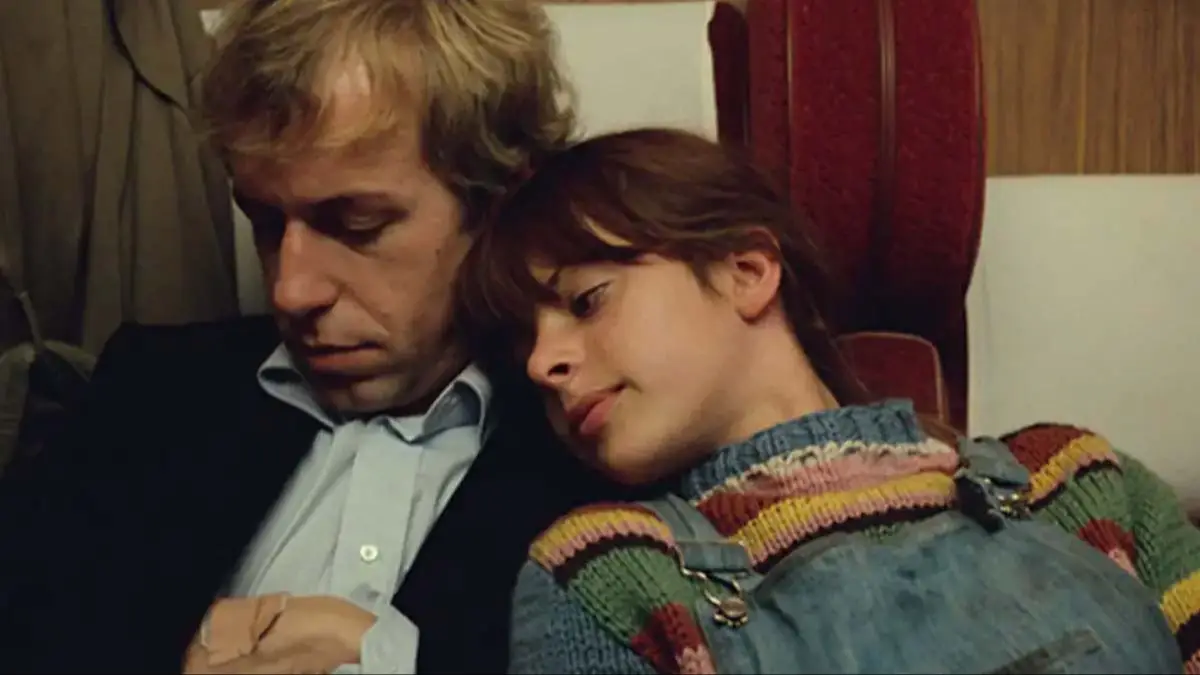
Actress in disturbing scene when she was 13 wins battle to have film removed 50 years later

Topics: Film and TV, Germany
 Thomas Bamford
Topics: Film and TV, Germany
Nastassja Kinski has won a decades-long fight to have a film removed from circulation after appearing in a scene as a 13-year-old in which a 30-year-old-man undressed and got into bed with her.
The German actress, now 65, made her acting debut in Wim Wenders' 1975 road film Wrong Move, playing a mute teenage acrobat.
The film also starred Rüdiger Vogler and Hanna Schygulla, but it is Kinski's appearance, and the circumstances surrounding it, that has defined the film's legacy.
Speaking about the scene years later, Kinski was unequivocal. "That was my first film, he was my first director, and he didn't protect me," she said.
Advert
"Even though I didn't know much aged 13, I knew that that was not okay."

Kinski first raised her concerns about the film in 2011, spending the next fifteen years trying to persuade Wenders to withdraw it.
Last month, speaking at the German Film Awards while collecting a lifetime achievement award, Wenders addressed the controversy, but his comments were widely interpreted as framing Kinski's demands as a threat to cinematic freedom rather than a legitimate grievance, suggesting that editing the film retrospectively would require a broader industry-wide discussion.
The backlash was swift. Fellow filmmaker and Babylon Berlin actor Julius Feldmeier published an open letter to Wenders, writing that "it's your responsibility alone to set things right."
Within days, Wenders reversed course entirely.

In a statement published on his foundation's website, he announced that the Wim Wenders Foundation, which owns the film, would withdraw it from all current channels of distribution.
"As the only person responsible at the time for Wrong Move who is still here, I recognise that Nastassja Kinski should have been better protected back then," he wrote.
"For that, I apologise to you, Nastassja, unreservedly, no ifs or buts."
Streaming, TV and distribution partners have been instructed to remove the film from public access.

For academics who study the treatment of young women in the film industry, the decision carries significant weight.
Professor Tanya Horeck, a Professor of Film and Feminist Media Studies at Anglia Ruskin University, told The Mirror that the outcome was meaningful, even if it took far too long. "It took Wim Wenders an incredibly long time to address and honour what she wanted to happen," she said.
"The film as a piece of art is not more important than the fact that a child was harmed. A film director's ego does not matter more than that."
Professor Horeck was careful to frame the case as part of a broader reckoning rather than an isolated incident. "There is not a time limit on these cases. Trauma is a very complicated thing," she said.
"You can't separate what happens on set from the final product. We need to recognise the harm that has occurred on sets, and acknowledge that that has to be part of how cinema is now framed and viewed."
Kinski's case is not without precedent.
She previously campaigned successfully against a television film directed by Das Boot's Wolfgang Petersen, in which she appeared naked at the age of 15, reaching an agreement with broadcaster NDR over its distribution.
Wenders, 80, is one of the most celebrated German directors of the postwar era, with films including Wings of Desire, Paris, Texas and Perfect Days to his name.
Kinski herself went on to star in more than 60 films across Europe and the US: including Paris, Texas, collaborating with Wenders again in 1984.