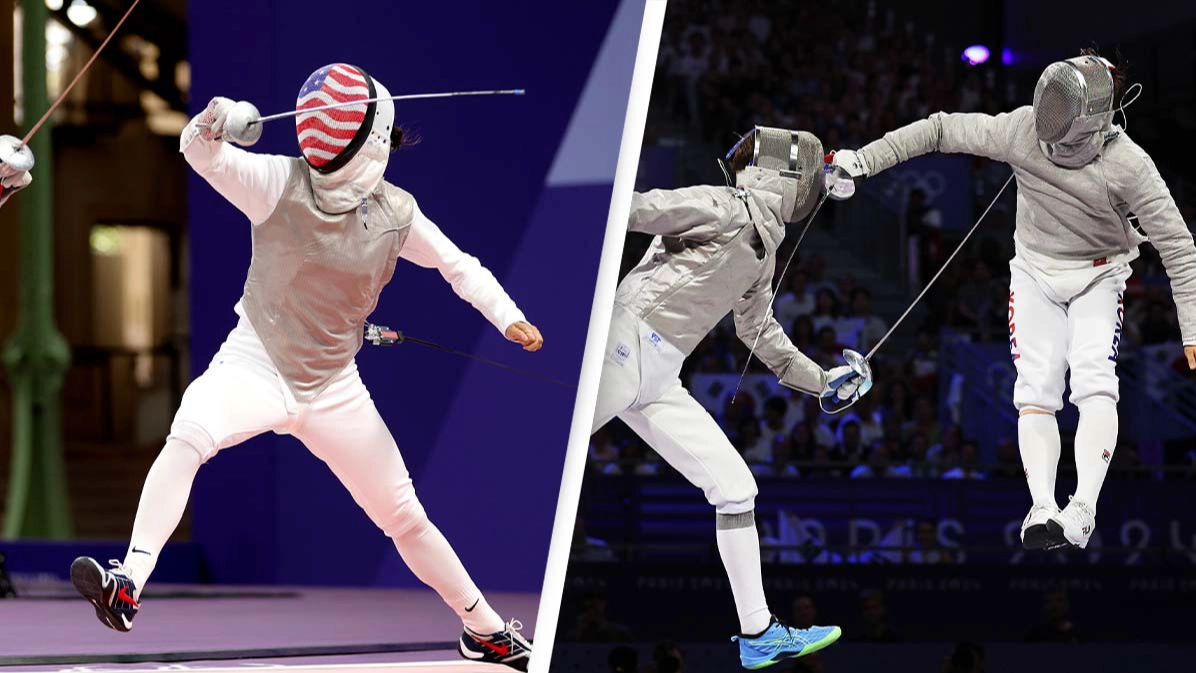
unilad homepage
unilad homepage
    • News
      • UK News
      • US News
      • World News
      • Crime
      • Health
      • Money
      • Sport
      • Travel
    • Music
    • Technology
    • Film and TV
      • News
      • DC Comics
      • Disney
      • Marvel
      • Netflix
    • Celebrity
    • Politics
    • Advertise
    • Terms
    • Privacy & Cookies
    • LADbible Group
    • LADbible
    • SPORTbible
    • GAMINGbible
    • Tyla
    • UNILAD Tech
    • FOODbible
    • License Our Content
    • About Us & Contact
    • Jobs
    • Latest
    • Archive
    • Topics A-Z
    • Authors
    Facebook
    Instagram
    X
    Threads
    TikTok
    YouTube
    Submit Your Content
    Real reason why Olympic fencers are attached to a cord
    Home>News>Sport
    Published 18:40 2 Aug 2024 GMT+1

    Real reason why Olympic fencers are attached to a cord

    You may have noticed that fencers are tied to a cord behind them during their bouts, and it's for a very good reason

    Kit Roberts

    Kit Roberts

    google discoverFollow us on Google Discover
    Featured Image Credit: Clive Brunskill/Getty Images / Elsa/Getty Images

    Topics: Sport, News, Olympics, World News

    Kit Roberts
    Kit Roberts

    Kit joined UNILAD in 2023 as a community journalist. They have previously worked for StokeonTrentLive, the Daily Mirror, and the Daily Star.

    Advert

    Advert

    Advert

    The Olympics are thoroughly underway and many people are tuning in to watch the fencing.

    Speaking as an amateur fencer, few things are more thrilling than two people in beekeeping suits trying to hit each other with pointy things.

    If you've ever watched a fencing match, once you get past the mystery of the rules surrounding 'right of way', you may have noticed something about the competitors.
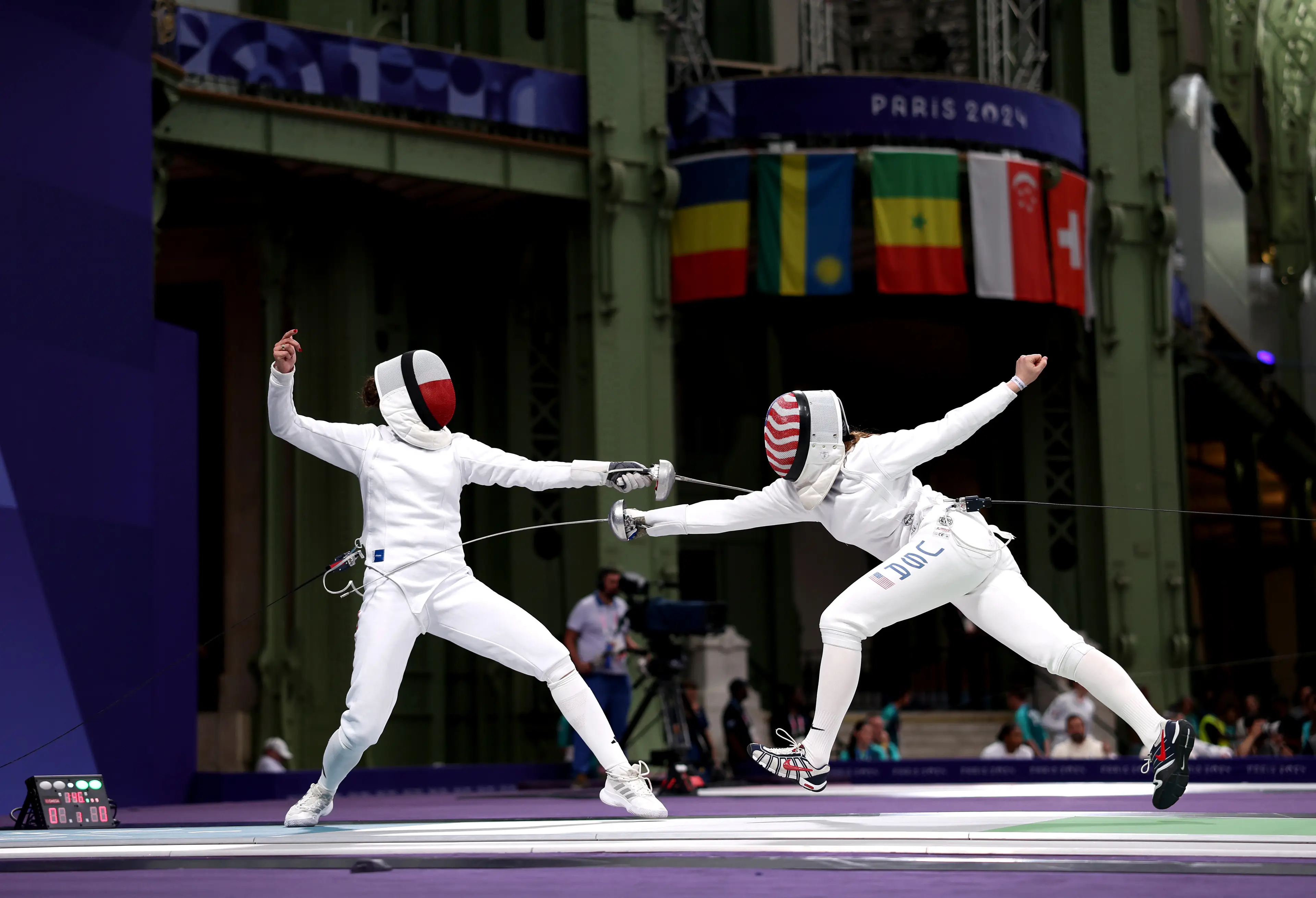
    Fencing is an amazing sport! (Elsa/Getty Images)
    Fencing is an amazing sport! (Elsa/Getty Images)

    Advert

    Typically, both fencers will have a long cable attached to their backs, which is connected to a spool at the end of the piste.

    Yes, in fencing, we call the place where you fence a piste, like in skiing.

    People have come up with a lot of rather wild theories about why us fencers like to attach ourselves to one end of the piste.

    However, I assure you that it is actually quite an important part of how you conduct a fencing match.

    One thing about fencing is that it is a very quick sport.

    Hits can happen in the blink of an eye and even the most watchful judge is sometimes not sure exactly who hit first and where they hit their opponent.


    Both of those things are important in determining who is actually winning the match.

    Those cables you see coming out of the back are not there to stop the fencers getting too close to each other.

    They're also not there to stop you from stepping off the piste - if that happens, the referee will spot it and call a halt.

    I promise you, they do not impede your movement.

    We have the cables there to keep score.

    So, the cable plugs in behind your back, you then have another wire running up inside your jacket and down your sleeve before plugging into your sword.

    When there is a hit this sends an electrical signal down the wire into a box, which switches on a light and sets off a buzzer to indicate there's been a hit.

    Also, different weapons have different rules.

    In foil, you can only score by hitting the torso and neck, while in sabre it's the upper body.
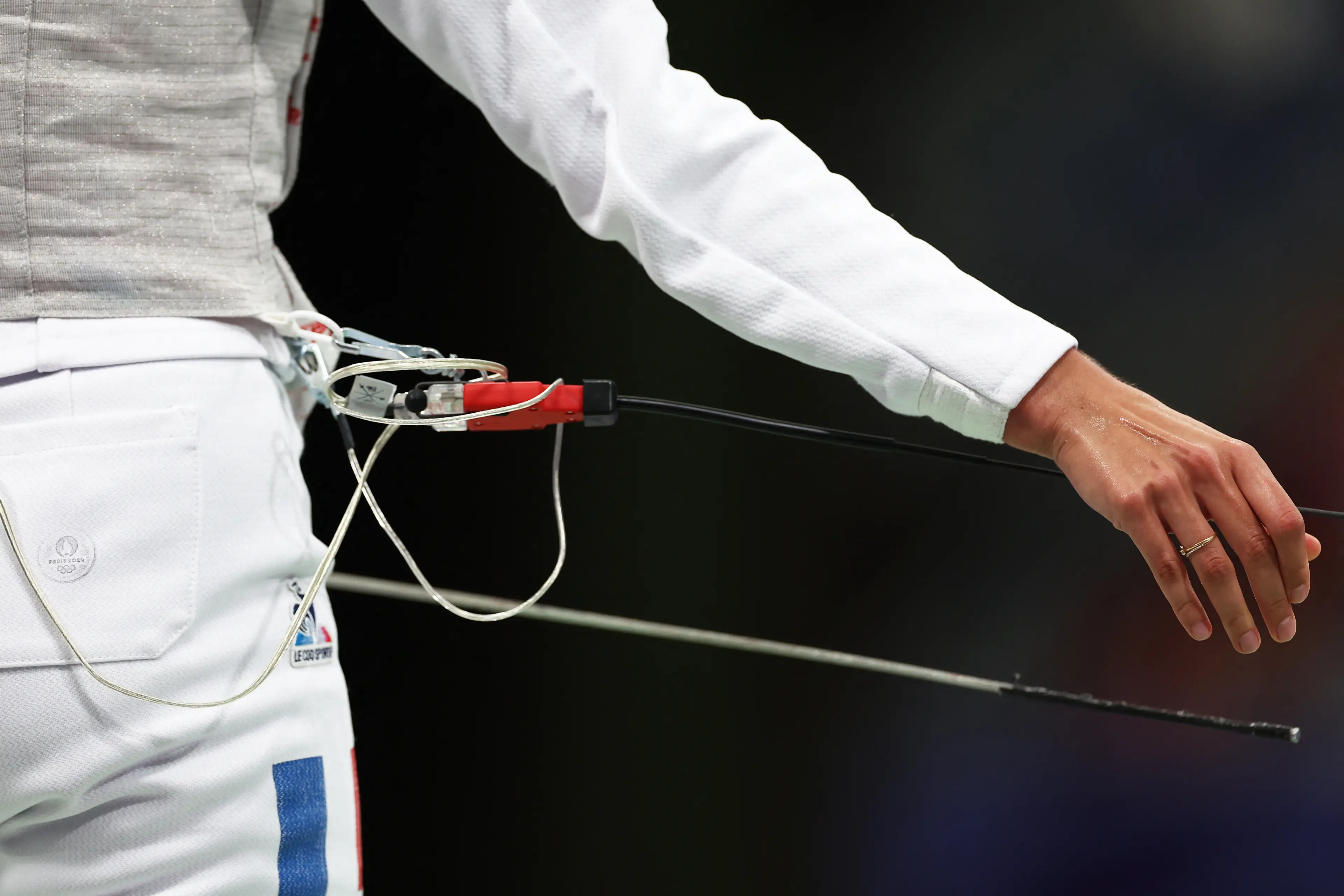
    The plug shown here runs up the back of the jacket and down the sleeve of the arm you fence with. (FRANCK FIFE/AFP via Getty Images)
    The plug shown here runs up the back of the jacket and down the sleeve of the arm you fence with. (FRANCK FIFE/AFP via Getty Images)

    In addition to these weapons, fencers will also wear a jacket called a lamé, which is conductive.

    This means that if you have a hit on target, the light is green, and if it's off target it's red.

    What about that 'right of way' I mentioned earlier?

    The rules vary, but essentially, in foil and sabre, this helps a judge decide who gets the point in the event of a double hit.

    As for the third weapon epée, which is also objectively the best, the entire body is the target area and there is no right of way so if there's a double hit, both people get the point.

    If you hadn't guessed, I'm an epeeist, and not remotely biased... We don't do right of way because we're too cool for it - our rules boil down to 'hit them, don't get hit'.

    Finally, 'en garde' just means 'get ready'. The actual starting command is more literal - 'allez', French for 'go'.

    So now you know - en garde, pret, allez!

    Choose your content:

    2 hours ago
    12 hours ago
    13 hours ago
    14 hours ago
    • Adam Gray/Bloomberg via Getty Images
      2 hours ago

      Transport Sec. Sean Duffy comes under fire for response to Frontier Airlines disaster

      One person was killed and 12 injured in Friday's deadly collision at Denver International Airport

      News
    • Getty Stock
      12 hours ago

      What your answer to 'the Red or blue Button' dilemma means, according to science

      The red button or blue button debate has split social media in half, but a game theory expert has broken down what it actually means

      News
    • TLC
      13 hours ago

      The horrific crimes 90 Day Fiancé Geoffrey Paschel went to prison for explained

      Geoffrey Paschel appeared on our TV screens not long before being imprisoned for 18 years over a brutal attack on his ex

      News
    • Getty Stock
      14 hours ago

      The simple way swingers spot each other on a ‘spicy’ cruise explained

      There's a simple way to tell if passengers are up for 'play'...

      News
    • Real reason Winter Olympics snowboarders are wearing their bibs only on one shoulder
    • Olympic medallist tragically dies aged 49 after being struck by lightning on family vacation
    • Olympic team disqualified by their own country before competition at Winter Games
    • Double Olympic gold medalist dies aged 31 in tragic mountaineering accident