What your answer to 'the Red or blue Button' dilemma means, according to science

Debate has been raging on social media for weeks in response to a deceptively simple ethical dilemma, proposed by of all people, YouTuber-turned-philosopher MrBeast.
This dilemma is a similar to the trolley problem and has split opinion in half, leaving each group believing the other is either full of idiots, or full of psychopaths, depending on whether they would press a blue or a red button.
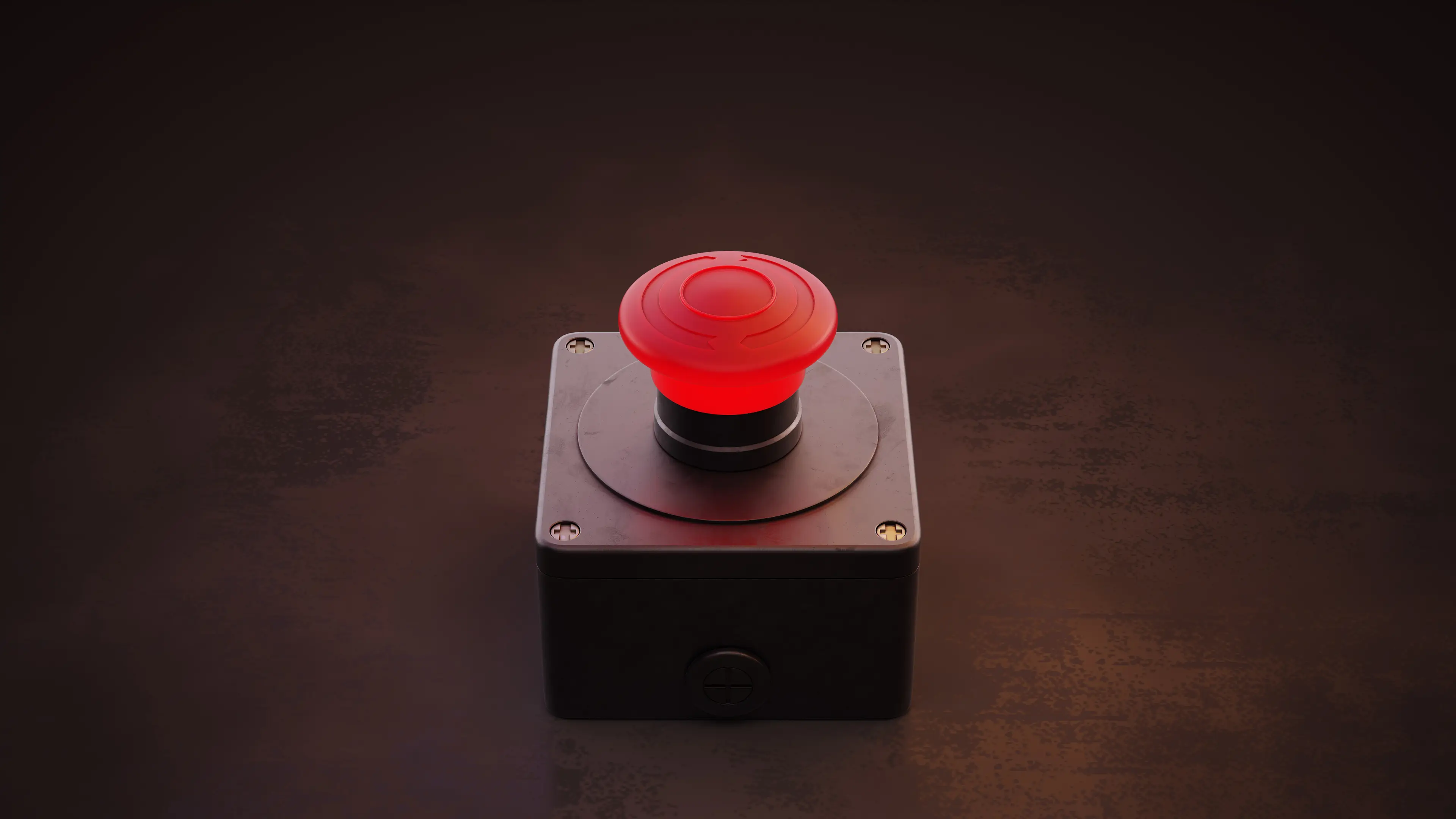
MrBeast posed his question as a poll to the public on X, explaining: "Everyone on earth takes a private vote by pressing a red or blue button. If more than 50% of people press the blue button, everyone survives".
Ok, well that's an easy option, just smash the blue button right? The question continued: "If less than 50% of people press the blue button, only people who pressed the red button survive. Which button would you press?"
Advert

This caused endless discourse as social media users divided themselves into camps 'Blue Button' and 'Red Button', with the former arguing that there choice was the only moral one and the latter claiming theres was the only rational one.
But Swinburne University of Technology's resident mathematician and game theory expert Steven Conway has explained that the question is a complex one to answer. "Most people think the choice is extremely obvious," he wrote in The Conversation.
"However, not everyone agrees whether the obvious answer is blue or red."
Conway said the underneath the dilemma are questions similar to those famously posed by the 'trolley problem' and the 'prisoner's dilemma'.
"From the point of view of philosophy and game theory, the question shows two different intuitions and views of decision–making with starkly contrasting results," he shared.
"And the very popularity of the question highlights the fraught existential stakes many of us feel in modern life."
Breaking down what each choice actually means, he explained: "The case for red seems simple.
"If more than 50% of people press the blue button, red pressers survive. If not, red pressers survive anyway. So basic self–interest leads to red."
Game theorists call this argument Nash's equilibrium, where the optimal outcome in a system where there is no positive outcome is the one that leaves the player unchanged. "This is the best choice for a participant looking to advance their own interests," Conway wrote.
But despite the supposedly optimal 'everyone for themselves' approach, the majority of people (56%) polled said they would have pressed the altruistic blue button.
Here's where things get interesting. Conway asked: "Why would anyone stake their own life on the collective decisions of others?
"As with any good thought experiment, the real value of the provocation shows itself, as we ponder the 'why' behind the choice."
Many people choosing the blue button will be doing it out of concern for other people, he said. This could be out of concern that your friends could die, or out of fear that you could be responsible for killing people if you picked the red button.
Or you might just want to avoid the judgment of others. In game theory, this is called the 'Pareto–optimal outcome'.
Conway explained: The specific formulation of the thought experiment, condensed down into a simple binary choice, is also perfect for social media, where hot takes dominate and extremity is rewarded by the algorithm: yes or no, right or wrong, gold–and–white dress or blue–and–black.
"It's also where similar questions are often asked of influencers, who might sacrifice their own moral viewpoints in pursuit of attention and visibility.
"It's a perfect quick moral apocalypse for a doomscrolling public."
Topics: MrBeast, Social Media
 William Morgan