
Expert reveals why women are reporting highest levels of unhappiness than ever before

On paper, 2026 should be a great time to be a woman.
They have more college degrees than me. Financial independence. More freedom and choice than any generation that came before.
And yet, by almost every measurable standard of wellbeing, women are reporting feeling worse than ever.
It's a contradiction that has baffled researchers for years, and one that Rachel Wilson, author of Occult Feminism, thinks she can explain.
Why are women so unhappy in 2026?
Speaking on the Jack Neel Podcast, Wilson laid out what she sees as the central paradox at the heart of modern women's unhappiness, and didn't pull her punches while doing it.
Advert
"Rachel, the average American woman is the most educated, most financially independent, and most free woman in human history," Neel asked.
"She's also the loneliest, most depressed, and least likely to have kids. Why do you think women are so unhappy in 2026?"
Wilson pointed to two large-scale studies that have tried to answer that question, the first of which landed in 2009 under the title The Paradox of Declining Female Happiness.
"In this study, the authors in their summary said that women have reported higher levels of unhappiness, loneliness, depression, than ever before," she explained.
"So if we go back to the 70s, which is arguably kind of the tipping point where feminism became the dominant ethos, if you go back to the early 70s where they asked women these questions, they largely reported being pretty content."
The numbers she cites for today make for uncomfortable reading.
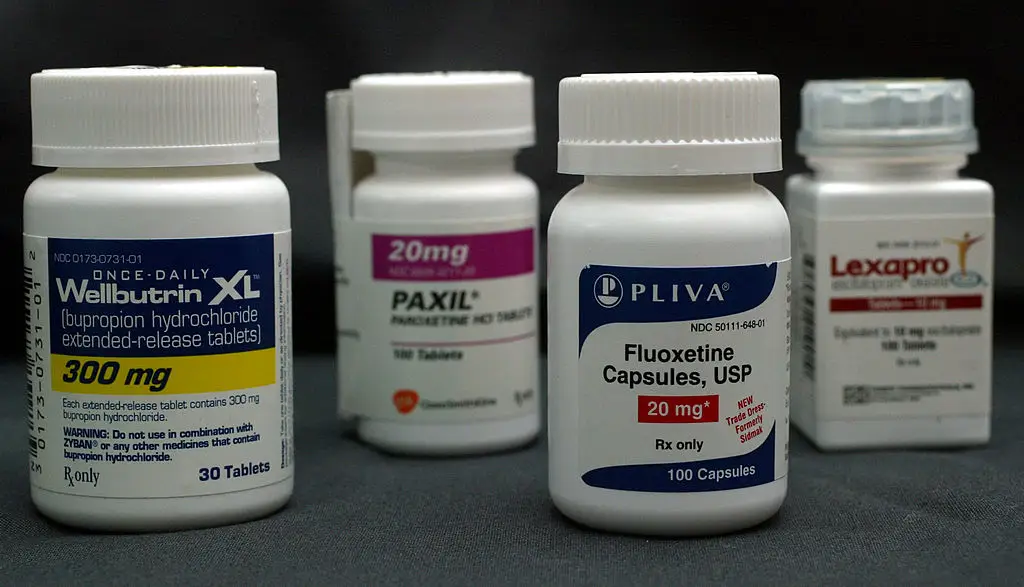
Why are 26% of all American women on a psychicatric drug?
Currently, 26% of all American women are on at least one psychiatric drug. Rates of foetal alcohol syndrome and alcoholism among women are higher than ever recorded. And women are now three times more likely than men to experience common mental health issues, a gap that has grown significantly over time.
For Wilson, the root of the problem lies in a fundamental contradiction between what women were told would make them happy and what is actually making them happy.
"We've created a paradox where by giving women everything that at least feminism told us they wanted, which was full equality, independence, from men who that we could choose a husband based on who we love and not who we need, that this would make women happier," she said.
"And we're finding ourselves in a position where women are reporting the highest levels of unhappiness ever."
Part of the issue, Wilson argues, is romantic.

Why are successful women struggling to find partners?
As women have become higher earners and more highly educated, they've found it increasingly difficult to find partners who match or exceed their achievements, something she says many women still instinctively want.
"Women don't know what to do with relationships because on the one hand, they want men who make more than they do.
"They want men who are higher achieving than they are. Yet this creates a paradox, whereas women have become number one earners of college degrees."
The result, she says, is a generation of women who followed the prescribed path and arrived at the destination feeling lost.
"What often happens, you'll see these viral clips on the internet of women in their 30s and 40s sitting alone in their car crying, 'I did all the things I was supposed to, I followed the prescription and I'm unhappy. I'm stressed out. I'm alone. I can't find a husband. I won't have a family. Am I going to die by myself? What did I do? I can't go back.'"
Wilson is careful not to reduce the issue to a single cause, but she's clear that loneliness, marriage rates and the pressure to 'have it all' are central to it.
"I think it's also we put so much pressure on responsibility on women to do it all, be it all, and have it all," she said; speaking partly from personal experience.
"By the time I got done with 12th grade, I thought, I think I just want to get married and have kids. Like, I really just want to marry my boyfriend, start a family and be a mom."
It's a conversation that's been driving conversations, and a lot of opinions, but the data the statements are being made on is real.
Topics: Mental Health, Feminism
 Thomas Bamford