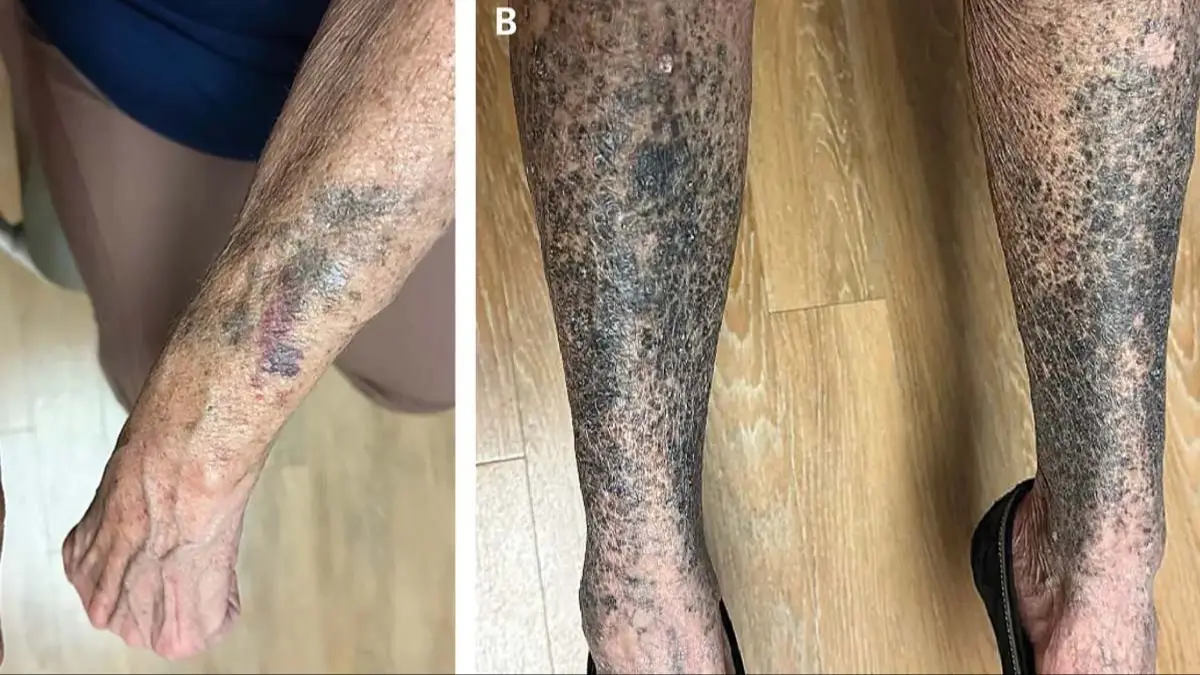
Woman left with blue-gray arms and legs after rare reaction to common medication

A woman was left with blue-gray arms and legs after having an unexpected reaction to a form of common medication taken by patients to treat a variety of different conditions.
The 68-year-old, who was not identified, sought medical treatment after the dark patches on her body persisted for a period of six weeks.
The woman's case report in the New England Journal of Medicine revealed the woman had rosace, a 'common skin condition that causes flushing or long-term redness on your face', according to Mayo Clinic.
Speaking of the condition, dermatologist Alicia Zalka told the New York Post: "Rosacea is a chronic inflammatory condition in which the skin appears inflamed along with evidence of acne-like bumps and textural change.
Advert
"Because the condition is multifaceted and is the result of the interplay of genetics, environment, vascular inflammatory responses of the skin, and even skin mites, there is no single cause of rosacea and similarly no single treatment."

There is no cure for rosace, but medications can help manage symptoms, which is exactly what the woman did.
She began taking 100 mg daily of oral minocycline two weeks before the dark patches on her arms and legs appeared, and thought that would do the trick.
Minocycline is widely prescribed to fight several conditions such as acne and bacterial infections, Mayo Clinic states.
"It works by killing bacteria or preventing their growth," the health sites adds. "However, this medicine will not work for colds, flu, or other virus infections."
It is also only available through a GP's prescription.
While the common form of medication came lead to symptoms such as dizziness, nausea, headaches, fatigue and skin sensitivity coming to fruition, the 68-year-old, in this case, experienced a rare side effect.
Hyperpigmentation, which caused the patient's dark patches, is said to affect 3-15 percent of those who take the drug. Health experts say the rare side effect typically appears after months of treatment, rather than just weeks.
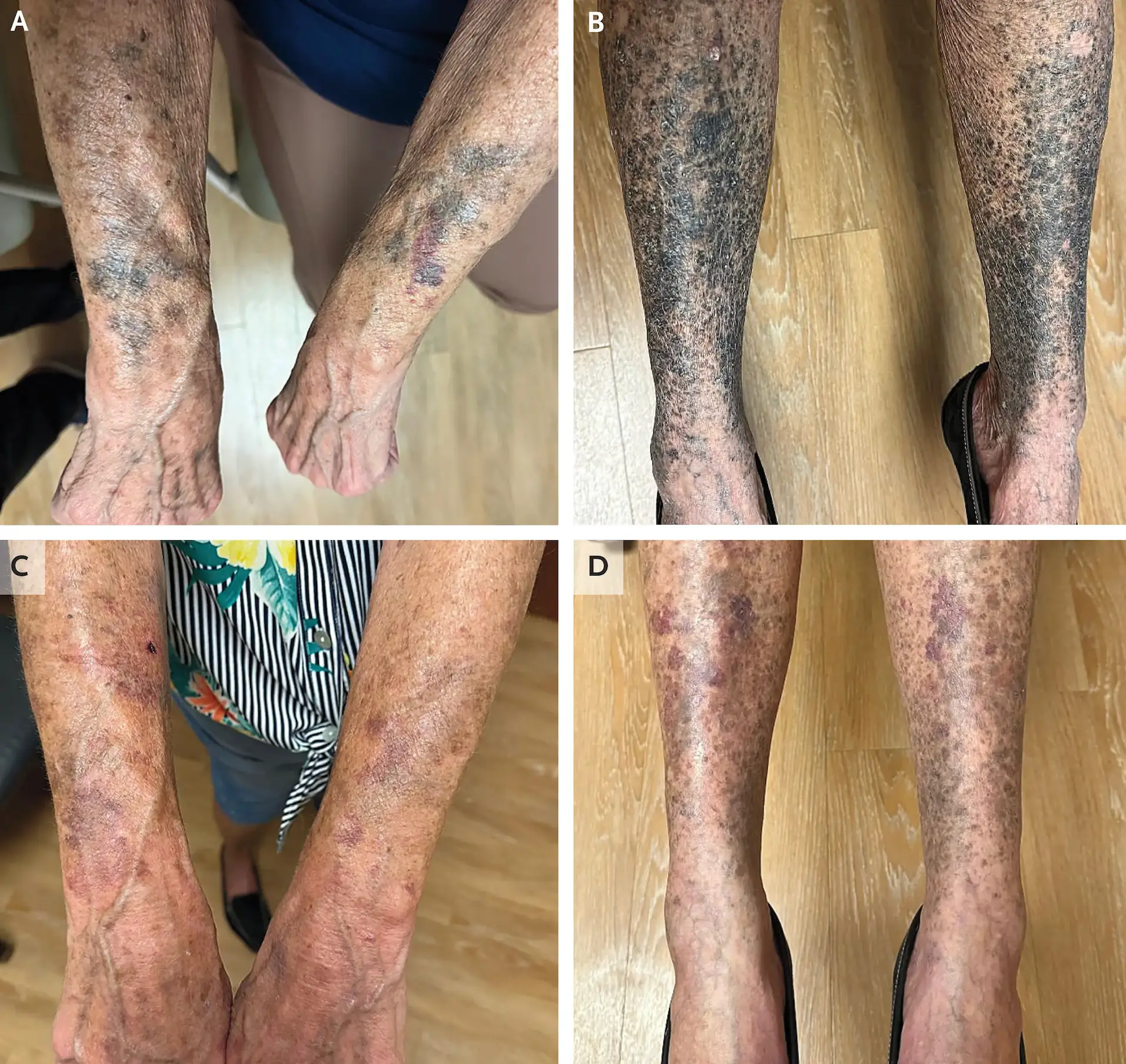
The condition makes some areas of the skin darker than others, creating spots or patches that can vary in color.
"The areas are not painful or itchy, but they can make people self-conscious," Cleveland Clinic states.
Upon speaking to medical experts, the woman was told to stop taking minocycline and to avoid sun exposure after being diagnosed with Type II minocycline-induced hyperpigmentation.
She returned to the clinic six months later and while the hyperpigmentation had 'abated somewhat', it had not completely faded.
Topics: Health
 Callum Jones