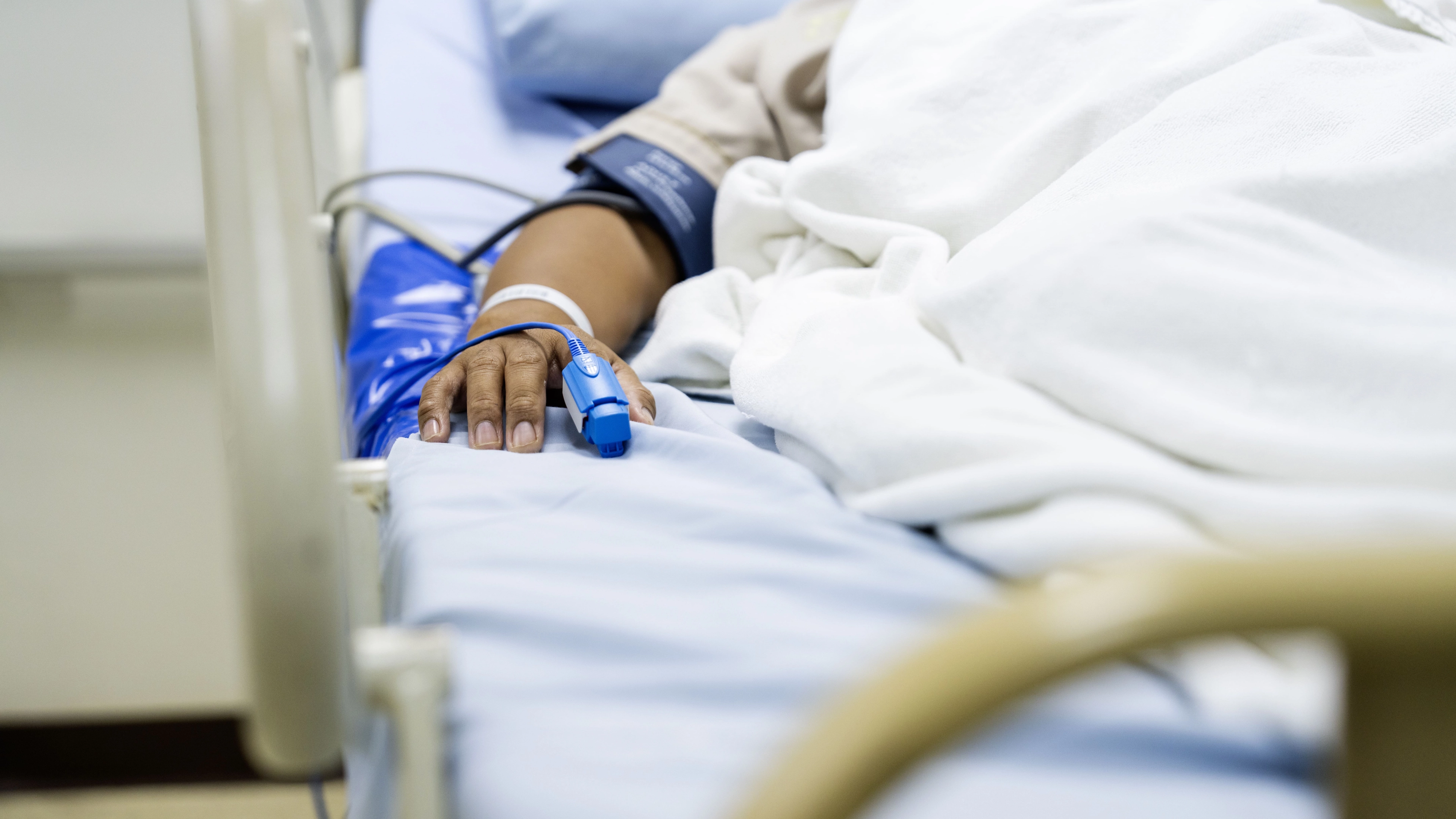
Simple test can predict if you'll die in the next 24 hours and doctors say it's 95% accurate

A new study has suggested that doctors can learn whether a patient is ready to die in the next 24 hours by utilising an easy bedside test.
If one thing is certain in life, it’s that one day - hopefully in the far future when we are old and wiser beyond our years - we will die.
According to research, around ten percent of Americans have what is known as ‘death anxiety’, while only three percent have a severe fear of death.
If you’re someone who is pretty aware of their mortality, then you may be interested in common death signs and how experts know that you or someone you love is on their last legs.
Advert
New research published in the BMJ Supportive and Palliative Care journal suggests that death could be just 24 hours away if a patient fails to do just one thing.

The study, led by Dr Jung Hun Kang, director of the hospice centre at Gyeongsang National University Hospital, is titled ‘Corneal reflex: novel strong prognostic marker for imminent death’.
The published results came after experts monitored 112 hospice residents with advanced cancer.
Doctors had allegedly already told these people that they only had two weeks left to live, with nurses checking common near-death signs every day, such as changes in breathing, blue-colored skin brought on by poor circulation, and reduced consciousness, as per the Daily Mail.
Experts were also guided to examine corneal reflex in the 112 patients - of which 110 died within seven days of the study starting.
Corneal reflex, otherwise known as involuntary, rapid blinking, was monitored three times per day.
Nurses would gently touch the cornea with a sterile cotton wisp or a strand of gauze.
Responses were recorded as intact, diminished or absent. Those exhibiting the latter were five times more likely to die within 24 hours than patients who were recorded as having ‘intact’ or ‘diminished’ reflexes.
The 24-hour mortality rate among patients with no reflex was 70.7 per cent.
Speaking about the results of the simple test, Dr Kang said: “Absence of the reflex may strongly support a prediction of imminent death, but preservation of the reflex does not rule it out.

“Loss of the corneal reflex may reflect progressive deterioration of brainstem function as part of the natural dying process.”
According to Kang, a multi-center follow-up study in a more diverse population is in the pipeline after the initial test was found to be 95 percent accurate.
MedScape also reported that he hopes artificial intelligence (AI) can be implemented to help detect subtle patterns, such as corneal reflex, that might escape bedside clinicians.
“Improving care in the final hours of life is just as important as prolonging survival,” he added.
“The better we become at recognizing imminent death, the better we can support a more peaceful and dignified experience for patients and families.”
 Ella Scott