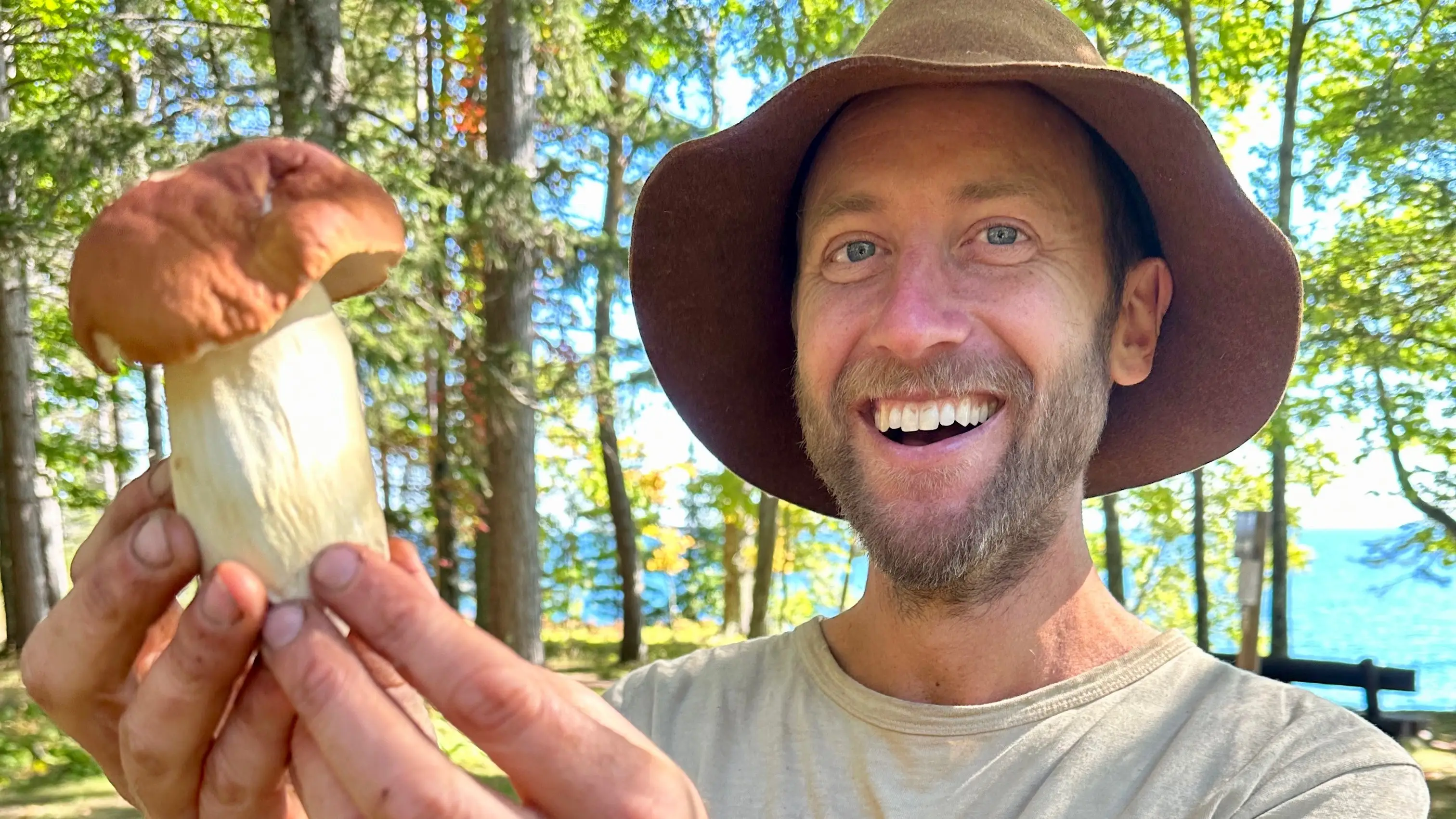
I'm foraging and won't spend a cent on food for whole year - it brings both joy and mercury poisoning

A man who has spent the better part of a year eating nothing but food he has foraged himself has revealed the surprising effects the extreme diet is having on his body.
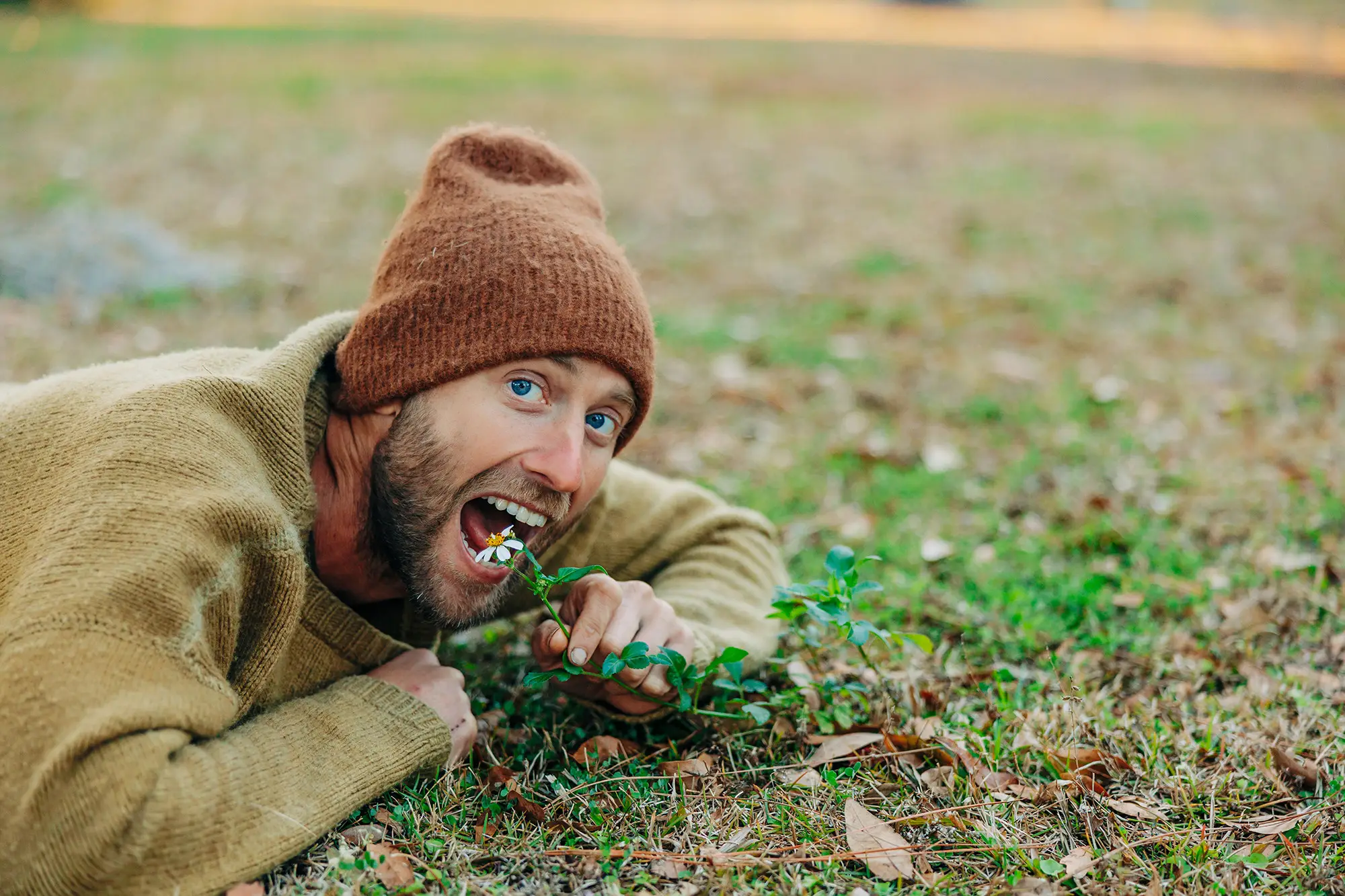
Robin Greenfield, a 39-year-old environmental activist based in Ashland, Wisconsin, set himself the challenge of surviving for 365 days on nothing but wild food and medicine gathered directly from nature, with no trips to the grocery store, restaurant or garden allowed.
Speaking to UNILAD, Greenfield detailed the physical and mental impact of the project, from a mineral deficiency linked to his fish-heavy diet to the exhaustion of foraging through hazardous wildfire smoke.
The activist, who previously spent a year growing all of his own food and medicine in Portugal back in 2019, said this latest challenge was about forging a deeper connection with the natural world.
Advert
"I don't have a grocery store to go to, I don't have a restaurant, if I want to eat, I have to go outside and build relationships with the plants," he explained.
"I have to learn how to identify them, harvest them, cook them, make medicine from them."
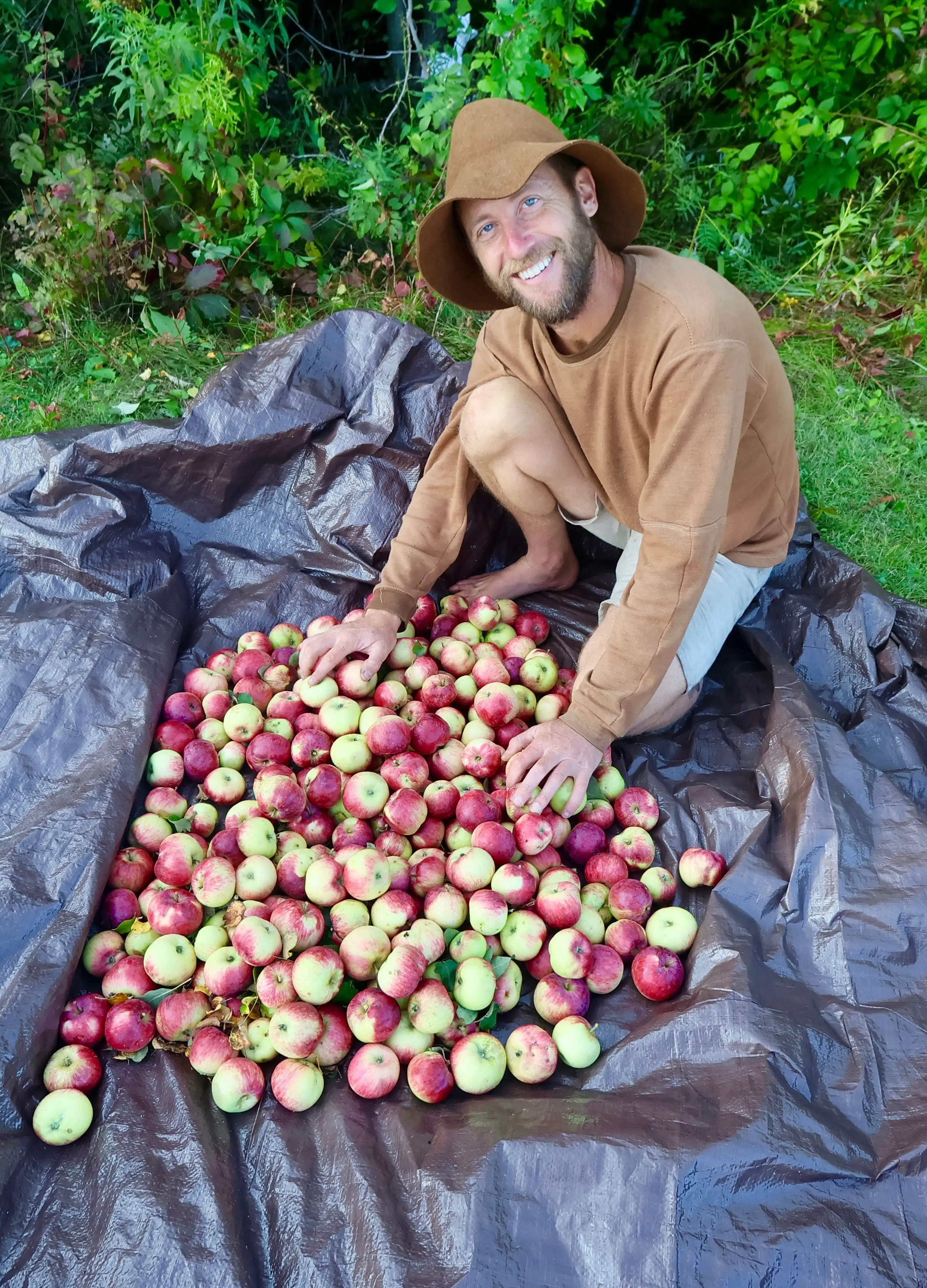
What has Robin Greenfield been eating during his year of foraging?
Rather than relying on a garden, Greenfield has spend the year sourcing every calorie from food growing freely in the wild.
His diet has included lesser-known plants such as wapato, lotus nuts and nannyberries, alongside more familiar finds like acorns, black walnuts, wild mushrooms, wild onions, fish, venison, and 'genuine' wild rice.
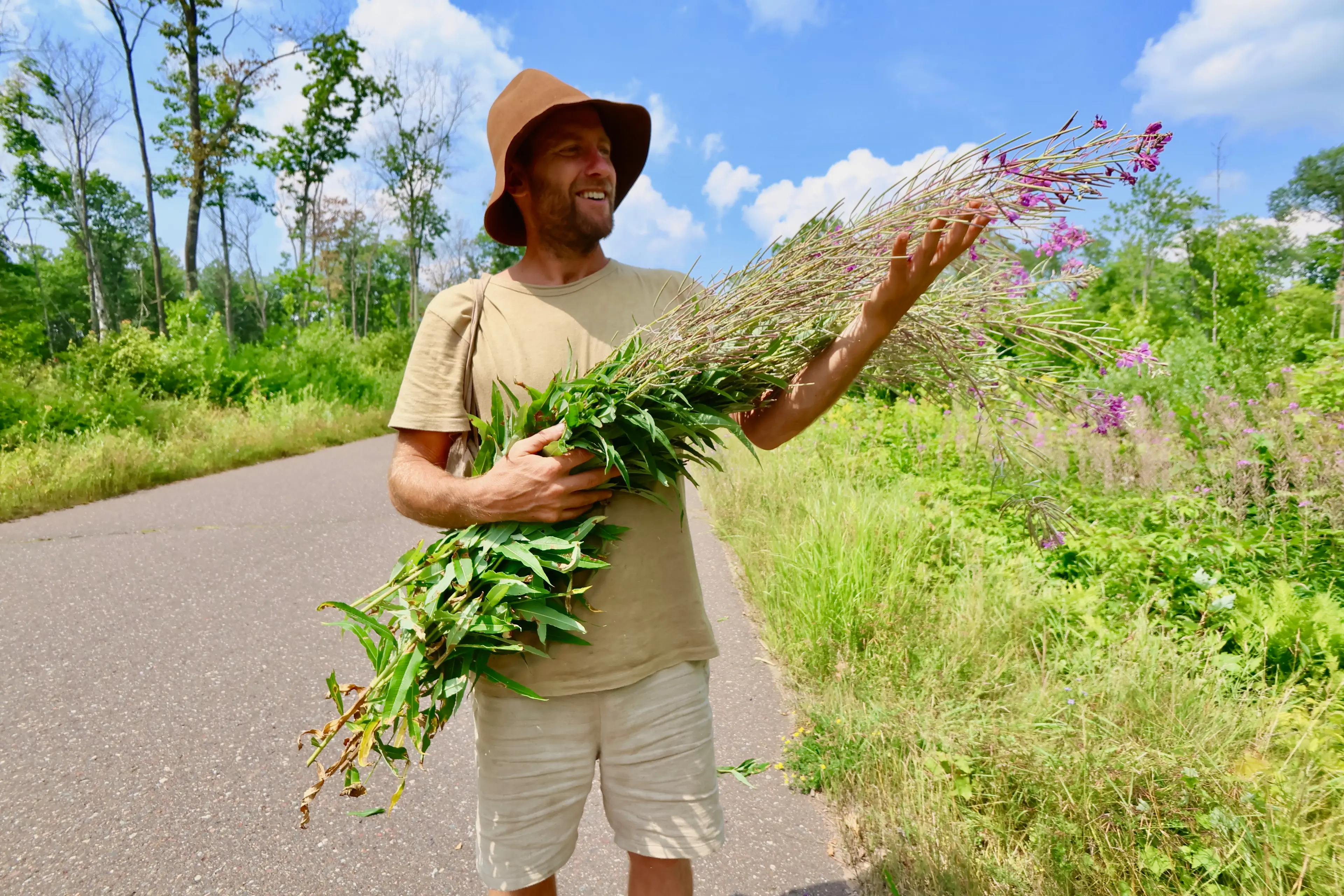
He has also eaten plants many people would consider weeds or nuisances, including burdock, stinging nettle and thistles.
Medicine has come from the same source.
Instead of reaching for the paracetamol when he's under-the-weather, Greenfield has relied on herbal teas made from ingredients such as elderberry, goldenrod and mint, along with rest, arguing that most modern ailments stem from people failing to take care of themselves in the first place.
Despite his dedication to the lifestyle, the challenge has not been without physical toll on his body. Robin revealed he developed low iron levels partway through the year, which he believes was a direct result of a build up of mercury from eating large amounts of fish.
Once he identified the issue, he adjusted his diet to include foods and herbs that help the body remove mercury and absorb iron, and said the change worked, with his anaemia clearing up within two months.
More recently, Robin has been grappling with a bout of extreme tiredness he has struggled to explain.
He said he was exposed to wildfire smoke reaching hazardous 'purple level' readings of 500 parts per million for several days while continuing to forage outdoors, as his home during the project is largely exposed.
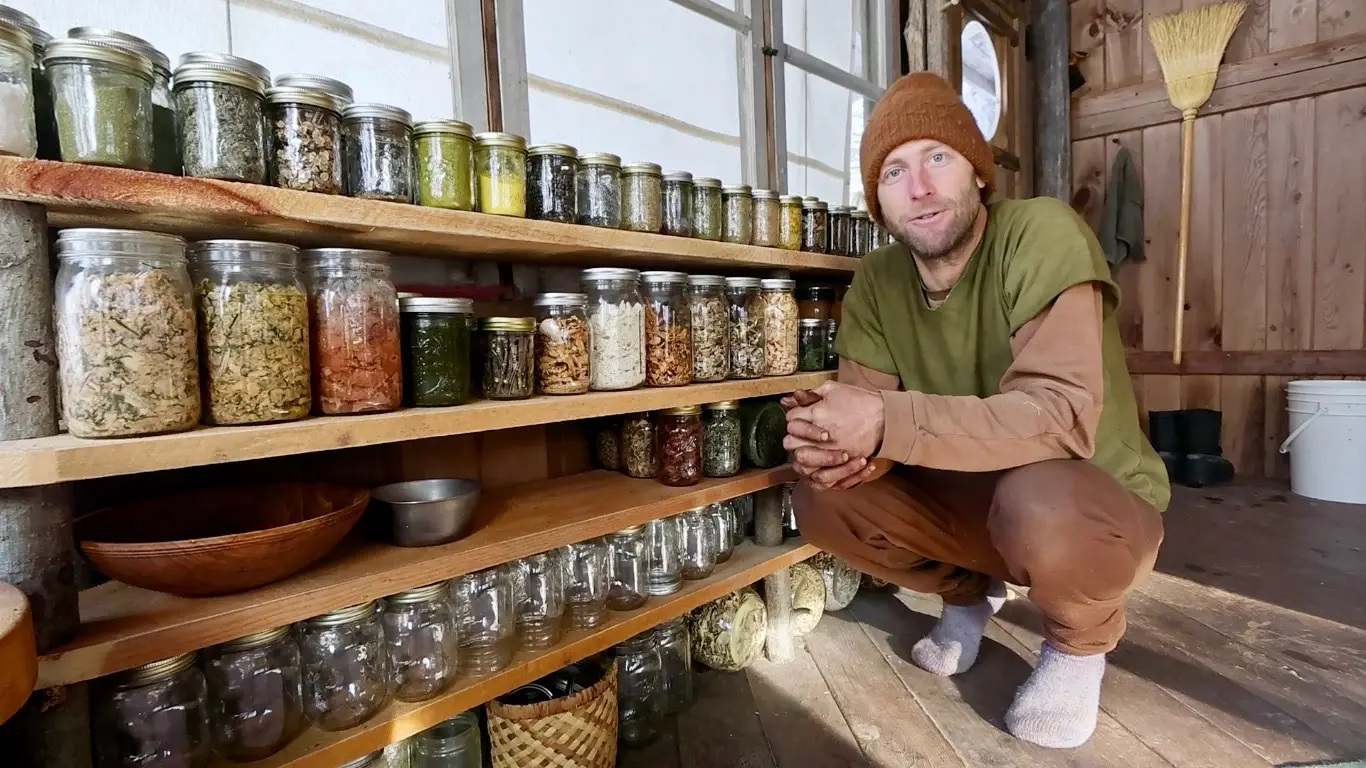
Robin lives in a small eco-cabin, which lacks the defences to the elements that a traditional house would.
In the week that followed the wildfires, he described experiencing one of the 'strongest bouts of fatigue' of his life, and admitted he was unsure whether it was linked to the smoke exposure, a nutritional gap, or something else entirely.
What are the health benefits of foraging?
Beyond the physical toll, Greenfield argued the psychological benefits of the lifestyle have been significant, both for himself and others he has met along the way.
He said thousands of people he has encountered on similar journeys of growing and foraging, and reconnecting with the planet by spending time out in nature, has multiple benefits to both your physical and mental health.
"It helps with alleviating depression and anxiety, it helps with having a sense of meaning and purpose, it brings so much joy into people's lives," he said.
Greenfield also touched on the wider social and political dimension of the project, describing self-sufficiency as a way of pushing back against dependence on corporate and governmental systems.
He argued that communities capable of taking care of themselves through skills like foraging are less easily controlled, and said the practice encourages the kind of critical thinking that authorities and corporations often discourage.
With around 60 days left of the challenge at the time of the interview, Greenfield said he was entering the 'home stretch' and felt mentally and spiritually aligned with the project, even if his body could use a break.
He said he did not feel the need to change anything about his approach, pointing to the number of people who have told him they have been inspired to transform their own relationship with food and nature as a result of his journey.
Greenfield's advice for people wanting to dip a toe into foraging without committing to a full year is to start small, learning just one plant at a time rather than trying to identify everything at once.
He suggested that learning even a single new plant each month could meaningfully change how connected someone feels to their surroundings and community.
Topics: Nature, Health, Environment, Climate Change
 Thomas Bamford