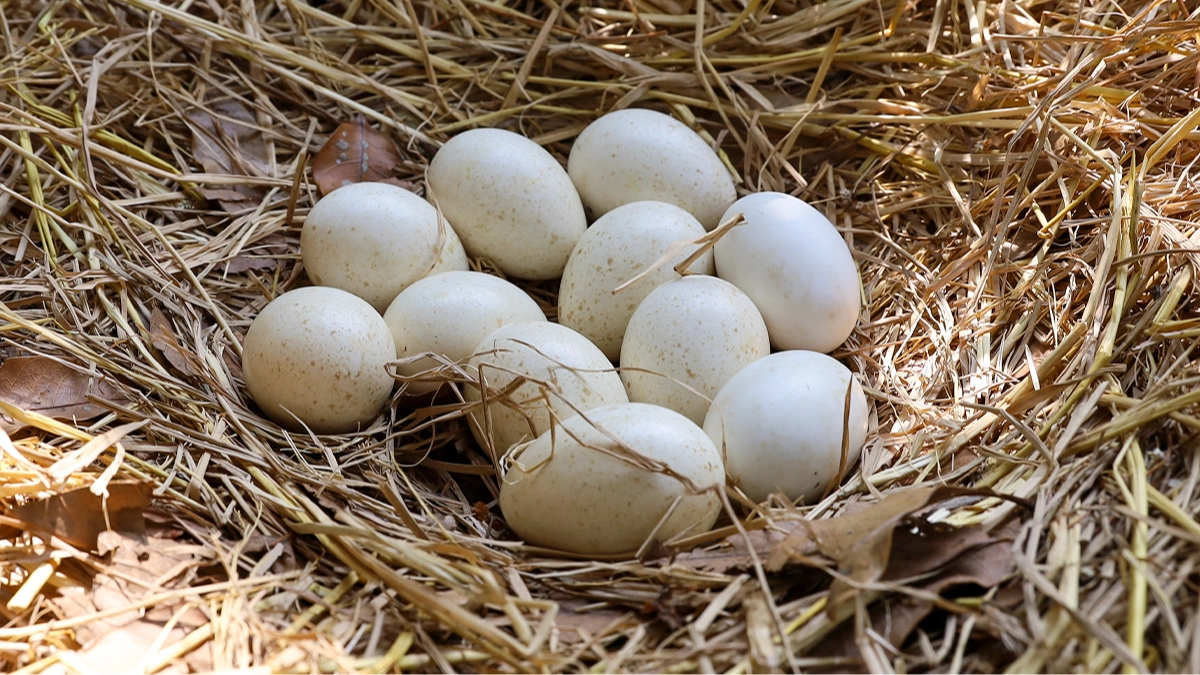
People are just discovering why we're not able to eat turkey eggs

Experts have revealed why you never see turkey eggs on the shelves, despite the bird's popularity for meat.
When Thanksgiving and Christmas roll round again, for many people there's only one dinner on their mind - turkey.
While some see turkey as overly dry and bland, requiring being injected with an ocean of butter to avoid it tasting like sawdust, it is still a hugely popular bird.
But despite this, you never seem to see turkey eggs on the shelves in supermarkets, in contrast to other commonly eaten birds such as duck, and of course chicken.
Advert
You might assume that this is because while the meat is popular, turkey eggs maybe don't make very good eating.
But this isn't actually the case, so why is it we never seem to see them?
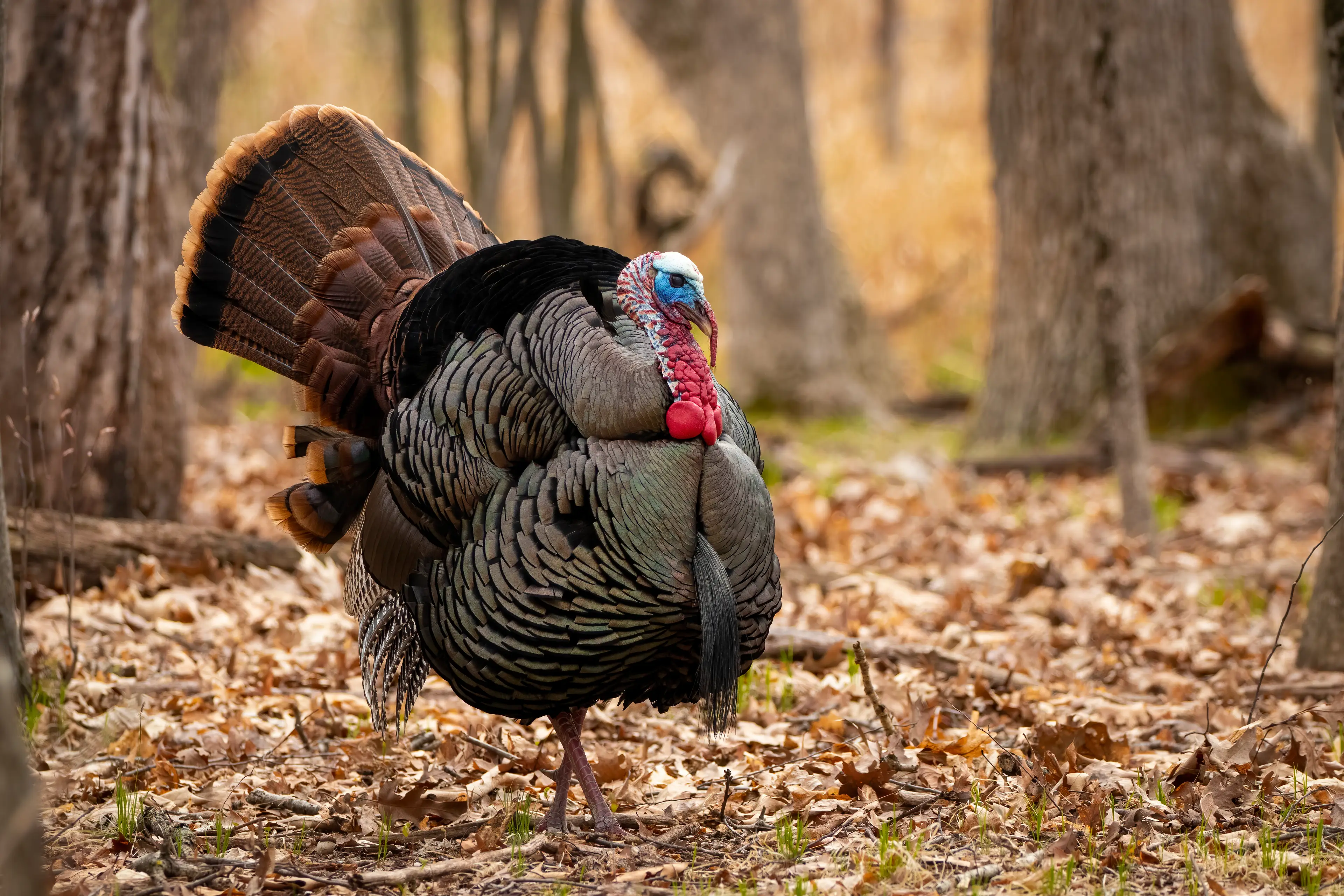
The answer lies in two things - when turkeys actually start to lay eggs and how often, and the rise of industrial scale egg production.
Before the advent of larger-scale egg farms, people did actually eat turkey eggs more regularly.
Nutritionally speaking, turkey eggs are much richer than chicken eggs, containing almost double the calories and fat, though this does also mean they have triple the cholesterol.
The problem is that compared to chickens, turkeys lay eggs relatively slowly, and it also takes longer for a turkey to mature to egg-laying age.
Not only that, but turkeys also need more food and care to raise properly, so are more expensive to keep.
All this means that turkey eggs cost a lot more to produce per egg compared to chicken eggs.
Experts have estimated that to make a profit, producers would need to charge a whopping $36 for a dozen turkey eggs - $3 per egg.
Speaking to MailOnline, Kimmon Williams of the National Turkey Federation said: “Turkeys have a longer life cycle, so they need to get to about seven months before they are able to produce laying eggs."
There is still some demand for turkey eggs, but this is more as a delicacy or for foodies, rather than as a staple food like chicken eggs.
When it comes to meat however, it's a different story.
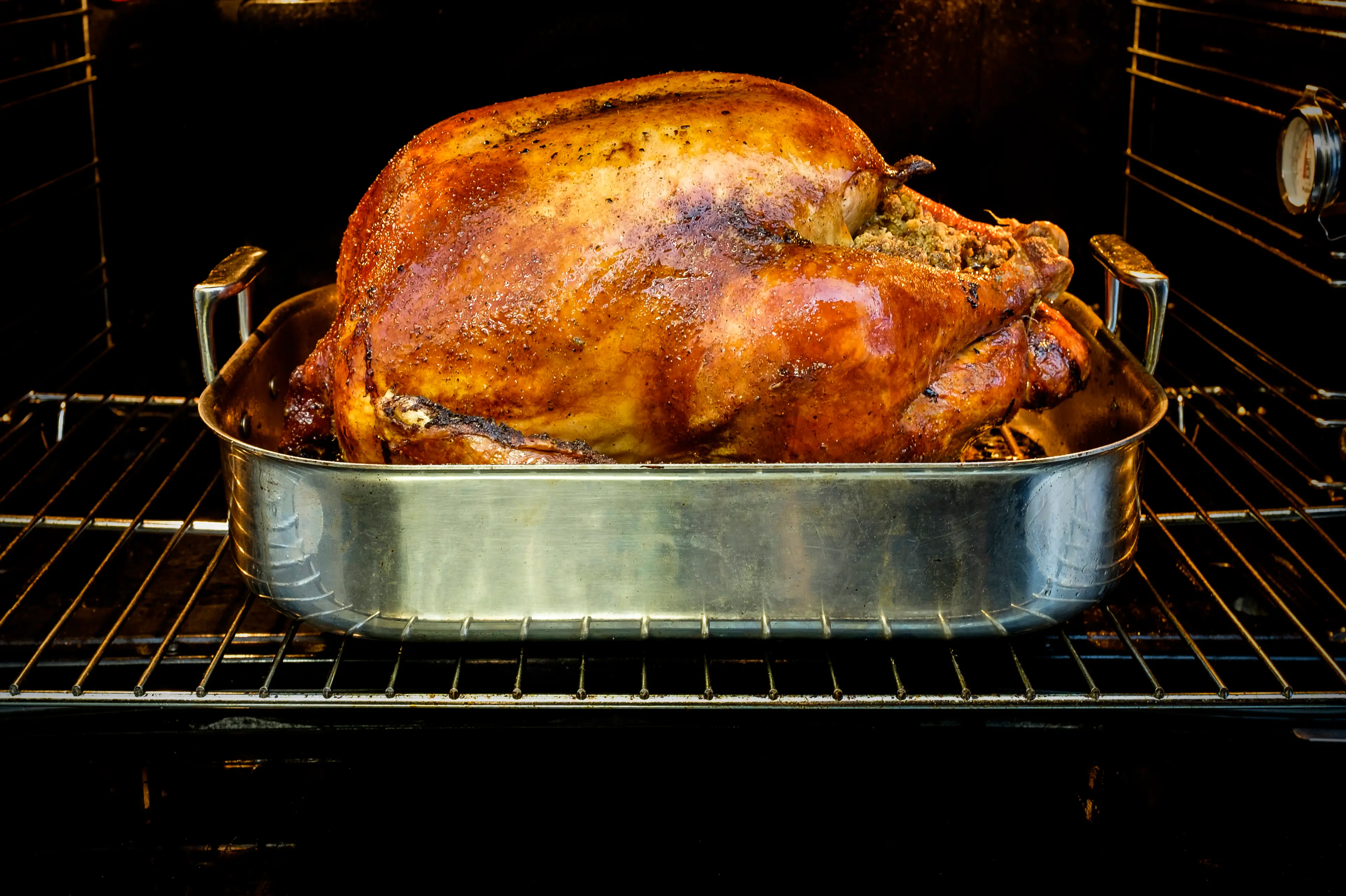
Anyone who's ever cooked a turkey knows that they are physically big birds, with a large quantity of the more popular breast meat compared to chickens.
So per bird farmers will get more desirable cuts from a turkey than a chicken.
Add into this the popularity of turkeys at Christmas and Thanksgiving, and they are a reliable livestock.
Topics: News, Christmas, Food and Drink, World News
 Kit Roberts