
Former FBI ‘spy catcher’ sets record straight on whether body language can really give away if you’re lying

A former FBI agent has revealed whether or not you can 'detect deception or lying with body language', sharing a nail-biting memory of a time he had to figure out if someone was being truthful from the way they held their cigarette.
'Spy catcher' Joe Navarro spent 25 years with the FBI and was a founding member of the FBI’s National Security Behavioral Programme. He's worked on cases involving one of Ted Bundy's victims as well as 9/11, and has become a world-leading expert in body language.
But when it comes to analyzing body language to determine whether someone's lying or not, can it really be done?
We've all heard of a shifty look to the left or a scratch of the face when someone's telling a fib, but how does it actually work in the US' FBI, and what's the science behind it?
Advert
Well, according to Navarro, ultimately, you can't actually detect someone's lying through body language.
Why there is 'no single behavior indicative of' lying
The former FBI agent told LADbible Stories: "Don't let anybody tell you that you can detect deception or lying with body language. Since 1986, and the great work of Paul Ekman, who wrote Telling Lies, we have known since 1986 that there is not one single behavior indicative of deception, not one.
"And what you'll find interesting is not once in the FBI was I seeking to identify somebody as being deceptive from their body language."
While you may not be able to 'detect deception through body language,' instead, Navarro reveals in a forensic setting, you're analyzing body language to be able to tell if someone is 'under stress, anxiety or discomfort'.
Navarro continues: "We react to certain things because they will either make us feel anxious or make us scared, or they will provide psychological comfort. So we have two domains: comfort and discomfort."
But what happened in a real-life case when Navarro needed to try and figure out whether a witness' story was true or not?
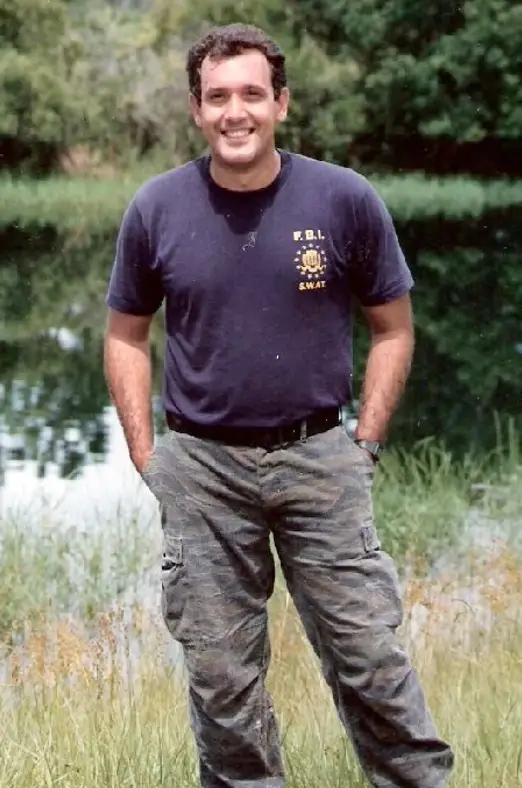
How the former FBI agent uses body language analysis to unravel the truth
Navarro explains there was one case which saw him talk to a man he believed to be a witness.
The man, named Rod Ramsey, was having a cigarette and the pair were 'getting along just fine,' discussing what life was like in Germany when he was there in the 80s.
"And then out of the blue, I said, 'um, did you know a guy by the name of, um, Clyde Lee Conrad?' And all of a sudden his cigarette just started shaking, and, I mean, it shook like a polygraph needle. And he said, 'uh, I, uh, I barely knew the guy'. I said, 'okay,' well, I didn't know any difference. So we went on," Navarro recalls.
Conrad was a US Army non-commissioned officer who, from 1974 until his arrest in 1988, sold top secret classified information to Hungary, including NATO war plans.
While Navarro 'didn't miss the shaking cigarette,' he held back from 'jumping on' it, not wanting to become 'intrusive,' sticking to 'observing' Ramsey.
But 'about 20 minutes later,' he notices Ramsey has been lighting up cigarette after cigarette, growing 'nervous'.
"I was an FBI agent. He didn't know who I was, but I mentioned the name Clyde Conrad again, and his cigarette shook again. And it was at that point that I realized that he had some sort of connection to Clyde Conrad," Navarro said.
And it only got juicier from there.

"What he didn't know was that Clyde Conrad had just been arrested in Germany. They had a nefarious relationship. In fact, they were both spying together."
While there isn't 'one single behavior indicative of deception,' Navarro says it was Ramsey's 'nervous reaction' which 'showed' the truth of the situation.
Oh, and for those of you who wanted some flittering eye movements to help prove someone's guilt, don't worry, one of Navarro's earliest cases saw a man's eyelids and chin move down as soon as he used the word 'ice pick' when listing various murder weapons.
Navarro resolves: "Now you say, well, what were you looking for? I was looking for the reaction to the words because certain knowledge, guilty knowledge, causes significant psychological distress. And in this case, it did that with him.
"So to the question, can we tell if people are lying? No. And please don't let anybody tell you that they can detect deception through body language. They can't. They can detect somebody that's under stress, anxiety, discomfort, but not deception."
Topics: Psychology, Crime
 Poppy Bilderbeck