
Criminal psychologist who believes 'anyone can be a narcissist' asks obvious question to prove it

A criminal psychologist has revealed the one question you can ask someone to figure out whether or not they're likely a narcissist.
Ever doom scrolled so hard on social media that phrases such as 'gaslighter', 'narcissist', 'psychopath' and 'avoidant' rise to the surface and you start questioning your whole life, choices and self? No, just me?
Well, if you had been panicking whether or not you may embody a narcissist or suspect someone close to you of being one, fret not, because it's apparently quite simple to pick apart who is one and who isn't.
Narcissism - which is a legitimate disorder - is a mental health condition in which people have 'an unreasonably high sense of their own importance', seeking admiration and attention while lacking understanding or harboring any caring feelings towards others, according to the Mayo Clinic.
Advert
Narcissists can subsequently end up running into issues with many people in their lives, from school to work, their partners and even sometimes, with the law. And if someone you know just sprung to mind, then Dr Julia Shaw helps break it down even further.
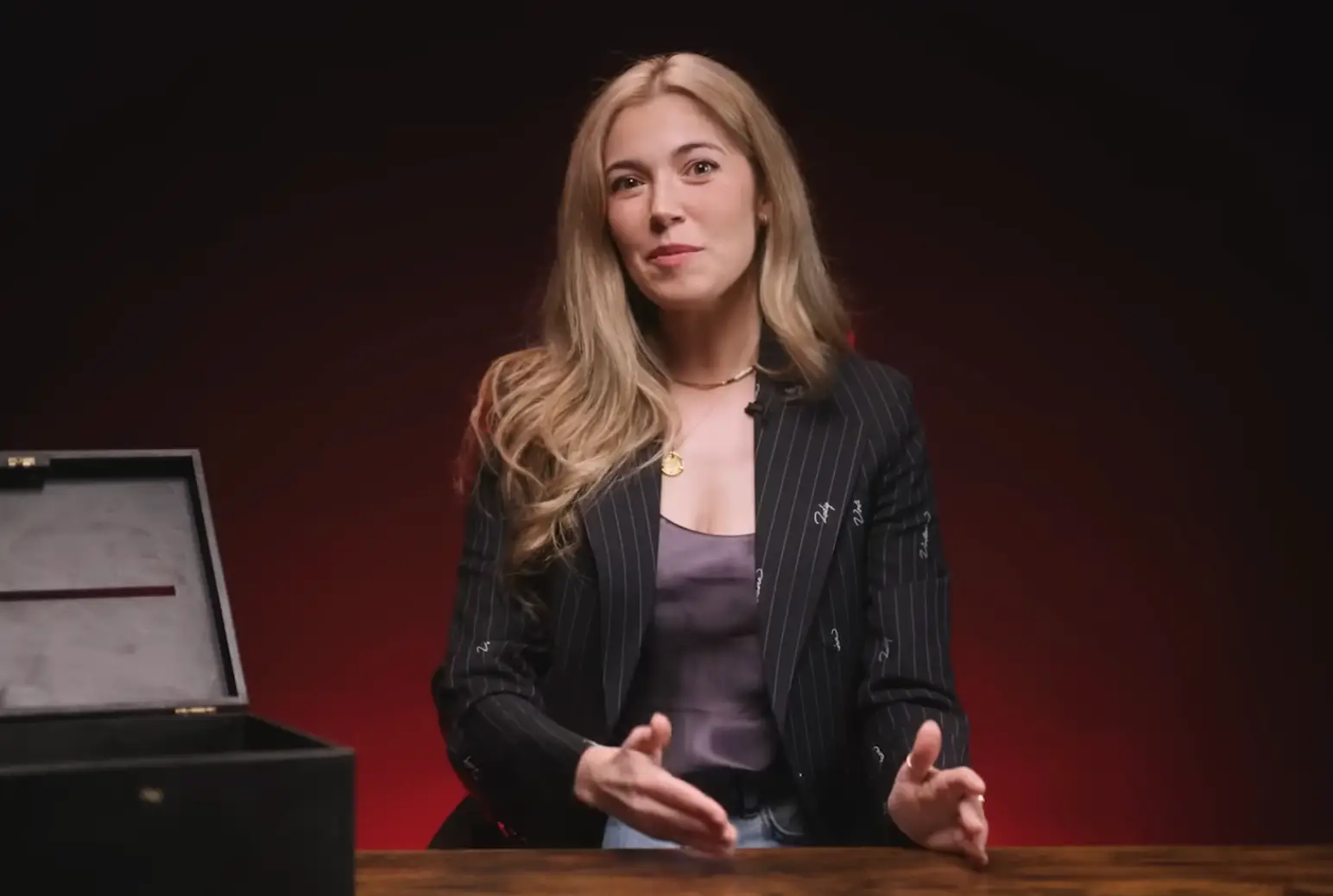
The German-Canadian criminal psychologist works with murderers and psychopaths on a regular basis, and now the pro has given us some worthwhile insight on how we might be able to identify a real narcissist out in the wild. The simple answer is: ask them.
Speaking to LADbible Stories during an episode of Honesty Box, Dr Shaw said: "People love this term right now, don't they? Narcissist," before revealing how anyone can be a narcissist, from your parents to an ex partner to even your therapist.
"Narcissism is a personality disorder," she explained, which she says can be spotted by asking 'specific kinds of questions'.
However, psychology studies over time have whittled down the key questions from 20 to 15 before settling on just the one, ultimate question, which she says is called the 'single item narcissism scale'.
"Which is literally just the question, 'Are you a narcissist?'" she said.
Although that seems like a blatant question a narcissist might dodge, Dr Shaw said the question is actually surprisingly 'useful'.

"How do you spot a narcissist? Ask them," she explained. "A narcissist would probably answer to this question, 'Yeah but like, I am better than most people. It's a realistic appraisal of myself,' because that's what narcissism is.
"It's that overconfidence, it's that thinking you're great and thinking you're better than you actually are."
However, Dr Shaw said the term has slipped into everyday contexts and urged us all to be 'incredibly careful with that' as it 'devalues the terms like narcissist in contexts that matter, like in a criminal context'.
She added: "It's not useful because you're just angry at somebody in real life, in normal sort of everyday life. So I think we need to be incredibly careful not to use this therapeutic language in this really casual, overly confident, inaccurate way because it takes away from context where it really matters."
Her insight comes as the true crime specialist, who also hosts TV series Murder in Mind on the True Crime Channel, said neither men nor women are inherently 'evil'.
"I don't like the term 'evil', but certainly in terms of crime, I mean almost all crime is perpetrated by men and also the victims are most likely to be men," Dr Shaw explained.
"So I think there it's pretty clear that there's a gender issue going on in terms of crime and rule breaking and anger and especially violent crimes, but all kinds of crimes really."
Topics: Mental Health, Psychology, World News, True crime
 Liv Bridge