Trump uses four key tactics he learned from his love of WWE to make himself a stronger president

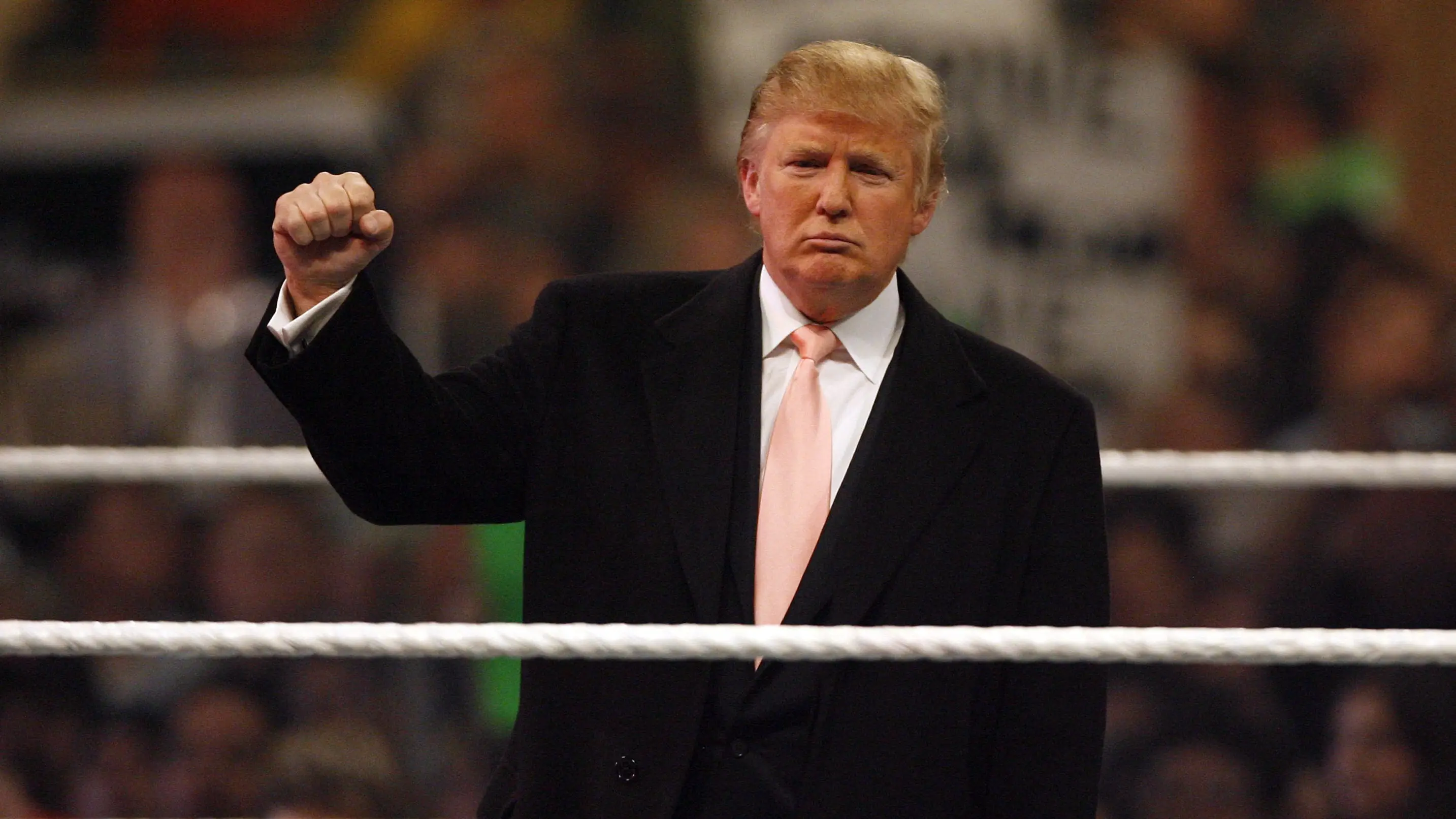
US President Donald Trump is the subject of Wrestling with Trump, a new Channel 4 documentary examining his relationship with the world of professional wrestling, and the experts who know the sport best say the parallels are no accident.
Hosted by comedian and presenter Munya Chawawa, best known for his viral political impressions and satirical commentary, the series sees Chawawa travel to the United States to meet WWE legends, Trump insiders and independent wrestlers, uncovering what's believed to be a deliberate political playbook lifted straight from the ring.
Chawawa, who built his name skewering the powerful on social media, brings a sharp comedic lens to the investigation.
He said in the documentary: "The misogyny, the xenophobic trash talk, that's fine in the ring.
Advert
"It was never meant to leave the living room. But when a person takes those behaviors into the real world, people begin to get hurt."
What exactly did Trump take from the world of spandex and steel chairs into his political campaigning? Here are four key tactics the experts identified in the documentary.
The rally theatrics and win-at-all-costs mentality
Trump's relationship with WWE goes back to the 1980s, when his rise coincided almost exactly with Vince McMahon's takeover of what was then the WWF (The World Wrestling Federation), later rebranded.
WWF legend Brutus Beefcake remembers him as a fan who flew wrestlers' families out and put them up in his Atlantic City hotel, simply 'because he loved wrestling so much'. He later recalled how Trump hung out with them into the early hours of morning, even buying the wrestlers steak dinners.
McMahon's wife, Linda, serves as Trump's Secretary of Education, a sign of just how deep these ties run. In addition, wrestling legends such as Hulk Hogan, Kane and Undertaker have all featured in Trump’s campaigning — with Hogan even ripping open his shirt at the Republican National Convention in 2024, shouting "Let Trump-a-mania rule again!"
Speaking in the doc, Brutus said: "Trump is a winner, he’s always going after what he wants, and making things happen. A lot of wrestlers are like that too."
Christopher DeJoseph, a former pro wrestler and script writer, also laid bare the connections between Donald Trump and the WWE in the documentary.
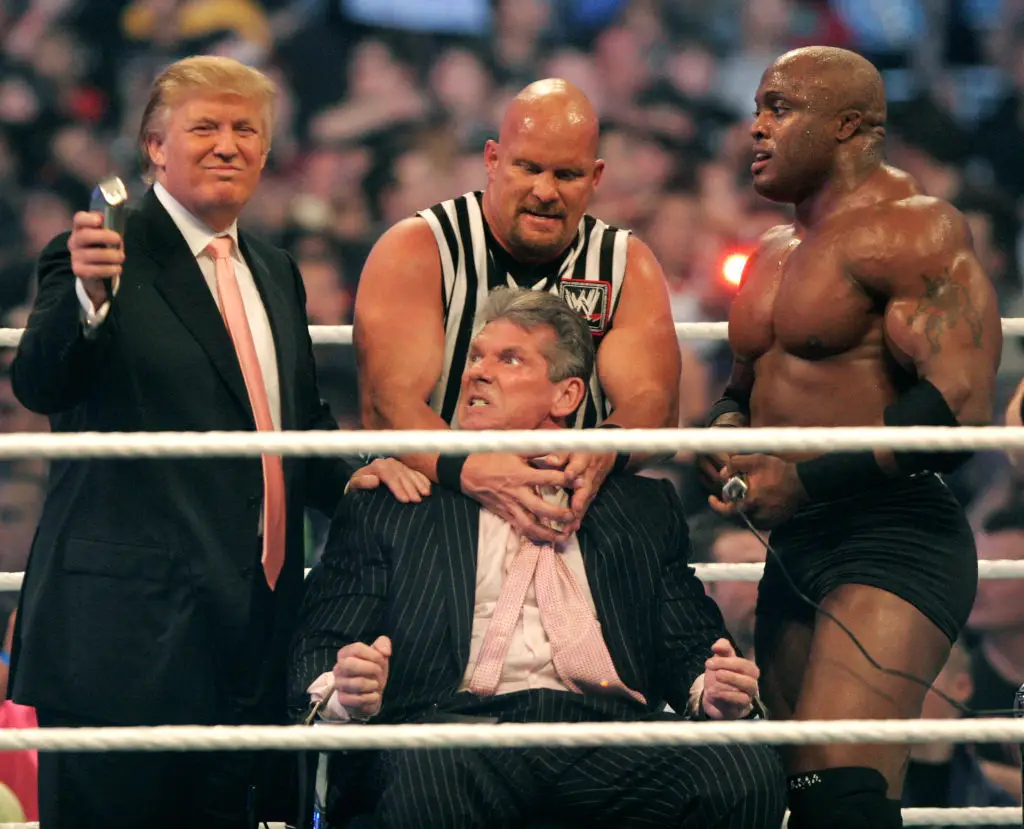
He wrote the famous Vince McMahon vs Trump Wrestlemania 23, ‘Battle of the Billionaires', a spectacle in which the two billionaires each backed a wrestler. Trump chose ECW World Champion Bobby Lashley, while McMahon chose Umaga, with Stone Cold Steve Austin as guest referee. Bobby Lashley won, and Trump got to shave McMahon's head.
He said: “The match clearly had a huge impact on Trump. Look at the way he sets up his rallies, it’s the same thing. He’ll get the crowd to boo the villain, then give them what they want, throw them a bit of red meat and getting them to cheer."
Brian Idol, another pro wrestler, said the inspiration Trump has taken from the WWE is blatant. "I think the storytelling aspects of wrestling 1000% influenced Trump. Everything he does is from the psychology from a pro wrestler.”
Idol showed Chawawa a video of a Trump rally entrance next to one from the Undertaker walking to the ring. The similarities were undeniable: the same silhouette, the same smoke, even the same song. "I think he picked up all of the things he does in politics from professional wrestling," Idol added.
It's worth mentioning Trump doesn't use this entrance every time — but the same tension and huge build up as the WWE wrestlers' entrance always accompanies Trump to the stage.
How trump uses kayfabe to sell fiction as reality
Kayfabe is wrestling's term for portraying staged storylines as entirely real. The audience knows it's performance. And yet they choose to believe.
Independent wrestler "Handsome" Beau James believes Trump operates in exactly this register, saying in the documentary: "He's the definition of wrestling, pulling the wool over people's eyes, creating heroes and villains, taking it to a national, global stage."
Trump's adviser for the 2016 presidential campaign, Sam Nunberg, confirmed the strategy was deliberate, saying: "We used the WWE as a model for the campaign. We branded him as a heel, an iconoclast, working for the people."
Trump's huge claims and statements like 'Mexico will pay for the wall', 'windmills cause cancer', even that the 2020 election was 'stolen' - people know they aren't true but seem to go along with them regardless.
The documentary also features a Trump supporter at a so-called 'Magathering' who claims to have personally investigated 30,000 lies Trump is estimated to have told during his first term, and concluded they were all false allegations.
Trash-talking nicknames
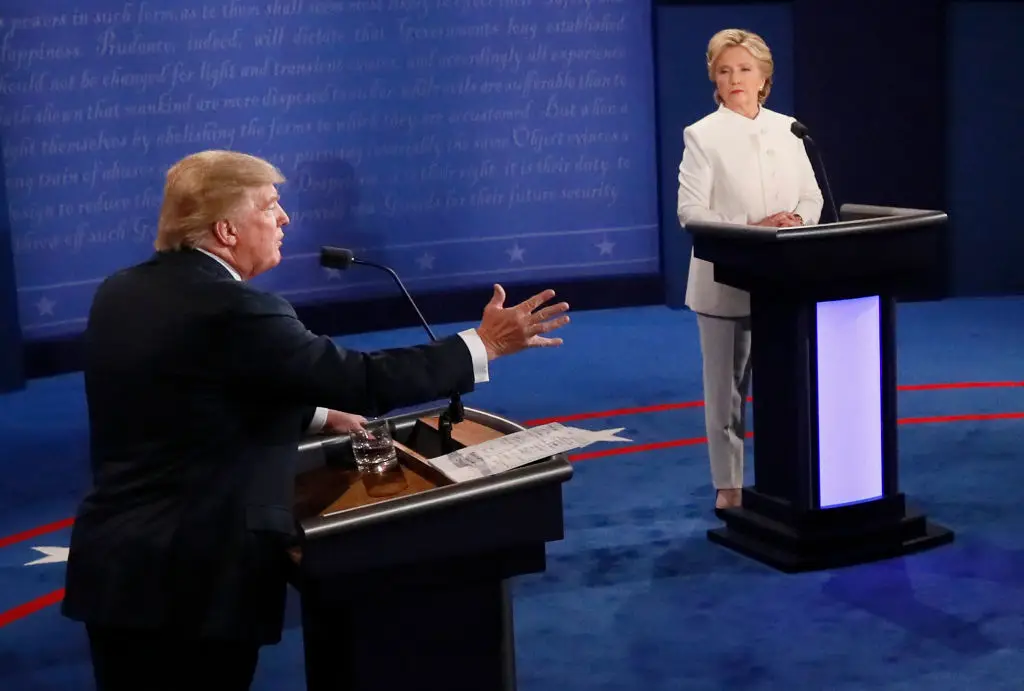
"Crooked Hillary." "Sleepy Joe." "Lyin' Ted." Pro wrestler Idol said this was one of Trump's most direct pulls from the wrestling playbook.
He explained in the documentary: "It's classic pro wrestling trash talk. He can nullify people by giving them ridiculous names." The tactic reduces an opponent to a single mockable trait before they've had a chance to speak. In wrestling it primes the crowd. In politics it dominates the news cycle.
Creating the 'foreign' villain
Wrestling has always needed an outsider villain. After 9/11, Marc Copani was cast as Muhammad Hassan, designed to capitalize on anti-Muslim sentiment. An Italian-American, Copani has spoken about being eaten up with guilt for his part in stoking prejudice. Trump has deployed the same playbook. The claim that Haitian immigrants were eating pets in a small Ohio city is the political equivalent of a 'heel' cutting a promo, outrageous, memorable, designed to unite his base against a common enemy, according to the doc.
Copani reflected on the real-world damage such tactics in Wrestling with Trump, saying: "Targeting Mexicans, Guatemalans, people who've been in this country for decades. It's had a devastating effect on the US."
Wrestling With Trump airs on Channel 4 on Tuesday 12 May at 10pm.
Topics: Documentaries, Film and TV, Wrestling, Donald Trump
 Thomas Bamford