
unilad homepage
  • News
    • UK News
    • US News
    • World News
    • Crime
    • Health
    • Money
    • Sport
    • Travel
  • Film and TV
    • Netflix
  • Music
  • Tech
  • Features
  • Celebrity
  • Politics
  • Advertise
  • Terms
  • Privacy & Cookies
  • LADbible Group
  • LADbible
  • SPORTbible
  • GAMINGbible
  • Tyla
  • UNILAD Tech
  • FOODbible
  • License Our Content
  • About Us & Contact
  • Jobs
  • Latest
  • Archive
  • Topics A-Z
  • Authors
Facebook
Instagram
X
Threads
TikTok
YouTube
Submit Your Content
Psychologists issue stark warning on why you should never be 'best friends' with your parents

Home> Community> Life

Updated 16:08 11 Sep 2025 GMT+1Published 16:07 11 Sep 2025 GMT+1

Psychologists issue stark warning on why you should never be 'best friends' with your parents

Experts have expressed concerns about something known as 'parentification'

Niamh Shackleton

Niamh Shackleton

google discoverFollow us on Google Discover
Featured Image Credit: Getty Stock Image

Topics: Parenting, Mental Health, News, Psychology

Niamh Shackleton
Niamh Shackleton

Niamh Shackleton is an experienced journalist for UNILAD, specialising in topics including mental health and showbiz, as well as anything Henry Cavill and cat related. She has previously worked for OK! Magazine, Caters and Kennedy.

X

@niamhshackleton

Advert

Advert

Advert

Being close with your parents can be a good thing, but there comes a point when it can negatively affect a child.

It's not uncommon to see close bonds played out on screen, typically mother-daughter relationships. From Gilmore Girls and Ginny & Georgia, to Mamma Mia! and Never Have I Ever, it's a popular topic often depicted in the media.

But is there a point where you can rely too heavily on your kids? Definitely.

This is something known as 'parentification'.

Advert

Psychology Today defines this as 'when a child is forced to take on the role of a supportive adult within their family'.

Examples of this include asking a child to look after their younger siblings or to referee arguments between parents.

"The phenomenon occurs on a spectrum, and it can lead to significant short-term and long-term challenges," Psychology Today adds.
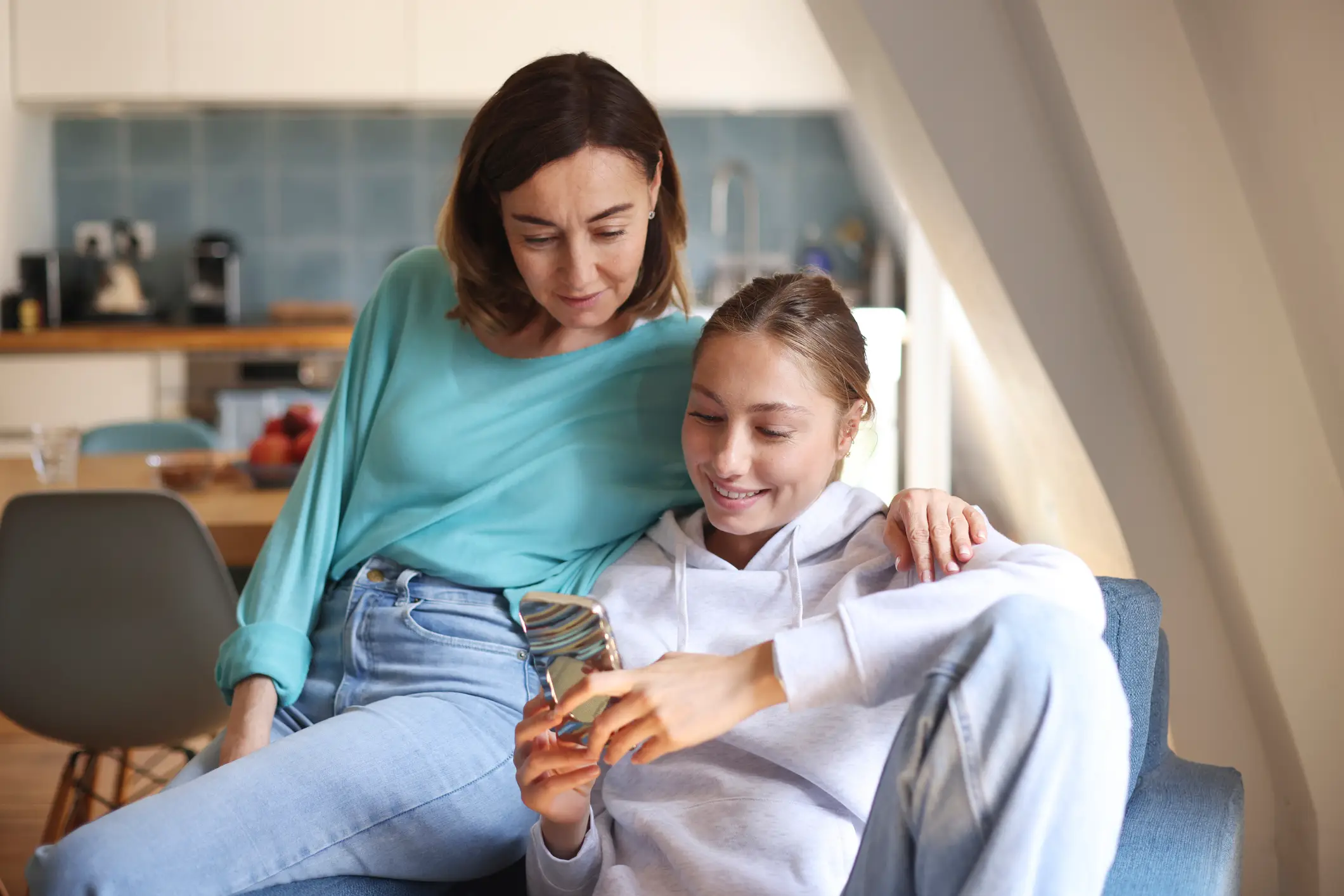
Children can end up being subjected to parentification (Getty Stock)

What have experts said?

Clinical psychologist Dr Robyn Koslowitz explained to SELF: "It’s not just sharing clothes, matching outfits, or going out for mani-pedis together. It’s when the kid starts serving the needs of the adult."

In extreme cases a child might end up running the household because their parent is physically or emotionally unavailable.

READ MORE:

DAD-OF-12 NICK CANNON SAYS HE DOESN'T BELIEVE IN TERM 'CO-PARENTING'

THREE COMMON NAMES YOU SHOULDN'T GIVE YOUR BABY FOR SURPRISING REASON

Psychologist Kate Eshleman also warned of how difficult it can be for a child to go through this.

"Overall, parentification can be difficult for the child. It doesn’t always allow kids to go through developmental phases if they’re having to provide either logistical, tangible or emotional support to a parent or to others," she told Cleveland Clinic.

Eshleman went on: "If a child is having to take care of things within the home, then they’re not spending time with friends. They may not be focused on their studies. They may not be doing the things that are typical and expected for their age."
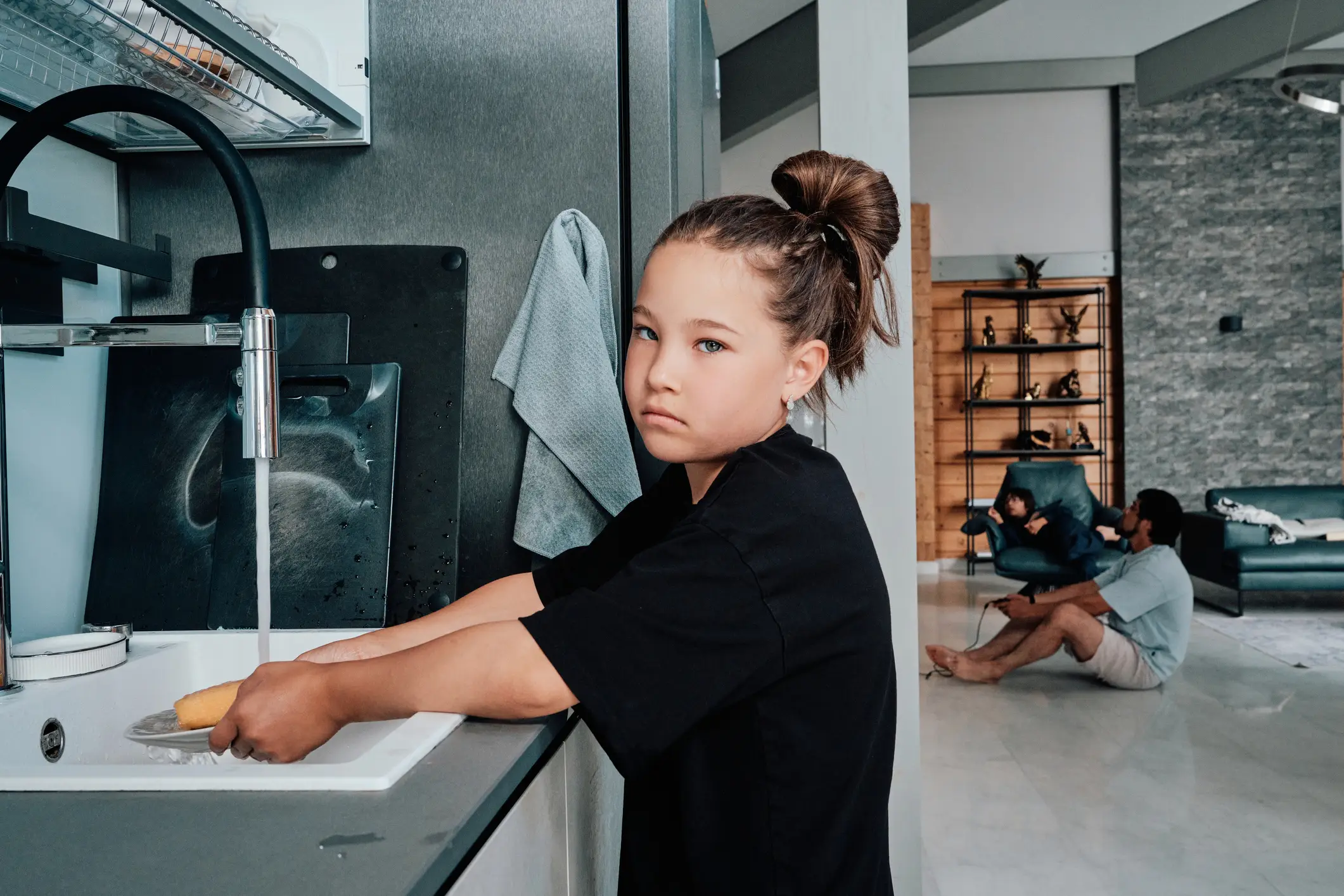
Kids can end up doing chores that their parents are supposed to be doing (Getty Stock)

The two types of parentification

Per Pyschology Today, emotional parentification is when a parent leans on their kid for support and they end up being the parents’ counselor, confidant, or emotional caretaker.

Instrumental parentification is when a child takes on roles like doing housework, caring for younger siblings, and other adult responsibilities.

Children who are experiencing either of these may get physical symptoms such as headaches, stomach aches, trouble sleeping and lack of appetite because it's affecting their emotional health, says Eshleman.

Choose your content:

5 days ago
7 days ago
16 days ago
18 days ago
  • Facebook
    5 days ago

    Healthy woman explained why she chose to end her life by euthanasia

    Wendy Duffy died by suicide on Friday

    Community
  • EMMANUEL DUNAND/AFP via Getty Images
    7 days ago

    Bizarre 'Scientology run' challenge explained as 'raid' trend sees teens storm church's buildings

    Users are divided on the trial, with some asking how they can 'sign up' to take part

    Community
  • ITV
    16 days ago

    Woman marrying convicted murderer on death row opens up about their relationship

    Tiana Krasniqi is set to wed James Broadnax, who was convicted of a double murder in 2009

    Community
  • Getty Stock
    18 days ago

    Hiring managers are sharing the worst interview experiences that make them reject people instantly

    Hiring the right person for the job can be extremely difficult, especially in a world of artificial intelligence and Zoom interviews

    Community
  • Doctor explains how to travel with GLP-1s and why you should never pack it in your suitcase
  • Expert reveals what actually happens to your brain when you try to multitask and it might disturb you
  • Professional chef explains why you should never stuff your turkey on Thanksgiving
  • Experts reveal why you should never hit snooze on your alarm and the devastating effects it can have on your body