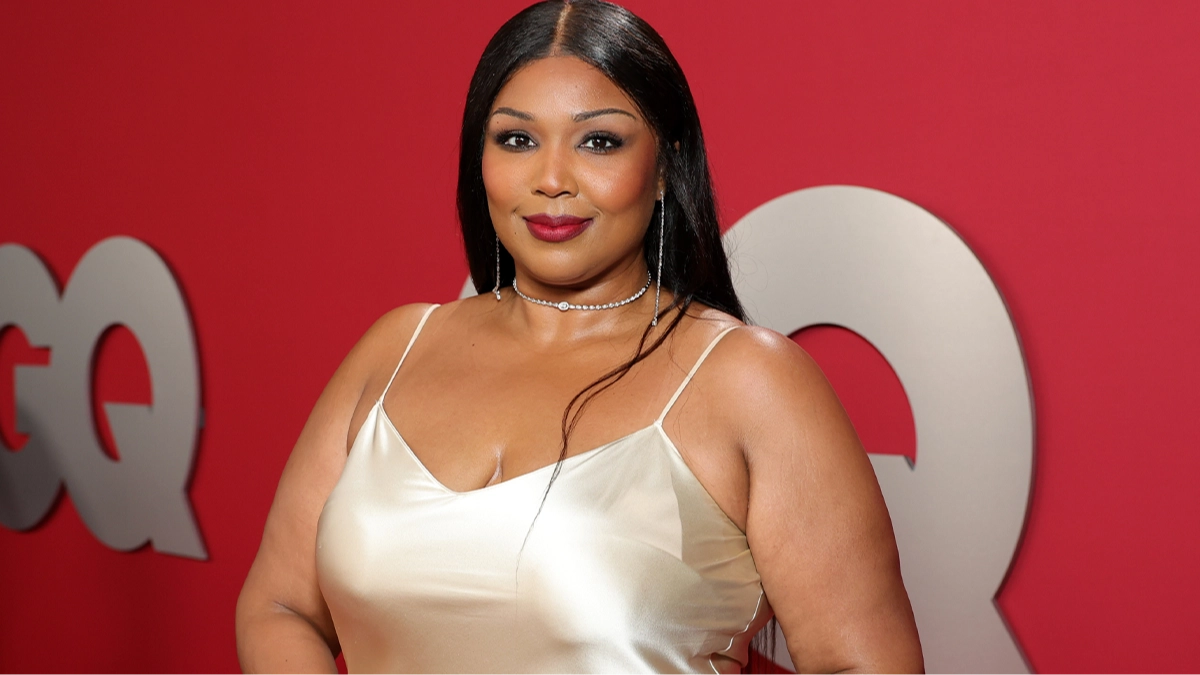
Lizzo claims plus-size women are being 'erased' following society's current 'Ozempic boom'

Lizzo has spoken of her concern about the cultural impact that Ozempic is having on plus-size women as use of the drug 'booms'.
The 37-year-old singer also opened up about her own weight loss journey, revealing that she had been struggling with mental health problems at the start and that she is still a 'proud big girl'.
Ozempic is not actually licensed as a weight loss drug - it's prescribed to help treat type 2 diabetes as it can assist the body with maintaining blood sugar levels.
However, a side effect of the medication is that it can function as an appetite suppressant, so when combined with diet and exercise, it can assist someone with losing weight and private prescriptions seem to have boomed in recent years.
Advert
Last year, it was reported that about one in eight US adults has taken a GLP-1 drug like Ozempic.
Lizzo shared her worry that the increasing use of Ozempic could be having a knock-on effect on the body positivity movement.
Her essay was published on her Substack on November 23, and was called 'Why is everybody losing weight and what do we do? Sincerely, a person who’s lost weight'.
“So here we are halfway through the decade, where extended sizes are being magically erased from websites," she wrote. "Plus-sized models are no longer getting booked for modeling gigs."
Lizzo also added that even when someone was considered 'plus size' in a modeling sense, in reality they are not, writing: "And all of our big girls are not-so-big anymore."
Think back to how Bridget Jones is considered to be 'comically overweight' in the movie Bridget Jones' Diary, despite not being remotely overweight by any reasonable standard.
"We have a lot of work to do, to undo the effects of the Ozempic boom," wrote Lizzo.
She went on to talk about her own weight loss journey, having previously addressed rumors of using Ozempic.
"People could not see my talent as a musician because they were too busy accusing me of making ‘being fat’ my whole personality," wrote the singer. "I had to actively work against ‘mammy’ tropes by being hypersexual and vulgar because being a mammy by definition is being desexualized."
She added: "And that’s the reality that nobody wants to talk about. We’re in an era where the bigger girls are getting smaller because they’re tired of being judged."
Lizzo also expressed her concern about the body positive movement, accusing it of becoming overly commercialized.
"I want us to allow the body positive movement to expand and grow far away from the commercial slop it's become," she said. "Because movements move."
A spokesperson for Novo Nordisk, the manufacturer of Ozempic, told UNILAD: "Obesity is a chronic and complex disease, influenced by a number of different factors and requiring long-term management. We continue to actively confront the stigma and bias associated with it and advocate for access to support and care."
If you or someone you know is struggling or in crisis, help is available through Mental Health America. Call or text 988 to reach a 24-hour crisis center or you can webchat at 988lifeline.org. You can also reach the Crisis Text Line by texting MHA to 741741.
 Kit Roberts