
7 signs you might have cataracts as Anne Hathaway reveals she's battled with condition for a decade

Anne Hathaway has opened up about suffering with cataracts, revealing she had to undergo surgery after being diagnosed with the condition.
Speaking in an interview for The New York Times podcast, Popcast, Hathaway revealed she was blind in one eye for a decade.
"This is maybe too much information. I was half blind for 10 years," she said.
"It impacted my vision so much that I was basically legally blind out of my left eye and I wound up getting surgery. And I didn't realise how bad it had gotten until I could finally see the full spectrum.
Advert
"I appreciate vision because I literally feel like every day, I wake up and I get to see the way that I do, it's a miracle. I actually am like, 'Oh, two generations back, that wouldn't have been an option for someone like me."
Cataracts occurs when the lens of the eye becomes clouded. It can look like seeing through frosted glass and can make it hard to read or drive, Mayo Clinic explain.
It usually develops slowly over time and eventually will affect vision significantly if left untreated.
"At first, stronger lighting and eyeglasses can help deal with cataracts. But if impaired vision affects usual activities, cataract surgery might be needed. Cataract surgery is generally a safe, effective procedure," the site explains.
SAGA say there are seven key signs to look out for when it comes to cataracts. Let's get into it...

Blurry vision
The most common symptom is blurry, clouded vision which may appear like you're looking through a foggy window.
SAGA explain this is a 'result of protein clumping and preventing light from passing through the lens.'
Halos around street lamps and glare from car headlights
Noticing halos or glare from car headlights or street lamps can also be a symptom, with consultant eye surgeon and researcher Alex Day, who works at Moorfields Eye Hospital in London, telling SAGA: “During autumn, when we rely more on artificial lighting, people often notice halos or glare around street lamps, car headlights or taillights.
“When you have a cataract, light scatters as it enters the eye, creating those classic rings or starbursts around lights.”
Difficulty seeing in dim light
Cataracts can often feel worse in darker or dim lighting. This is because in poorer lighting conditions, the pupils naturally dilate to allow in more light.
Johnson Laser Eye explain: "For individuals with cataracts, this can actually make vision worse. The larger pupil allows more of the scattered, cloudy light to enter the eye, amplifying blurriness and glare. Low-contrast environments, such as dusk, winter, overcast weather, or softly lit rooms, make it even harder for your eyes to distinguish edges or details."
Muted colours
Vision can often look washed out with cataracts, with a reduction in the intensity and vibrancy of colours. This mostly occurs with reds, purples and blues, but can also make whites appear more yellow.
In fact, many people remark on how different colours look following corrective surgery.
Double vision
Double vision can also be a common symptom, due to the light entering the eye becoming scattered by the cataract. It can often appear as a faint image, known as ghosting.
Pupil changes
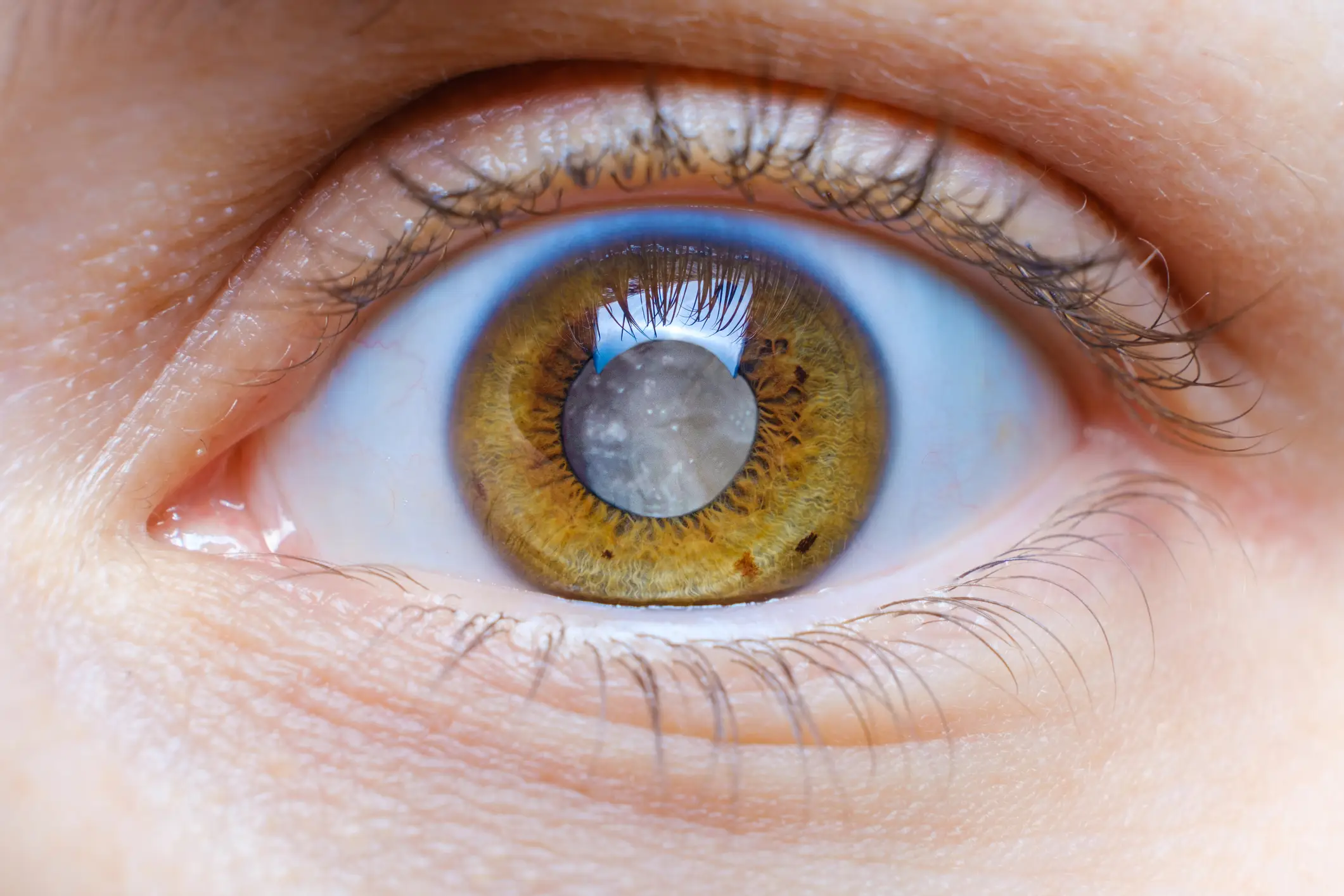
In some advanced cases of cataract, the pupil can often look white or dull in colour.
Prescription changes
SAGA explain that having multiple prescription changes can be common in those with cataracts. This is because cataracts can cause vision issues that glasses or lenses cannot fix. The prescription will therefore continue to shift, resulting in patients needing more changes.
Topics: Health, Anne Hathaway, Celebrity
 Lucy Devine