Scientists reveal what aliens could really look like after discovering '99.7%' chance of life on distant planet

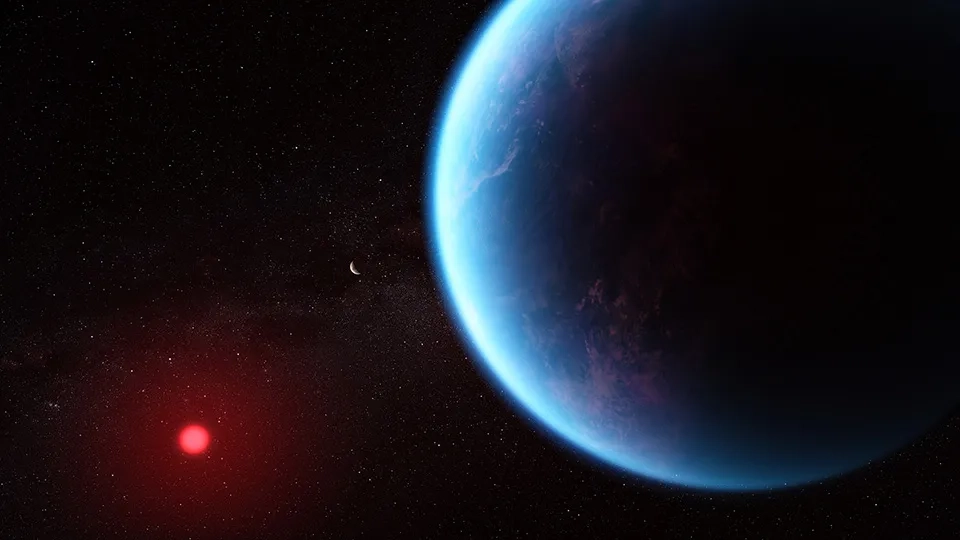
Scientists have weighed in on what life on K2-18b could look like.
It was recently announced that scientists believe they've found what they have described as the 'strongest hints yet of biological activity outside the solar system'.
Astromers at the University of Cambridge, UK, used data from NASA's James Webb Telescope and found 'chemical fingerprints of dimethyl sulfide (DMS) and/or dimethyl disulfide (DMDS)'.
For all your non-science boffins out there — like me — DMS and DMDS are only produced by life, so the discovery of such chemical compounds has caused some excitement.
Advert
K2-18b is located a whopping 120 light years from Earth and is three times as large as our planet.
While the discovery is undeniably huge discovered, scientists are approaching it with caution as they conduct further research.
"We didn’t know for sure whether the signal we saw last time was due to DMS, but just the hint of it was exciting enough for us to have another look with JWST using a different instrument," said Professor Nikku Madhusudhan from Cambridge’s Institute of Astronomy, who led the research.
But they remain optimistic.
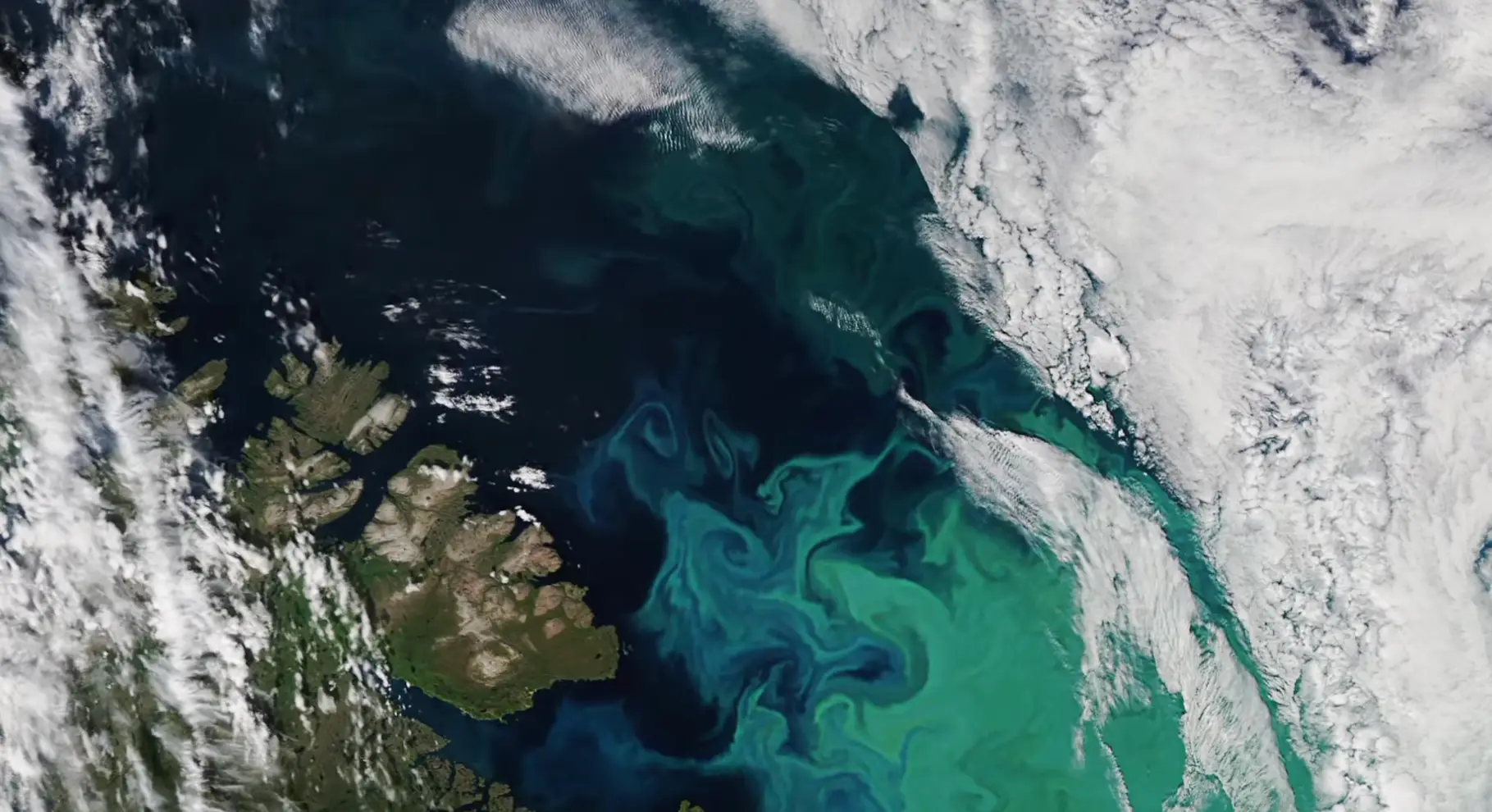
"Earlier theoretical work had predicted that high levels of sulfur-based gases like DMS and DMDS are possible on Hycean worlds," Madhusudhan continud. "And now we’ve observed it, in line with what was predicted. Given everything we know about this planet, a Hycean world with an ocean that is teeming with life is the scenario that best fits the data we have."
In wake of the news, other scientists have weighed in on what life on K2-18b may look like.
Speaking to Mail Online, Dr Arik Kershenbaum, a zoologist from the University of Cambridge and author of The Zoologists Guide to the Galaxy, said life on the far away planet would be every different to that on Earth today.
"Even if there is an ocean on this planet it's going to look more like what Earth looked like three or four billion years ago when life first evolved," he said.
"So, one thing we can say pretty confidently is that the vast majority of planets that have any sort of life on them are going to have simple life on them."
Kershenbaum continued: "By simple I just mean simple interactions and a very simple ecosystem. So, you might have organisms that capture light from the star like plants do on our planet and then, as they die and sink down in the water there might be some organisms that eat the dead creatures.
"That's probably what life was like on Earth around two billion years ago."
Astronomer Michael Garrett, a professor at Manchester University, also weighed in and suggested that if the star the life on K2-18b gets light from is a red dwarf then the life on the planet might have eyes that are 'much more sensitive and larger than ours'.
 Niamh Shackleton