Scientists issue warning over controversial plan to launch 50,000 mirrors into space

Scientists have expressed concerns about a proposed new project that would see thousands of mirrors sent up into space.
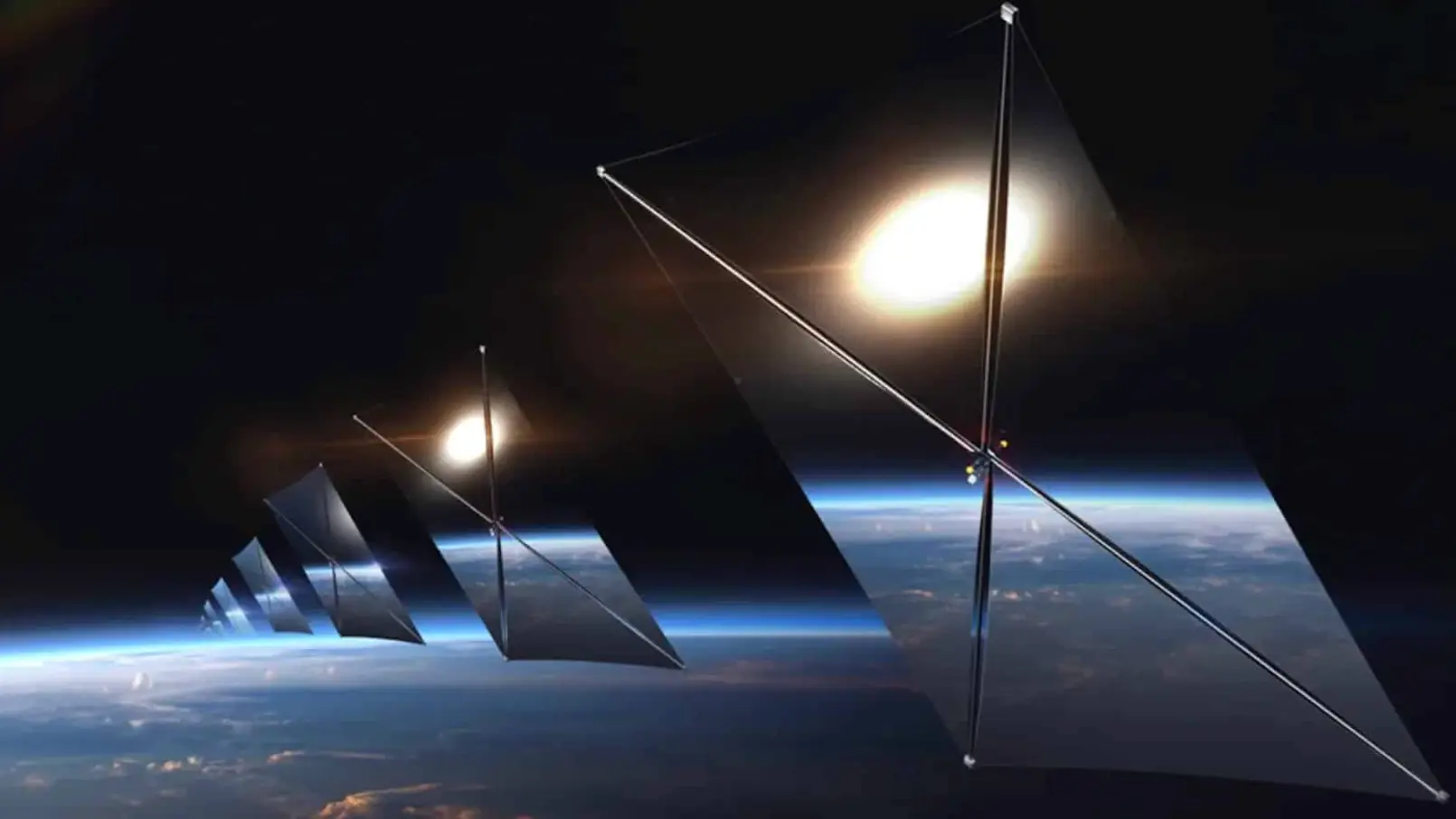
There has been suggestions to launch 50,000 mirrors into space using satellites and it's left some experts worried.
The mirrors aren't being sent up into space for the likes of the Artemis II crew to see their reflections, but so that Earth could experience sunlight 'on demand'.
The idea has come from Reflect Orbital, which is a California-based space technology company that wants to send mirrors into orbit so that light is reflected back onto Earth at times it wouldn't usually.
Advert
Why would we want this, I hear you ask? Well, Reflect Orbital says that it would allow some solar plants to run 24-hours a day, provide lighting for disaster–struck regions and even replace street lights.
More light would also extend working hours and supposedly help create 'unforgettable nighttime experiences for events and public spaces', its website states.
While there are apparent benefits to have more sunlight reflected on our planet, there are downsides too that experts are now raising ahead of the plans being green lit and have penned letters to the US Federal Communications Commission (FCC).
One key problem it could cause is changes to people's sleep patterns. The presidents of the European Biological Rhythms Society (EBRS), the Society for Research on Biological Rhythms, the Japanese Society for Chronobiology, and the Canadian Society for Chronobiology have said (via The Guardian): "The proposed scale of orbital deployment would represent a significant alteration of the natural night-time light environment at a planetary scale."
Changes in the amount of sunlight we get could impact both humans' and animals' biological clocks that regulate things like sleep and hormones. For animals specifically, it might impact migration in nocturnal species like hedgehogs, owls, racoons, and fireflies (to name a few).
Prof Charalambos Kyriacou, a geneticist at the University of Leicester and president of the EBRS, is urging the FFC to 'think before you go through with this'.
Discussing how plants in particular could be affected, Kyriacou shared: "We’re saying, please think before you go through with this, because this could have global implications for things like food security. Plants need the night. You can’t just get rid of it."
The Royal Astronomical Society (RAS) has also expressed its concerns about both Reflect Orbital's plans, as well as about SpaceX's hopes of sending 1,000,000 satellites into space to power artificial intelligence.
Dr Robert Massey, Deputy Executive Director at the RAS, said: "These proposals would not only have a disastrous impact on the science of astronomy, they would also hinder the right of everybody on Earth to enjoy the night sky. That is unacceptable.
"The stars above us are a valued part of human heritage – deploying more than one million exceptionally bright satellites would utterly destroy this and permanently scar the natural landscape.
"We hope the FCC wholeheartedly rejects the plans."
UNILAD have approached the FFC for comment.
Topics: Space, News, World News, Technology, Earth
 Niamh Shackleton