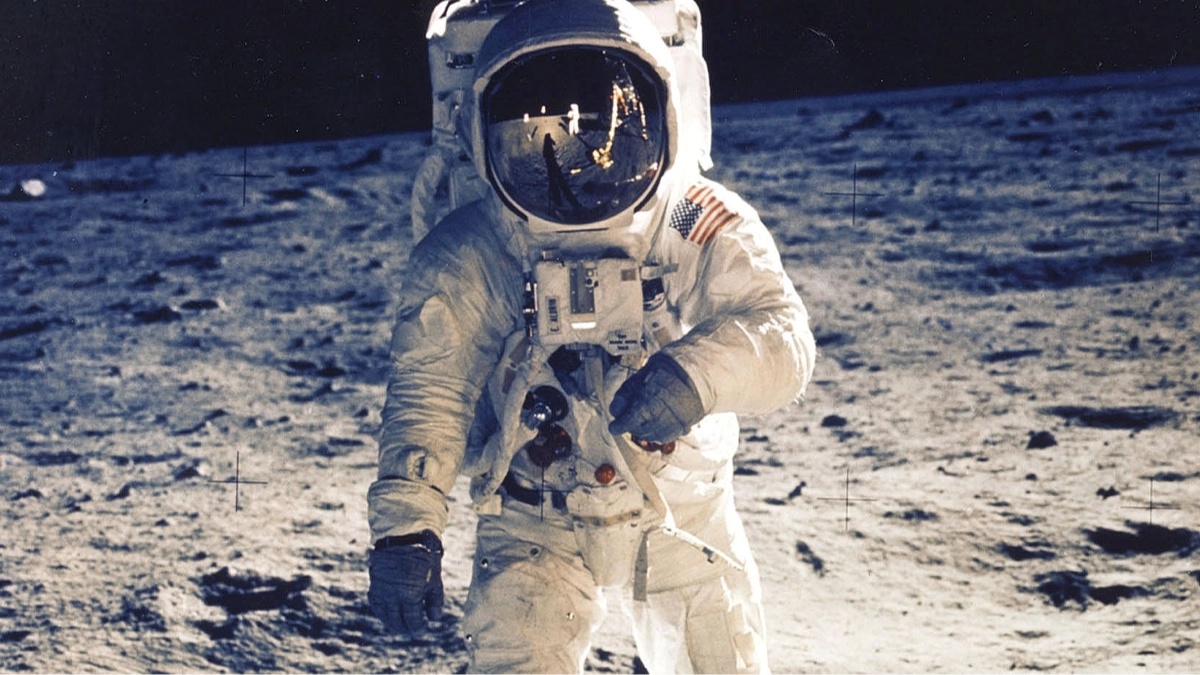
Bizarre music heard by astronauts on far side of the moon that left them terrified after NASA warning

Astronauts from two different space missions have claimed they heard bizarre music while heading to the moon.
Space is pretty fascinating, but for all of its wonders it can also be quite terrifying and astronauts know this first hand.
While you might think it would all be a great adventure, the truth of discovery can turn out to be quite alarming.
A handful of astronauts claim to have heard some cosmic melodies while venturing towards the moon which is quite a claim considering it should technically not be possible.
Advert
This is due to there not being air in space to carry the sound waves, with space being a nearly perfect vacuum with very few atoms or molecules to carry the sound nor 'make' the music.
The problem is so pressing that astronauts can't hear each other through human ears alone when spacewalking, meaning they have to communicate with each other with the help of radio waves, though they can hear one another in their pressurised spacecraft.
So, how did two separate astronaut teams claim to have heard music out there?
NASA astronauts aboard the Apollo 10 and Apollo 11 spacecrafts both said they heard weird 'space music' while on a trip to the moon.
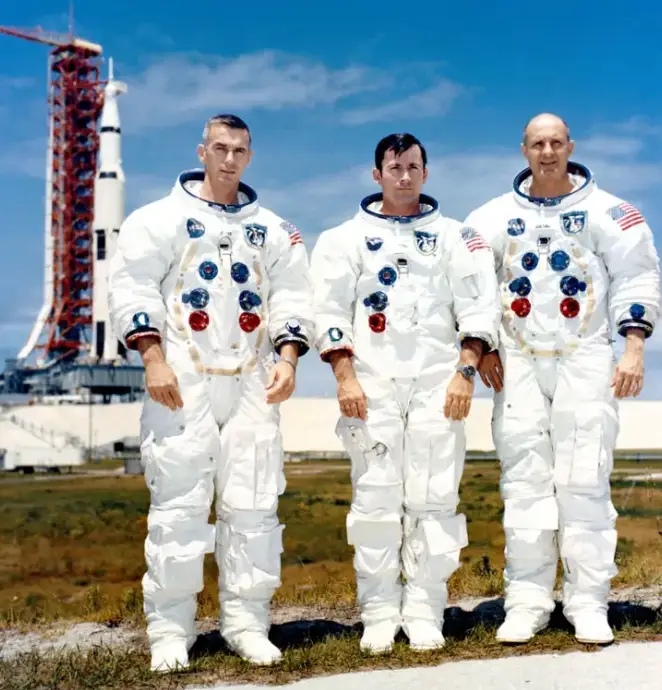
The first time, Apollo 10 astronauts Thomas Stafford, John Young and Eugene Cernan heard the strange sounds while on a dress rehearsal in May 1969, in prep for the first-ever human moon landing.
It would take NASA 50 years to release what they heard, but it didn't stop them from ominously warning Apollo 11 astronauts about it when they set off to the moon months later.
For Apollo 10, the unsettling noise began when the lunar module separated from the main module as they planned on orbiting the moon for more than 10 hours.
After the orbit, they would return to the landing module.
However, while on the far side of the moon and away from the base, the trio heard a 'whistling' sound, and the audio reveals it certainly wasn't a toe-tapper of number one hit by any means.
Describing the sound, footage from inside the shuttle shows Cernan say to the others: "Can you hear that? That whistling sound?"
Stafford replied: "Yes," to which Cernan mimicked the music: "Whooooo!"
Young then chimed: "Did you hear that whistling sound, too?"
Cernan said: "Yeah. Sounds like, you know, outer-space-type music.”
The footage then went buried in a NASA database somewhere for decades.
Then, when Apollo 11 was preparing for takeoff, NASA reportedly told the crew to brace themselves for the 'space music', too.
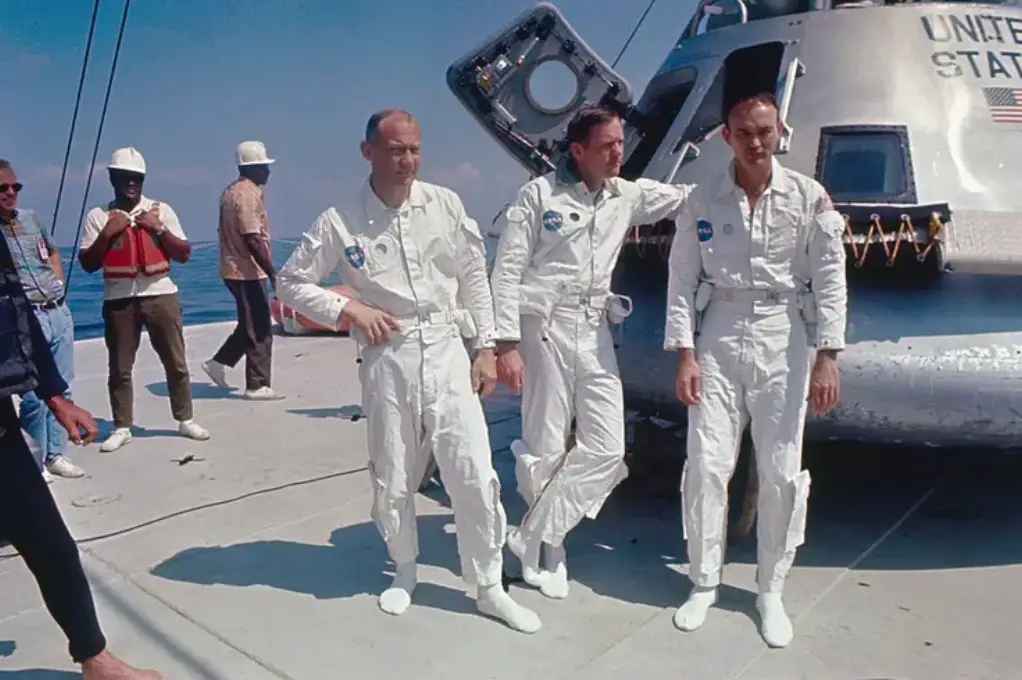
Buzz Aldrin, Michael Collins and Neil Armstrong also heard the same racket of their predecessors, this time hearing the sound when the lunar module separated from the main module and the 'music' ending when the module touched down on the moon.
Later, Collins wrote about the experience in his book, Carrying the Fire: An Astronaut’s Journeys, where he penned: “There is a strange noise in my headset now, an eerie woo-woo sound."
He added: "Had I not been warned about it, it would have scared the hell out of me.”
NASA since explained the noises came down to interference between the VHF radios of the lunar module and the command module.
 Gerrard Kaonga