unilad homepage
  • News
  • Film and TV
  • Music
  • Tech
  • Features
  • Celebrity
  • Politics
  • Weird
  • Community
  • Advertise
  • Terms
  • Privacy & Cookies
  • LADbible Group
  • LADbible
  • SPORTbible
  • GAMINGbible
  • Tyla
  • UNILAD Tech
  • FOODbible
  • License Our Content
  • About Us & Contact
  • Jobs
  • Latest
  • Archive
  • Topics A-Z
  • Authors
Facebook
Instagram
X
Threads
TikTok
YouTube
Submit Your Content
Harvard scientist warns 'not natural' object aiming at Earth 'could be here by Christmas'

Home> Technology> Space

Published 15:58 11 Aug 2025 GMT+1

Harvard scientist warns 'not natural' object aiming at Earth 'could be here by Christmas'

It's an alarming thought...

Ellie Kemp

Ellie Kemp

google discoverFollow us on Google Discover
Featured Image Credit: NASA/JPL-Caltech

Topics: Space, NASA, Science, Technology

Ellie Kemp
Ellie Kemp

Ellie joined UNILAD in 2024, specialising in SEO and trending content. She moved from Reach PLC where she worked as a senior journalist at the UK’s largest regional news title, the Manchester Evening News. She also covered TV and entertainment for national brands including the Mirror, Star and Express. In her spare time, Ellie enjoys watching true crime documentaries and curating the perfect Spotify playlist.

X

@EllieKempOnline

Advert

Advert

Advert

A Harvard scientist reckons an unusual space object could reach Earth 'by Christmas'.

Unless you've been living under a rock, you'll have heard about 3I/ATLAS - an astronomical anomaly that's had the whole world intrigued, and a little concerned.

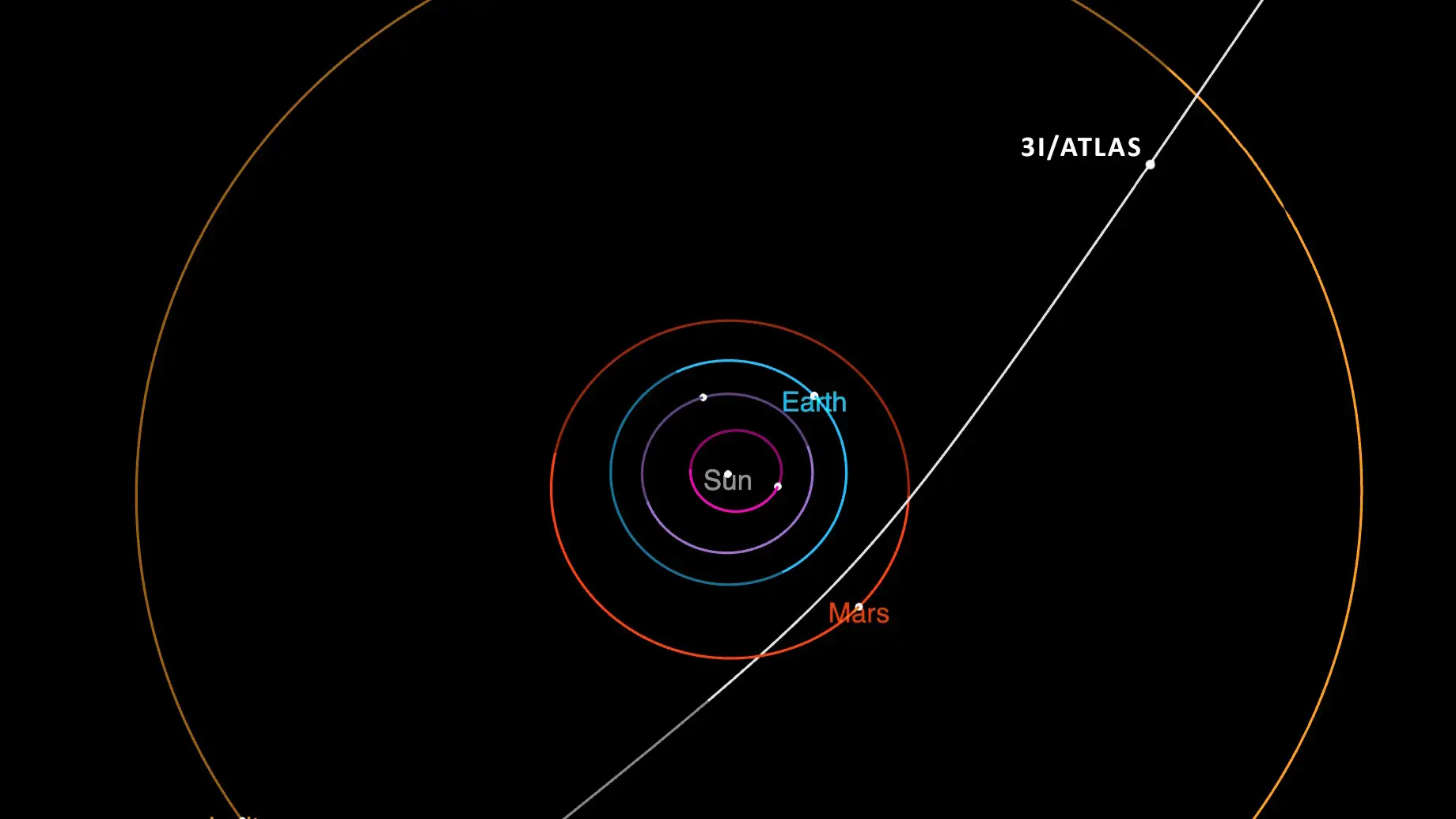
Measuring around seven miles long, the unusual space object was first spotted in July by scientists at the NASA-funded ATLAS survey telescope in Chile.

Incredibly, this is only the third object ever discovered that’s believed to have come from interstellar space - meaning it didn’t originate in our Solar System at all. Scientists figured this out because it’s moving way too fast to be held back by the Sun’s gravity; over 41 miles per second.

Advert

At one point, it even raised eyebrows for being 'possibly hostile', with some worried it could cause serious problems if it came too close to Earth.
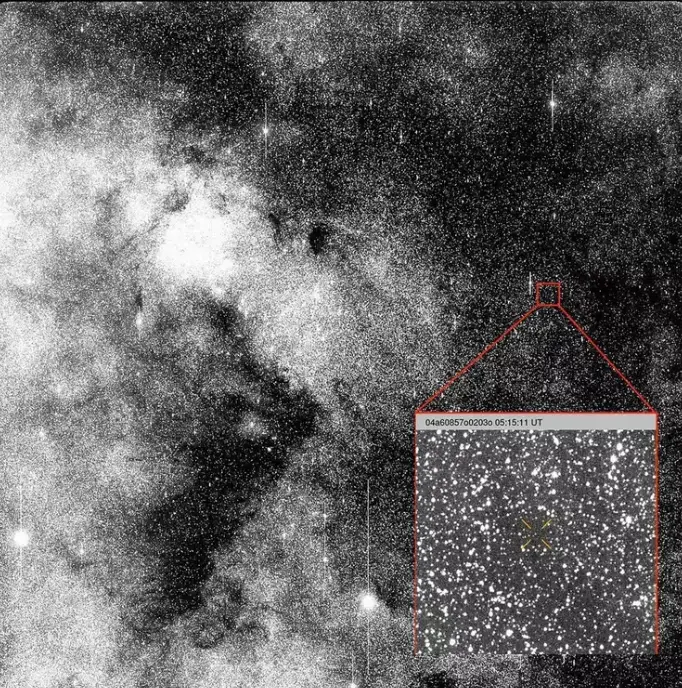
The space object has caused some concern in the scientific community (ATLAS/University of Hawaii/NASA)

Yet NASA has since dismissed this chatter, claiming 3I/ATLAS poses no threat to us. Scientists believe it's an interstellar comet which could be made up of icy rock.

The US space agency even tracked the comet's predicted movements; it should be making its closest pass to the Sun just before Halloween, as it continues on its trajectory into deep space, 'never to be seen again'.

But one Harvard physicist digging into 3I/ATLAS has floated the idea of the fast-moving object not being 'natural' at all.

The man in question is Avi Loeb and, in a new Medium blog post, he's even suggested should the mysterious object be some sort of alien ship, it could reach Earth 'by Christmas'. Yikes.

Scientist Avi Loeb thinks the unusual object could be a UFO (Anibal Martel/Anadolu Agency via Getty Images)

In the post, Loeb discusses how no Earth-launched rocket could intercept the 'comet' before it reaches its nearest point to the Sun.

But, since it's traveling at a speed far below that of light, we could feasibly send it a radio message. The big question is: should we?

Loeb argues that such a move only makes sense if 3I/ATLAS is more than just a rock - possibly even a technological spacecraft.

He highlights two key concerns that arise: is there any intelligence onboard to receive and understand our message? And could our message be seen as a threat?

Who'd have thought AI could really be standing for 'alien intelligence' all along!

Humans have sent signals out into deep space before; in 1974, the Arecibo radio telescope broadcast a message to a cluster of stars called Messier 13.

However, they are located 22.2 thousand light years away, whereas 3I/ATLAS is close enough to respond quickly, making potential contact more immediate - and possibly riskier.

Given all these uncertainties, Loeb suggests waiting until the object reaches its closest point to the Sun. If it behaves like a normal comet, it’s likely natural. If it performs a maneuver, we may be facing something far more advanced. And that's when the panicking can really begin...

Choose your content:

an hour ago
7 hours ago
8 hours ago
2 days ago
  • Getty Stock Image
    an hour ago

    NASA scientist claims to have found evidence of ‘Non-Human Intelligence’ in our skies

    Scientists may finally have answered the old age question of whether there is extraterrestrial life

    Technology
  • Miguel J. Rodriguez Carrillo/Getty Images
    7 hours ago

    NASA astronaut describes ISS experience that led to its first-ever evacuation

    Doctors have ruled out the possibility Mike Fincke had a heart attack

    Technology
  • Gregg Newton / AFP via Getty Images)
    8 hours ago

    NASA's Artemis II crew will feel 'pressure' briefly as they travel into space for moon mission

    We're not talking about societal pressure here - though the crew might feel that too

    Technology
  • U-Boat Worx
    2 days ago

    Scientists design world’s fastest ‘underwater supercar’ with unbelievable price tag

    The cost of exploring the ocean's depths in a private submarine have changed massively in recent years

    Technology
  • Harvard scientist says mysterious object aiming at Earth is 'not natural' after pointing out one major issue
  • Terrifying update on mysterious object aiming at Earth that Harvard scientist claims is 'not natural'
  • Chilling update on mysterious object aiming at Earth that Harvard scientist claims is 'not natural'
  • Experts baffled by new update on mysterious object aiming at Earth that Harvard scientist claims is 'not natural'