unilad homepage
  • News
    • UK News
    • US News
    • World News
    • Crime
    • Health
    • Money
    • Sport
    • Travel
  • Film and TV
    • Netflix
  • Music
  • Tech
  • Features
  • Celebrity
  • Politics
  • Advertise
  • Terms
  • Privacy & Cookies
  • LADbible Group
  • LADbible
  • SPORTbible
  • GAMINGbible
  • Tyla
  • UNILAD Tech
  • FOODbible
  • License Our Content
  • About Us & Contact
  • Jobs
  • Latest
  • Archive
  • Topics A-Z
  • Authors
Facebook
Instagram
X
Threads
TikTok
YouTube
Submit Your Content
Scientists release pictures of what 'city destroying' asteroid looks like as exact locations it could hit revealed

Home> Technology> Space

Published 15:08 15 Feb 2025 GMT

Scientists release pictures of what 'city destroying' asteroid looks like as exact locations it could hit revealed

The asteroid could strike home in 2032...

Liv Bridge

Liv Bridge

google discoverFollow us on Google Discover
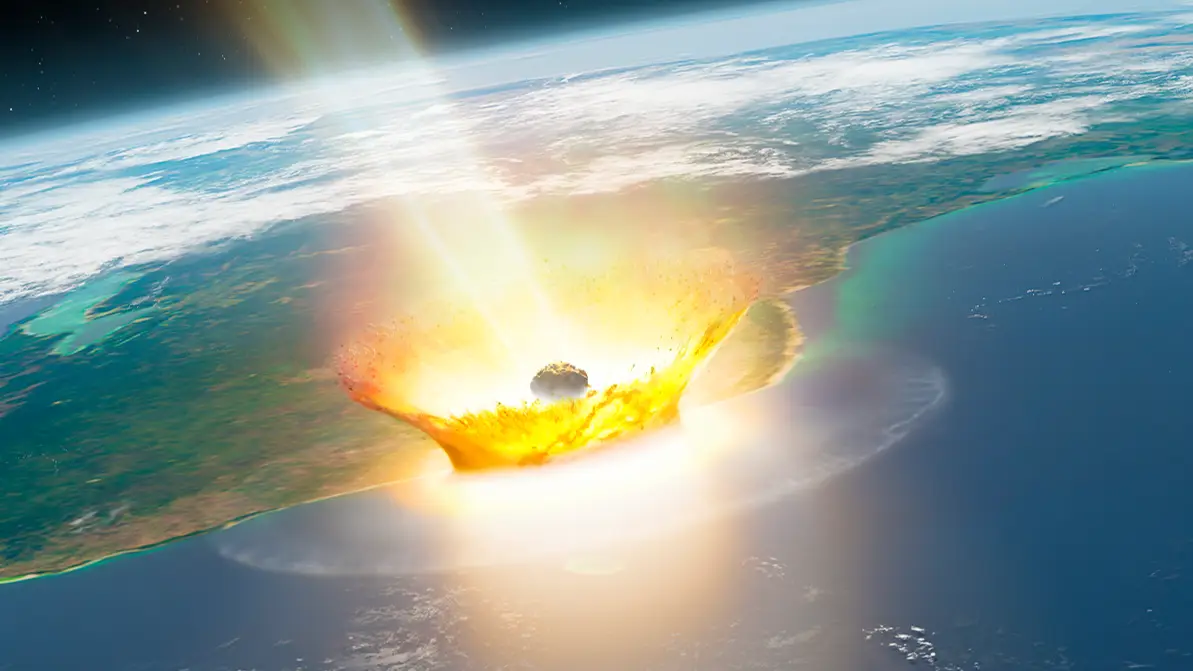
Featured Image Credit: MARK GARLICK/SCIENCE PHOTO LIBRARY/Getty

Topics: NASA, Space, Science, Earth, Florida, Technology

Liv Bridge
Liv Bridge

Liv Bridge is a digital journalist who joined the UNILAD team in 2024 after almost three years reporting local news for a Newsquest UK paper, The Oldham Times. She's passionate about health, housing, food and music, especially Oasis...

X

@livbridge

Advert

Advert

Advert

Scientists have released pictures of what the 'city destroying' asteroid looks like as the exact locations it could hit have been revealed.

NASA found a somewhat concerning asteroid in December last year which they've gone on to name 2024 YR4.

The space rock was initially spotted by an automated telescope in Chile and went to the top of the impact risk list maintained by US and European space agencies.

Scientists predict the asteroid could crash into Earth on December 22, 2032.

Advert
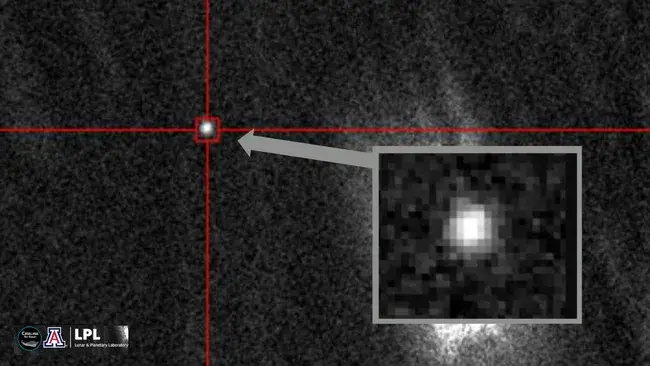
The asteroid has been photographed (Catalina Sky Survey/ LPL/Dr. Wierzchos/ Bryce Bolin/Twitter/@estelsiplanetes)

According to reports, it could be as big as the Statue of Liberty or Cinderella's Castle in Walt Disney World Florida, and scientist Dr Robin George Andrews has warned even protecting ourselves from its impact could go wrong.

He explained that firing rockets at it to deflect it from its path could spark the end times.

But with a one-in-48 chance, it's still unlikely it will actually hit home.

Still, scientists are still studying the asteroid and have now released images of what it looks like.

The snap was captured on February 7 this year by the 8.1-meter Gemini South telescope on Cerro Pachón mountain in the Chilean Andes.

At the time, the asteroid was around 37 million miles from Earth and 130 million miles from the sun, according to Space.com.

Bryce Bolin, the NASA Goddard Space Flight Center astronomer who helped capture the photograph, told the outlet: "I find 2024 YT4 to be extremely exciting! Not only because of its notoriety but for the scientific potential of studying such a small asteroid in high detail.

"Only a few asteroids have been studied like this."

Explaining how he got the image, he said: "We took 12 200-second long exposures in the Red band and tracked the motion of the asteroid to obtain these images.
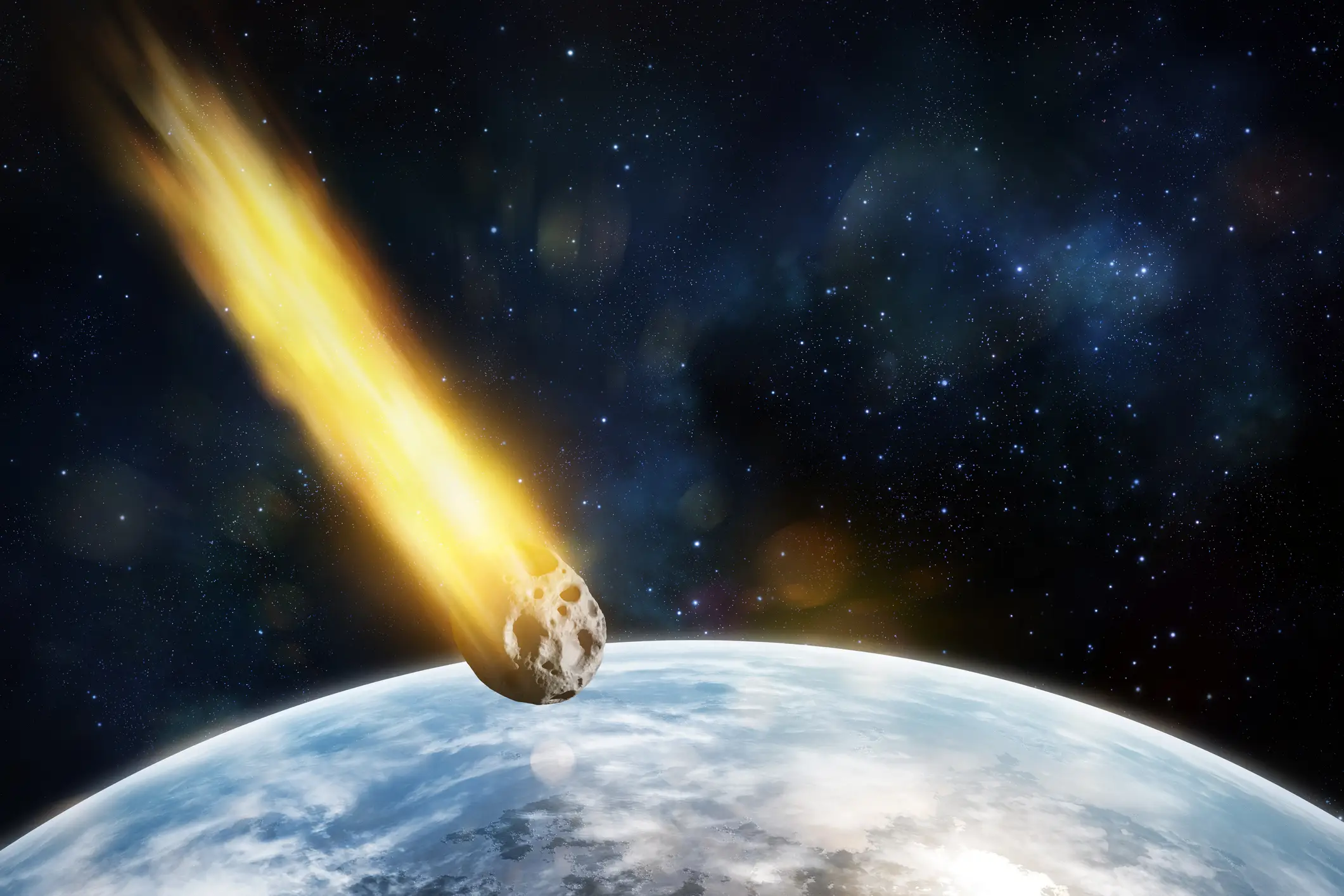
There's a one-in-48 chance of the asteroid striking Earth (Getty Images)

"The observations were difficult for three reasons. Firstly, the asteroid was faint, requiring the use of large telescopes to observe."

This is because the 2024 YR4 was visible when the moon was 70 per cent illuminated, meaning there was other background light in the sky and more difficult to detect the asteroid.

Secondly, the asteroid was moving 0.26 arceseconds per minute, which meant Bolin and the team had to carefully track it with Gemini South.

It isn't the first time space boffins have captured a pic of the asteroid either, though NASA last published a glimpse of on December 27 last year.

The International Asteroid Warning Network is also continuing to monitor and track the asteroid to determine its risk, as it will be visible throughout April.

However, after that, it will be 'too faint to observe' up until June 2028.

Choose your content:

15 hours ago
20 hours ago
a day ago
3 days ago
  • Gabby Jones/Bloomberg via Getty Images
    15 hours ago

    ChatGPT down for thousands as users report issues

    ChatGPT is just one of a number of AI platforms that has had issues reported

    Technology
  • Manuel Mazzanti/NurPhoto via Getty Images
    20 hours ago

    Artemis II astronaut shares stunning view of Earth you've never seen before

    The Artemis II crew landed from the mission on April 11

    Technology
  • Getty Stock Images
    a day ago

    Tesla owners are showing the reality of owning electric car as they share their average monthly bills

    Turns out there's a handy calculator for you to find out how much you could be spending (and saving)

    Technology
  • Anna Barclay/Getty Images
    3 days ago

    iPhone users warned to change specific setting when using public chargers

    Using public chargers can be risky

    Technology
  • Experts issue urgent warning over city-destroying asteroid that could devastate Earth without direct impact
  • Scientists release new map of the universe 'like no other' so humans can see what space really looks like
  • Earth's 'space battery' that stops the Sun from destroying the planet as we know it
  • NASA explains stunning Earth phenomenon captured from ISS that looks like something from a movie