Scientists baffled by black hole exuding more energy than the Death Star

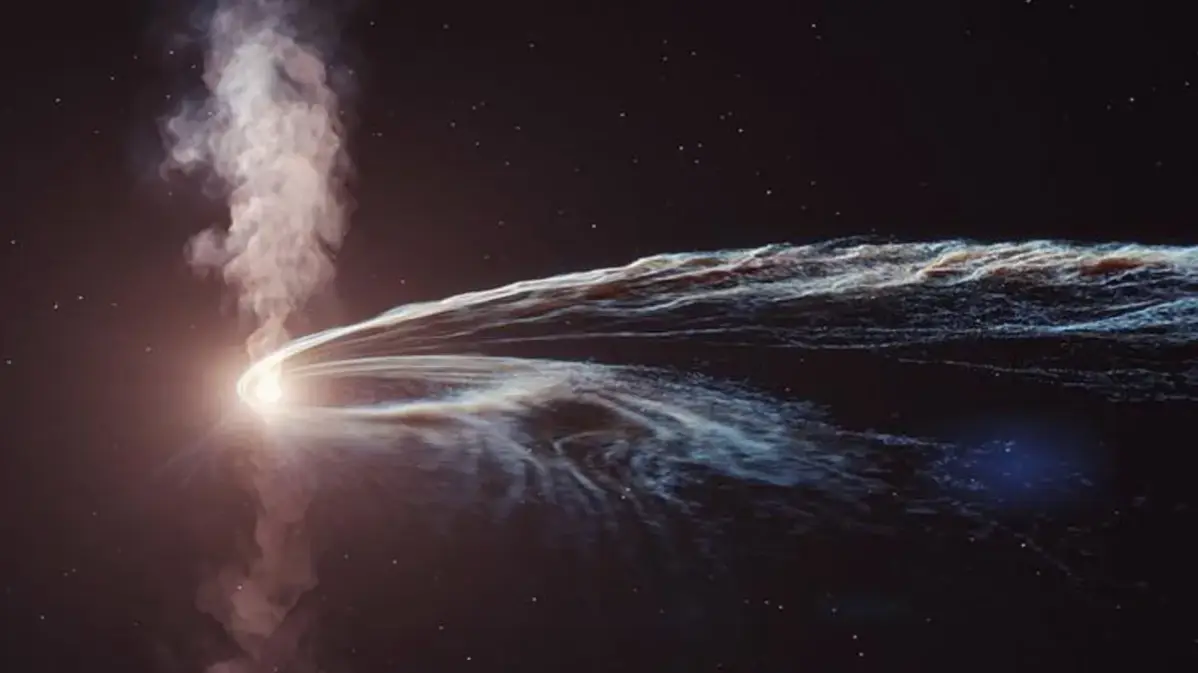
Scientists have been left bamboozled about the behavior of a black hole that's been spewing out massive amounts of energy for the last four years.
If there's one thing to know about black holes, it's that you never want to get near one.
If Earth ever got close to one of the mysterious cosmic objects, our planet would be quickly destroyed by a process known as 'spaghettification' (where the gravitational tug of the black hole shreds something up).
This is what happened to a star a few years ago. The tidal disruption was spotted by scientists back in 2018, but they didn't think much of it at the time, with Yvette Cendes – an astrophysicist at the University of Oregon – calling it a very 'boring' event.
Advert
But a few years later, Cendes spotted something strange about the same black hole.
While it initially didn't do much, she found that it was emitting quite a lot of energy in radio waves.
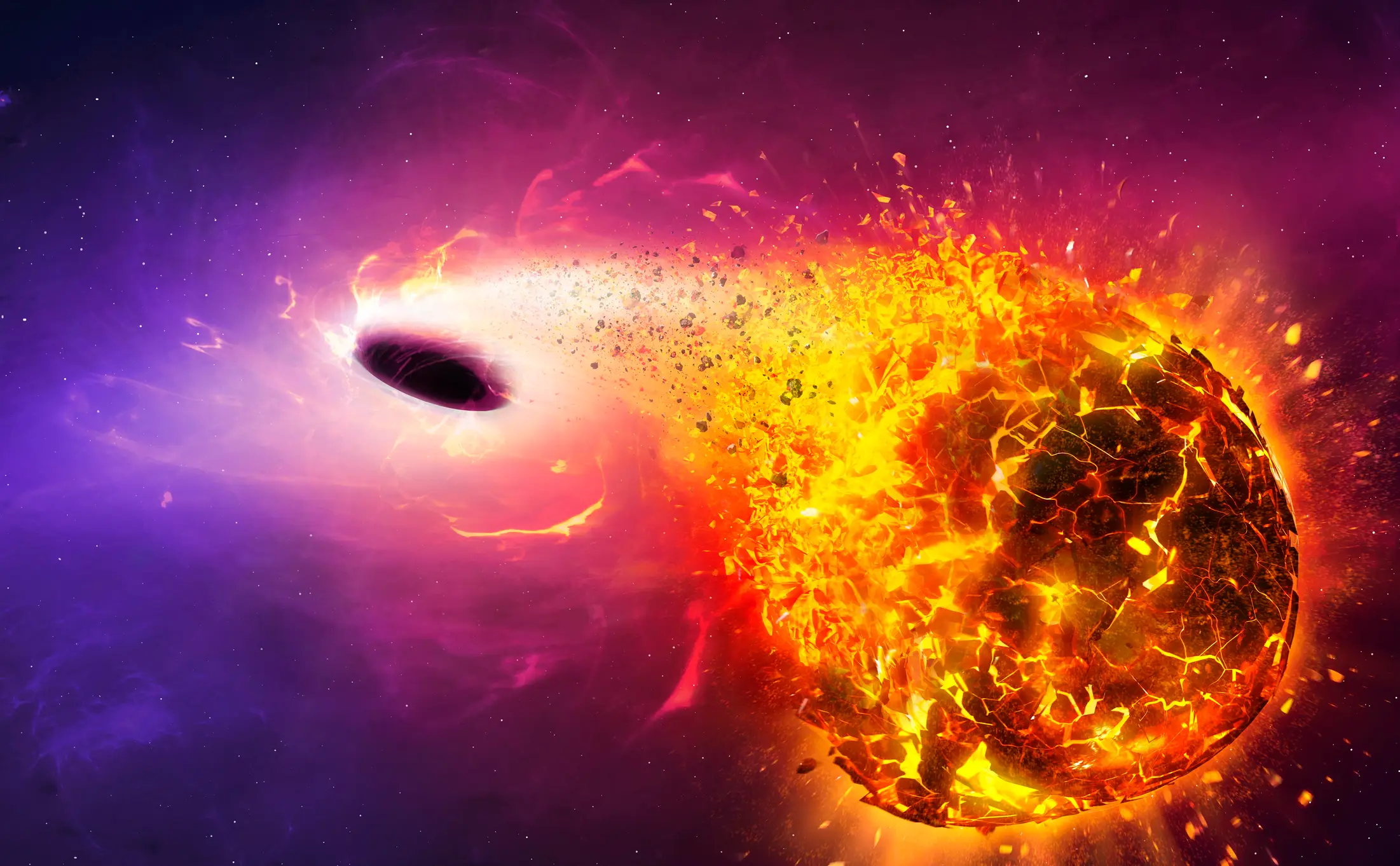
Cendes and her colleagues have been tracking the black hole ever since, and four years later it's still going strong — and actually getting stronger.
It's now 50 times brighter than it was when it was first discovered, and Cendes said that a black hole emitting this much energy so many years after chewing up a star is 'unprecedented'.
The object’s official scientific name is AT2018hyz, but Cendes calls it 'Jetty McJetface'.
Cendes and her colleagues have recently released a new paper about Jetty McJetface on how the black hole's energy has continued to rise sharply over the last few years.
Those scruntinizing the black hole have done some calculations that suggest that the energy outflow could be on par with a gamma ray burst, meaning it might be 'among the most powerful single events ever detected in the universe', explained a University of Oregon news release.
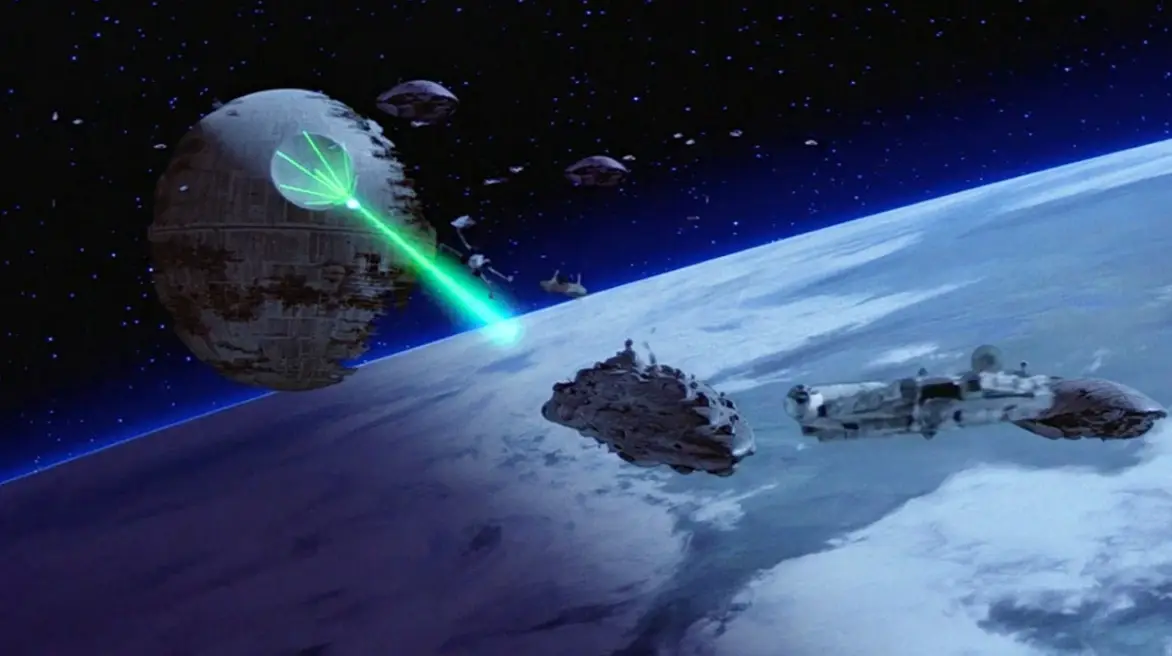
Making it more understandable for Star Wars fans, the release said of the strength of the black hole: "To put it in other terms: Avid Star Wars fans have done calculations of how much energy the infamous super-powerful Death Star would emit. This black hole is emitting at least a trillion times that, and possibly closer to 100 trillion times."
Cendes went on to say of the extremely 'unusual' cosmic object: "I'd be hard-pressed to think of anything rising like this over such a long period of time."
The black hole's energy is expected to peak sometime next year.
In the wake of this huge void's behavior, Cendes is looking out for other black holes that might also be exhibiting the unique phenomenon.
Topics: Black Hole, Space, Science, News, Star Wars
 Niamh Shackleton