unilad homepage
  • News
    • UK News
    • US News
    • World News
    • Crime
    • Health
    • Money
    • Sport
    • Travel
  • Film and TV
    • Netflix
  • Music
  • Tech
  • Features
  • Celebrity
  • Politics
  • Advertise
  • Terms
  • Privacy & Cookies
  • LADbible Group
  • LADbible
  • SPORTbible
  • GAMINGbible
  • Tyla
  • UNILAD Tech
  • FOODbible
  • License Our Content
  • About Us & Contact
  • Jobs
  • Latest
  • Archive
  • Topics A-Z
  • Authors
Facebook
Instagram
X
Threads
TikTok
YouTube
Submit Your Content
Mysterious 100,000,000-year-old discovery could re-write Earth's history

Home> Technology

Published 18:34 2 Oct 2024 GMT+1

Mysterious 100,000,000-year-old discovery could re-write Earth's history

The scientist who made the discovery insisted this was just the beginning

Gerrard Kaonga

Gerrard Kaonga

google discoverFollow us on Google Discover
Featured Image Credit: Getty/MARK GARLICK/SCIENCE PHOTO LIBRARY/Getty/Yuri_Arcurs

Topics: Science

Gerrard Kaonga
Gerrard Kaonga

Gerrard is a Journalist at UNILAD and has dived headfirst into covering everything from breaking global stories to trending entertainment news. He has a bachelors in English Literature from Brunel University and has written across a number of different national and international publications. Most notably the Financial Times, Daily Express, Evening Standard and Newsweek.

Advert

Advert

Advert

A university researcher has made a discovery regarding the Earth’s tectonic plates that he believes can completely rewrite what we think we know about the planet.

A group of scientists have uncovered what they believe to be evidence of a long-lost underwater collision that took place over 100 million years ago below the Pacific Ocean.

This is particularly interesting as the team discovered remnants of an ancient seafloor that is believed to be part of a tectonic plate that broke off and slipped beneath millions of years ago.

“Our discovery opens up new questions about how the deep Earth influences what we see on the surface across vast distances and timescales," lead author and geology postdoctoral researcher Jingchuan Wang of the University of Maryland said in a statement.

Advert

Wang added: “This thickened area is like a fossilized fingerprint of an ancient piece of seafloor that subducted into the Earth approximately 250 million years ago."
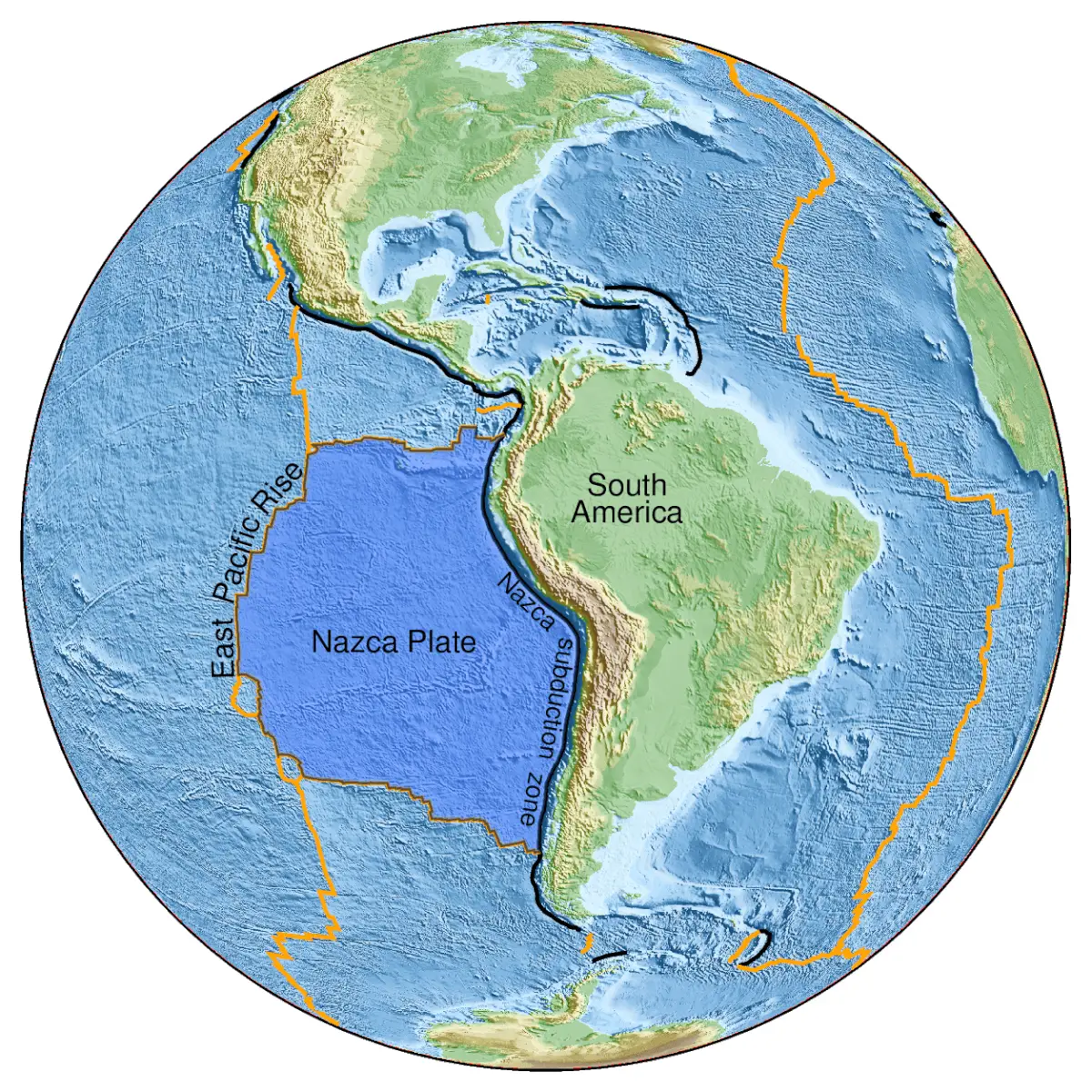
A map of the East Pacific Rise region where the discovery of an ancient seafloor was made (Jingchuan Wang)


The discovery found a 12-mile-thick 1,200-mile-long area in the ‘mantle transition zone'. This is a region that separates the upper mantle from the lower one.

So admittedly... I am almost as lost as you are but Wang insists this discovery will mean scientists will have to rethink what we know about the mantle transition zone.

He noted that the unusual thickness of the region suggests there is colder material in this part of the mantle and that it is possible that that some oceanic slabs get stuck halfway down as they subduct through the mantle.

Wang explained: “We found that in this region, the material was sinking at about half the speed we expected, which suggests that the mantle transition zone can act like a barrier and slow down the movement of material through the Earth."
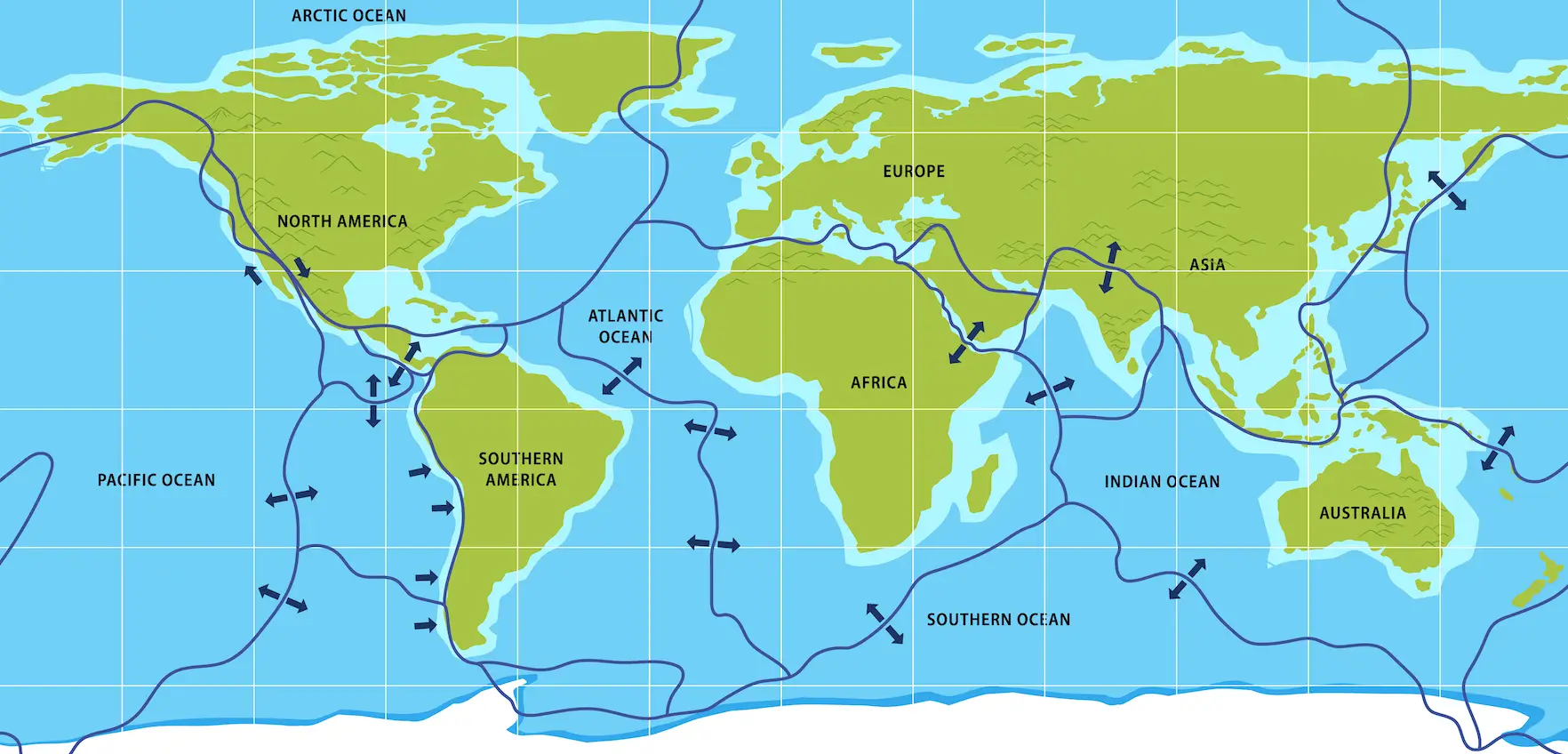
Wang believes this discovery is just the beginning and can rewrite what scientists think they know (Getty Stock Image)

Oh but Wang isn’t done just yet and believes there are more ancient structures to be found in the Ocean’s depths.

He said: “This is just the beginning.

“We believe that there are many more ancient structures waiting to be discovered in Earth’s deep interior. Each one has the potential to reveal many new insights about our planet’s complex past—and even lead to a better understanding of other planets beyond ours.”

So why does this even matter? Well, being able to better understand and improving models of plate tectonics and mantle dynamics we (the scientists, not you or I) can better understand things ranging from the formation of mineral deposits to long-term climate change.

Choose your content:

2 days ago
5 days ago
7 days ago
8 days ago
  • Justin Sullivan/Getty Images
    2 days ago

    OpenAI names 22 industries at risk of job losses as it proposes four day week

    Two new reports suggest AI might be coming for your job - but you could also get a three day weekend

    Technology
  • Kayla Bartkowski/Bloomberg via Getty Images
    5 days ago

    Congressman Tim Burchett claims he has seen UFO footage that ‘defies logic’

    Tim Burchett says he has seen UFO footage that couldn't be man made - and he wants answers from the government

    Technology
  • NASA/JPL-Caltech/MSSS
    7 days ago

    NASA's Curiosity rover makes groundbreaking discovery that suggests Mars can support life

    An expert has claimed the new reveal 'increases the prospect that Mars offered a home for life in the ancient past'

    Technology
  • John Nacion/Variety via Getty Images
    8 days ago

    Bill Nye issues stern warning to Trump over concerns he could 'end NASA'

    Bill Nye the Science Guy revealed that Donald Trump's NASA proposal is a 'huge mistake'

    Technology
  • Archeologists discover 6,000-year-old skeletons with unexplained DNA that could rewrite history
  • Scientists make unbelievable discovery inside rare 520-million-year-old fossil that made their ‘jaws drop’
  • Scientist issues warning the shortest day in history will happen in weeks as Earth's rotation is speeding up
  • Million-year-old skull could rewrite entire timeline of human evolution according to researchers