unilad homepage
unilad homepage
    • News
      • UK News
      • US News
      • World News
      • Crime
      • Health
      • Money
      • Sport
      • Travel
    • Music
    • Technology
    • Film and TV
      • News
      • DC Comics
      • Disney
      • Marvel
      • Netflix
    • Celebrity
    • Politics
    • Advertise
    • Terms
    • Privacy & Cookies
    • LADbible Group
    • LADbible
    • SPORTbible
    • GAMINGbible
    • Tyla
    • UNILAD Tech
    • FOODbible
    • License Our Content
    • About Us & Contact
    • Jobs
    • Latest
    • Archive
    • Topics A-Z
    • Authors
    Facebook
    Instagram
    X
    Threads
    TikTok
    YouTube
    Submit Your Content
    Scientist unveils creepy human farms concept with birthing pods that can grow up to 30,000 babies a year
    Home>Technology
    Published 08:56 13 Dec 2022 GMT

    Scientist unveils creepy human farms concept with birthing pods that can grow up to 30,000 babies a year

    It looks a bit like something out of a dystopian sci-fi

    Joe Harker

    Joe Harker

    google discoverFollow us on Google Discover
    Featured Image Credit: Hashem AI-Ghaili / YouTube

    Topics: Technology, Science, Weird

    Joe Harker
    Joe Harker

    Joe graduated from the University of Salford with a degree in Journalism and worked for Reach before joining the LADbible Group. When not writing he enjoys the nerdier things in life like painting wargaming miniatures and chatting with other nerds on the internet. He's also spent a few years coaching fencing. Contact him via [email protected]

    X

    @MrJoeHarker

    Advert

    Advert

    Advert

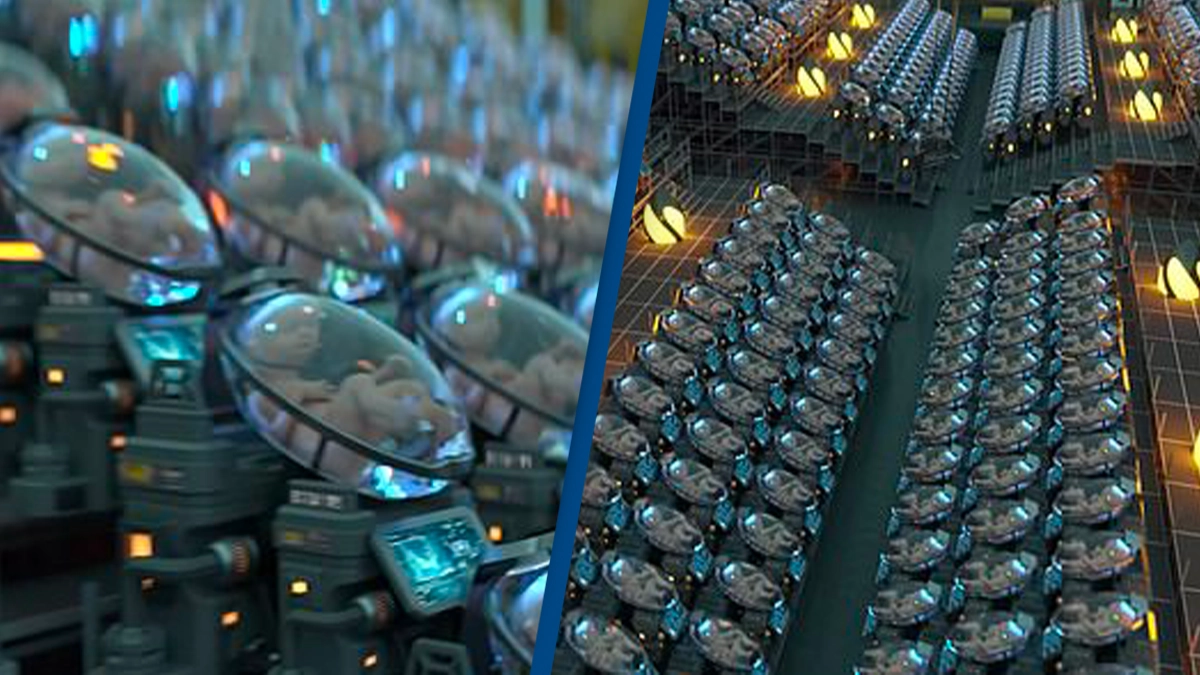
    It's the sort of thing you'd probably expect to see in a dystopian slice of science fiction like The Matrix or Brave New World, but a scientist has pitched the concept of human farms full of birthing pods.

    The basic concept is that rather than growing a baby the usual way in the mother's womb over the course of about nine months, the child would instead grow in one of the 'artificial wombs'.

    This is EctoLife, a concept thought up by scientist Hashem Al-Ghaili, who created a video advertising the idea of birthing pods growing thousands of humans outside the womb to spark off a conversation.

    Advert

    The video declared 'premature births and c-sections will be a thing of the past', and proclaimed that the technology would help countries suffering from 'severe population decline'.

    EctoLife claims just one of their lab buildings can grow up to 30,000 babies each year, and the child inside will be monitored by all sorts of sensors which will be reported back to the parents.
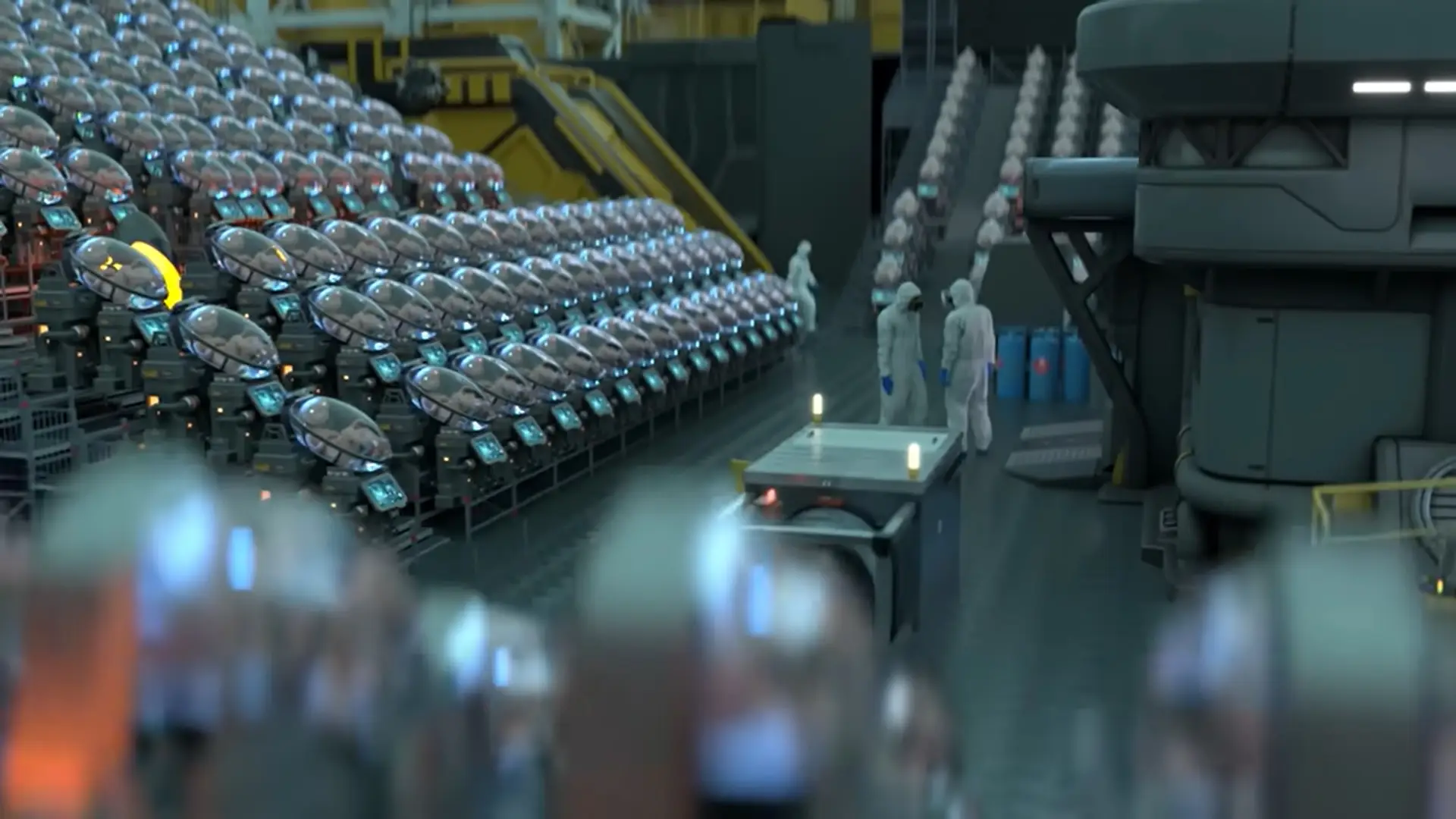
    This is just a concept for now, but it could one day be a reality.
    Hashem AI-Ghaili / YouTube

    They will also allow the parents-to-be access to an app which enables them to watch a timelapse of their baby growing, along with playing them music through speakers installed in the pod.

    If this is meant to be the future it seems as though plenty of people won't be very happy, as there has been a backlash against the 'creepy' concept.

    People criticised EctoLife, saying that the 'ethics and morality of this future is at the very least concerning' and reckoning it was a sign that 'the world has truly gone insane'.

    Plenty of others drew the link between EctoLife and a whole range of dystopian sci-fi works which had depicted but definitely not endorsed similar concepts, calling the whole thing 'freaking scary as hell'.

    That classic Jurassic Park quote about scientists being 'so preoccupied with whether they could, they didn't stop to think if they should' also made an appearance.
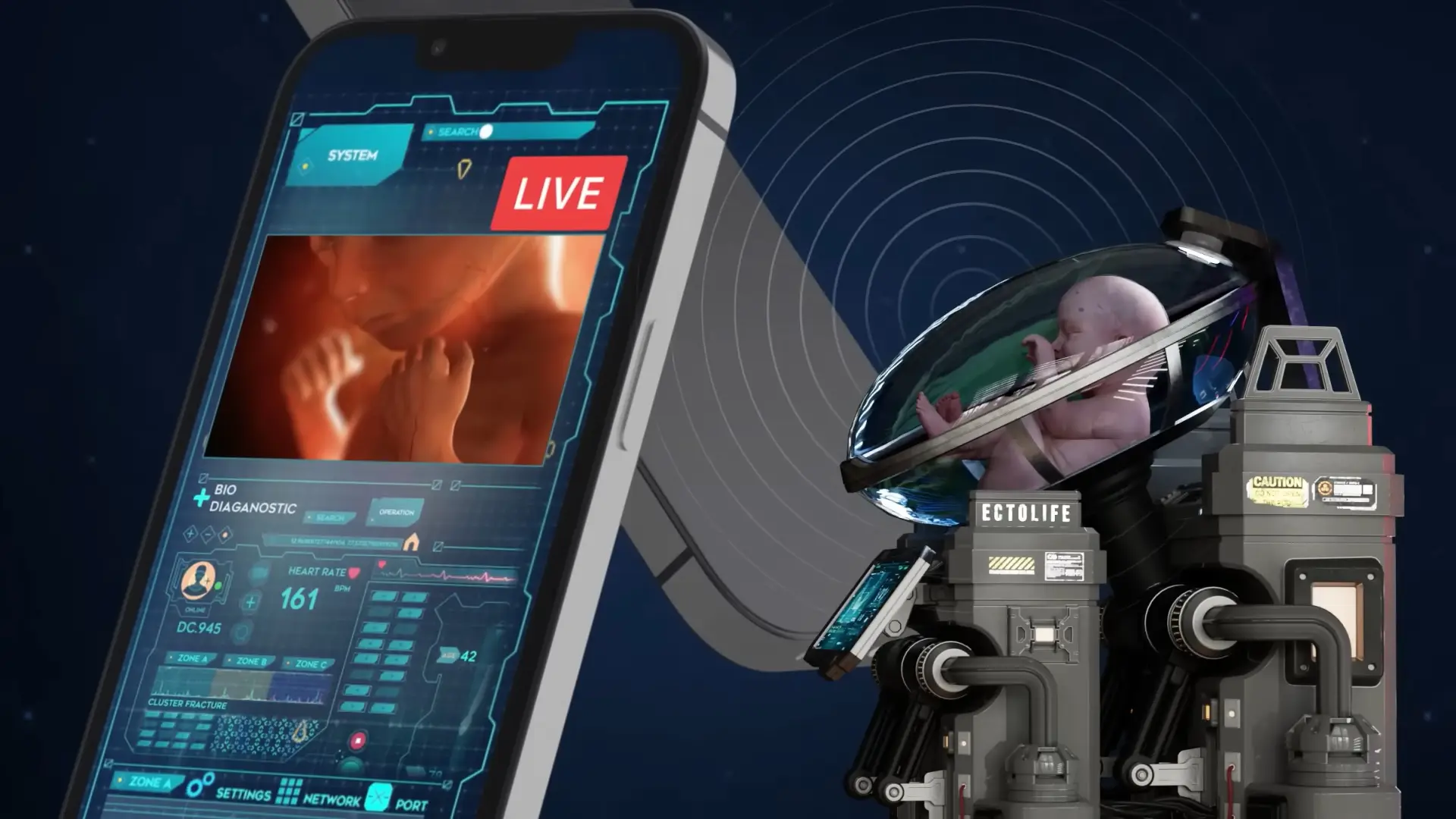
    The concept claims you'd be able to monitor your baby's progress via an app, and even play music or sing to them.
    Hashem AI-Ghaili / YouTube

    There wasn't much in the way of praise for the idea, though a handful of people suggested the project's aims of helping nations with low birthrates and families struggling to conceive could be a benefit.

    Al-Ghaili also suggested it could help save lives around the world, arguing that 300,000 women die in childbirth each year and such a risk would be eliminated if they grew their babies in an EctoLife pod instead of in the womb.

    Still, most were very sceptical of the whole concept, arguing that EctoLife was 'playing god' and did nothing to tackle the underlying reasons behind why a country might have low rates of birth.

    Fortunately for those who aren't getting a good feeling from this, it's all just a concept at this stage and no actual lab which could grow thousands of babies at a time has been built - at least not yet.

    Choose your content:

    11 hours ago
    a day ago
    3 days ago
    • (Photo by Emanuele Cremaschi/Getty Images)
      11 hours ago

      Playstation users who bought games within four-year period eligible for Sony $7.85 million settlement

      Sony has been accused of monopolizing the market through its PlayStation Store

      Technology
    • Dhiraj Singh/Bloomberg via Getty Images
      a day ago

      iPhone users can check if they’re eligible for Apple's $250m payout over AI accusations

      The payout applies to people who bought certain iPhones between June 2024 and March 2025

      Technology
    • Christopher Willard/Disney via Getty Images
      3 days ago

      Shark Tank star Lori Greiner issues warning over hidden Gmail setting and reveals how to disable it

      Lori Greiner has warned 1.8 billion Gmail users about a setting that allows access to their private emails

      Technology
    • Getty Stock
      3 days ago

      Every country where ChatGPT is banned and why

      One in eight people on the planet can't access ChatGPT - and their governments want to keep it that way

      Technology
    • 'Gleeking' is the gross human body function that most people don't realize they can do
    • Company unveils $195,000 robot and people are 'uncomfortable' over extremely 'creepy' details
    • Sony unveils new car that can be driven using PS5 controller
    • Scientists discover new planet which could support human life if we can reach it