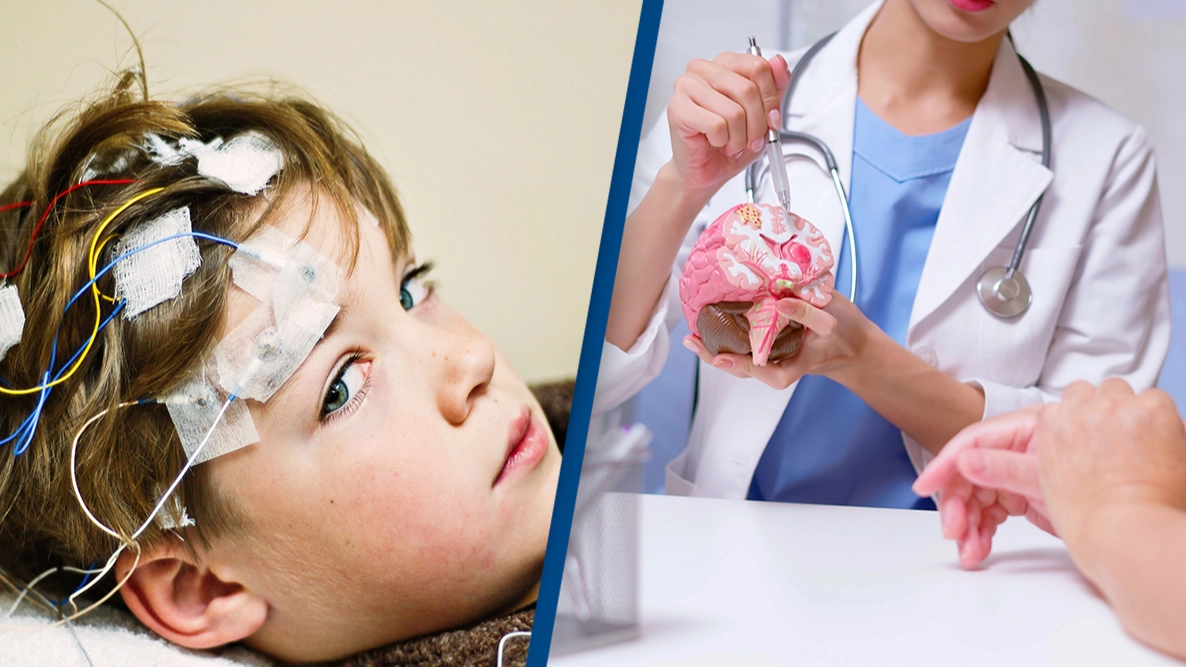
Young boy becomes the world's first person to receive brain implant that treats Epilepsy

A 13-year-old boy has become the first patient in the world to try out a brain stimulation device to treat severe epilepsy.
With the advancements in technology, we're seeing some pretty incredible things.
And this latest piece of technology, worked on by experts, looks set to be a game changer for millions of people if it does indeed go mainstream.
Oran Knowlson is one of those who suffers from severe epilepsy, to the point where he was having hundreds of seizures per day.
Advert
The teen had surgery in October 2023 when he was 12, and his family says he's already experiencing massive benefits.
Speaking of raising Oran, his mother, Justine, explained to the BBC: "I had a fairly bright three-year-old, and within a few months of his seizures commencing he deteriorated rapidly, and lost a lot of skills."
Her young son was diagnosed with autism and ADHD, while it was also discovered he had a condition called Lennox-Gastaut syndrome, which Justine said 'robbed him of all of his childhood'.
As per the National Organisation for Rare Disorders, Lennox-Gastaut syndrome (LGS) "is a severe form of epilepsy that typically becomes apparent during infancy or early childhood."
They add: "Affected children experience several different types of seizures, most commonly atonic, tonic and atypical absence seizures."
Children with the condition may also develop cognitive dysfunction, delays in reaching developmental milestones and behavioral problems.
Because of this, Oran's mother explained how he would often drop to the floor, lose consciousness, and, on occasion, even stop breathing.
Usual drug treatments don't typically work in these cases, so scientists have been looking at different approaches to treatment.
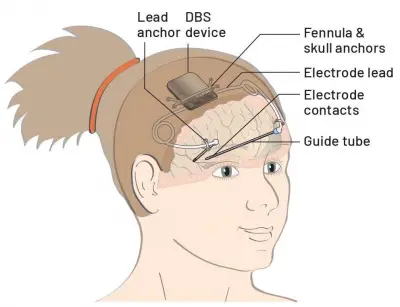
The CADET Project is aiming to trial the use of a deep brain simulation (DBS) in 22 children with Lennox-Gastaut syndrome.
Oran has become the first of the children to have his device surgically implanted.
The simulator is anchored to the skull, with connected electrodes inserted into the part of the brain responsible for seizure activity.
"This study is hopefully going to allow us to identify whether deep brain stimulation is an effective treatment for this severe type of epilepsy and is also looking at a new type of device, which is particularly useful in children because the implant is in the skull and not in the chest,” lead neurosurgeon Martin Tisdall told the BBC.
After an eight-hour surgery, Oran's life couldn't be more different.
The teen has seen a whopping 80 per cent reduction in daytime seizures.
“He is more alert and with no drop seizures during the day,” his mother said.
Topics: Health, Science, Technology
 Callum Jones