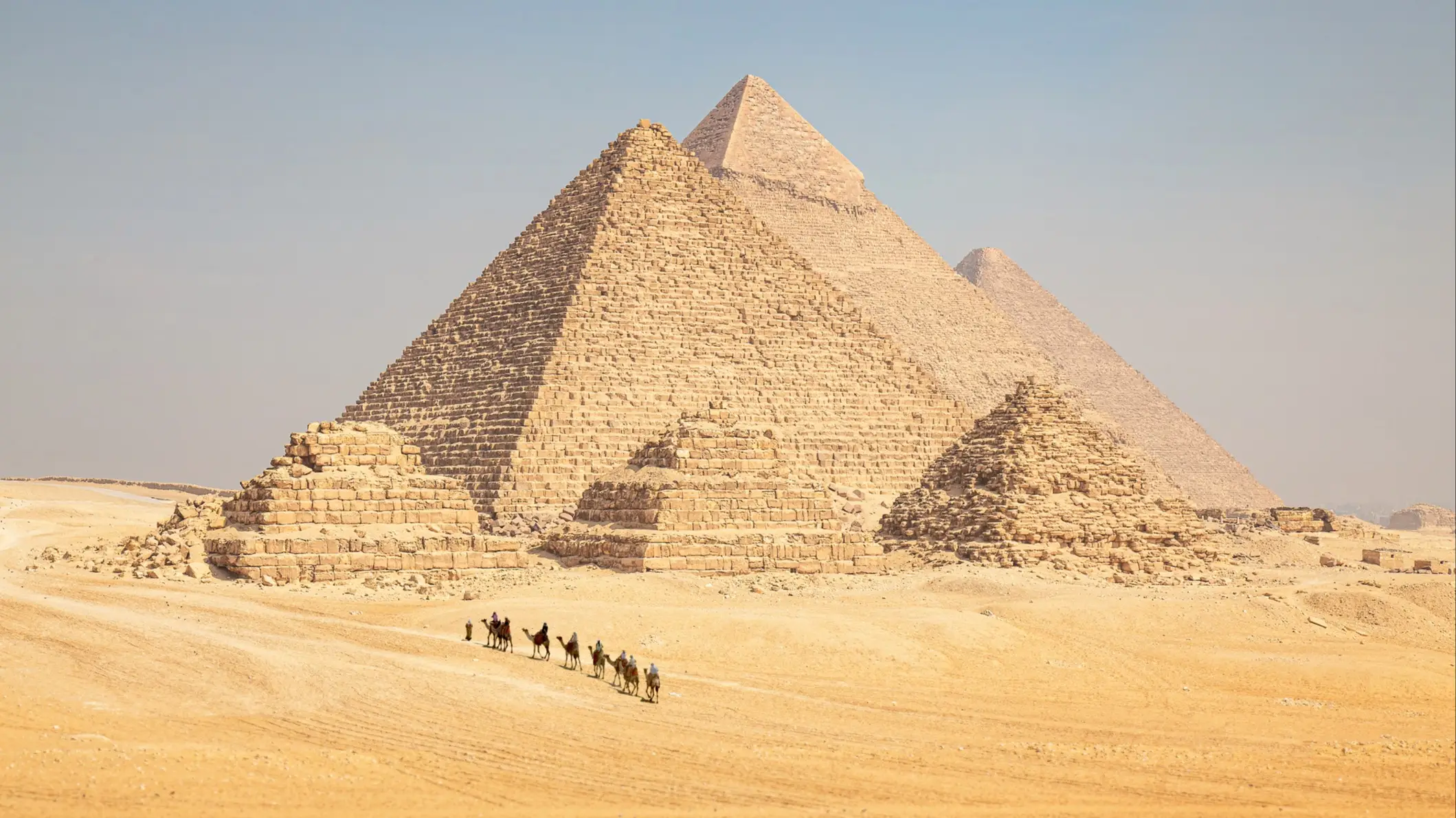
Scientists may have found a secret entrance into Pyramids of Giza after stumbling upon ‘mysterious void’

Thousands of years after the Pyramids of Giza were built and researchers are still learning new things about them to this day.
A recent study has been looking at the Pyramid of Menkaure — the smallest of the three pyramids of Giza that stands at 200ft tall and is thought to have been erected around 2510 BC.
The historic piece of architecture is said to be a tomb for Fourth Dynasty King Menkaure and researchers at Cairo University, Egypt, and the Technical University of Munich (TUM), Germany, think they've discovered a hidden entrance.
Using a high-tech scanning tool, the experts spotted two air-filled voids located behind a polished section of granite, underneath the pyramid's eastern facade.
Advert
The fact that the stones were polished raised curiosity as these kind of stones are only found elsewhere on the northern side of the pyramid at its entrance, Newsweek reports.
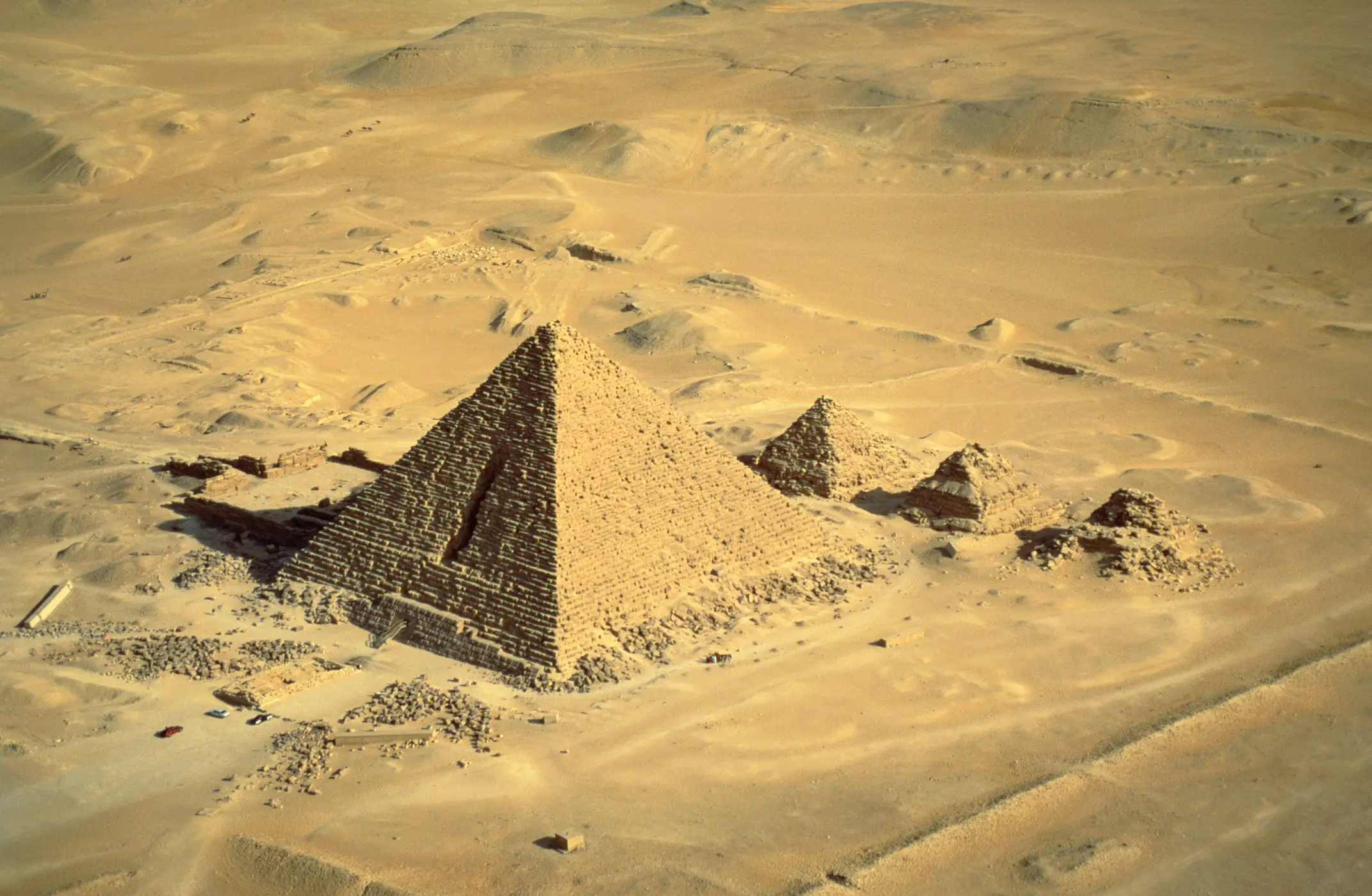
This is what has lead them to believe that this too could be another, lesser-known entrance in the pyramid. The entrance on the north-side was already known about.
Researchers used radar, ultrasound, and electrical resistivity tomography to scan the pyramid, which doesn't cause any damage to the historic infrastructure, as part of the project called ScanPyramids.
Christian Grosse, Professor of Non-destructive Testing at TUM, said of their findings: "Following the significant validation of a hidden corridor in the Pyramid of Cheops in 2023, ScanPyramids has once again succeeded in making an important finding in Giza.
"The testing methodology we developed allows very precise conclusions to be drawn about the nature of the pyramid's interior without damaging the valuable structure.
"The hypothesis of another entrance is very plausible, and our results take us a big step closer to confirming it."
The research was conducted under the supervision of the Egyptian Supreme Council of Antiquities and the Egyptian Ministry of Tourism and Antiquities.
While it's unlikely that anyone will be able to access the newly discovered hidden corridor anytime soon, robots have previously been used to film whats inside other similar corridors.
In one instance, archaeologists found narrow shafts in the Great Pyramid but they were too small for a human to gain access to.
With this in mind researchers University of Leeds, UK, worked with Dassault Systèmes in France to build a small enough bot to go inside the space. It took them almost five years to complete, but it was worth it in the end.
With the help of the tiny robot they were able to accumulate nine hours worth of footage which revealed new and exciting things about shaft.
Topics: History, News, Egypt, World News, Science, Technology
 Niamh Shackleton