• News
  • Film and TV
  • Music
  • Tech
  • Features
  • Celebrity
  • Politics
  • Weird
  • Community
  • Advertise
  • Terms
  • Privacy & Cookies
  • LADbible Group
  • LADbible
  • SPORTbible
  • GAMINGbible
  • Tyla
  • UNILAD Tech
  • FOODbible
  • License Our Content
  • About Us & Contact
  • Jobs
  • Latest
  • Topics A-Z
  • Authors
Facebook
Instagram
X
Threads
TikTok
YouTube
Submit Your Content
Giant Siberian 'Gateway to Hell' has tripled in size and scientists believe 'we can learn' a lot from it

Home> News> World News

Published 18:50 2 Sep 2024 GMT+1

Giant Siberian 'Gateway to Hell' has tripled in size and scientists believe 'we can learn' a lot from it

The Batagay crater was first discovered in the 1990s

Niamh Shackleton

Niamh Shackleton

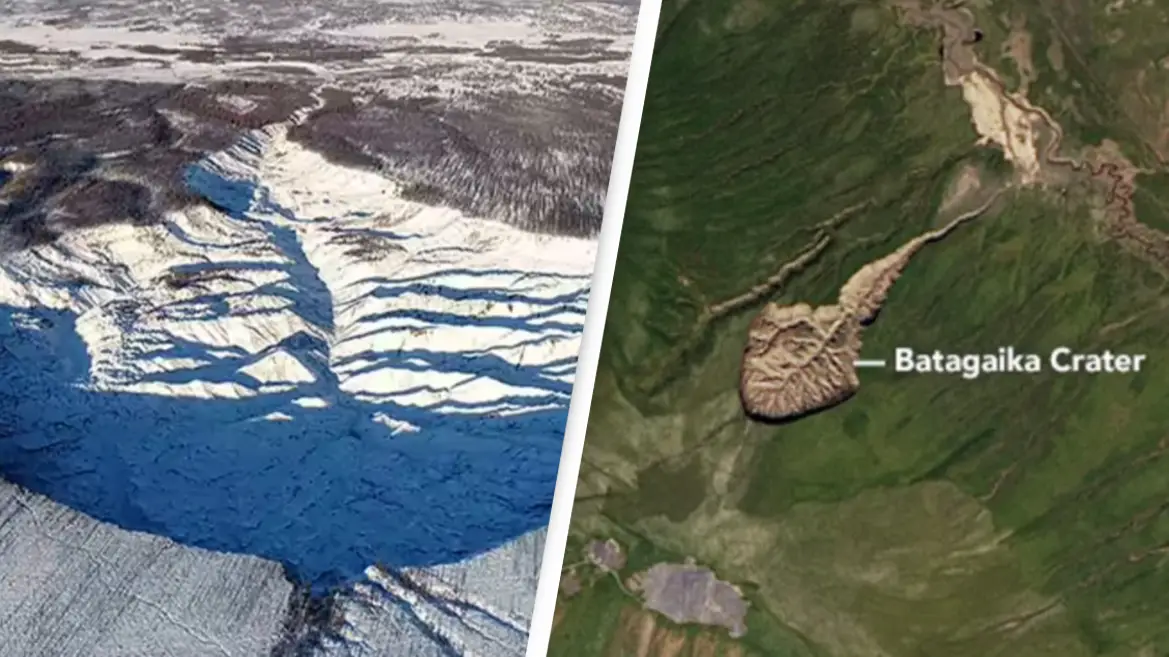
A giant megaslump in Siberia could prove beneficial to the future of science.

Known as the 'Gateway to Hell', the Batagay megaslump is the biggest permafrost crater in the world and it's getting bigger as each year goes by.

The crater formed in the 1960s after its permafrost began to thaw, but it wasn't until 1991 that researchers came across the remote pit with the help of satellite images.
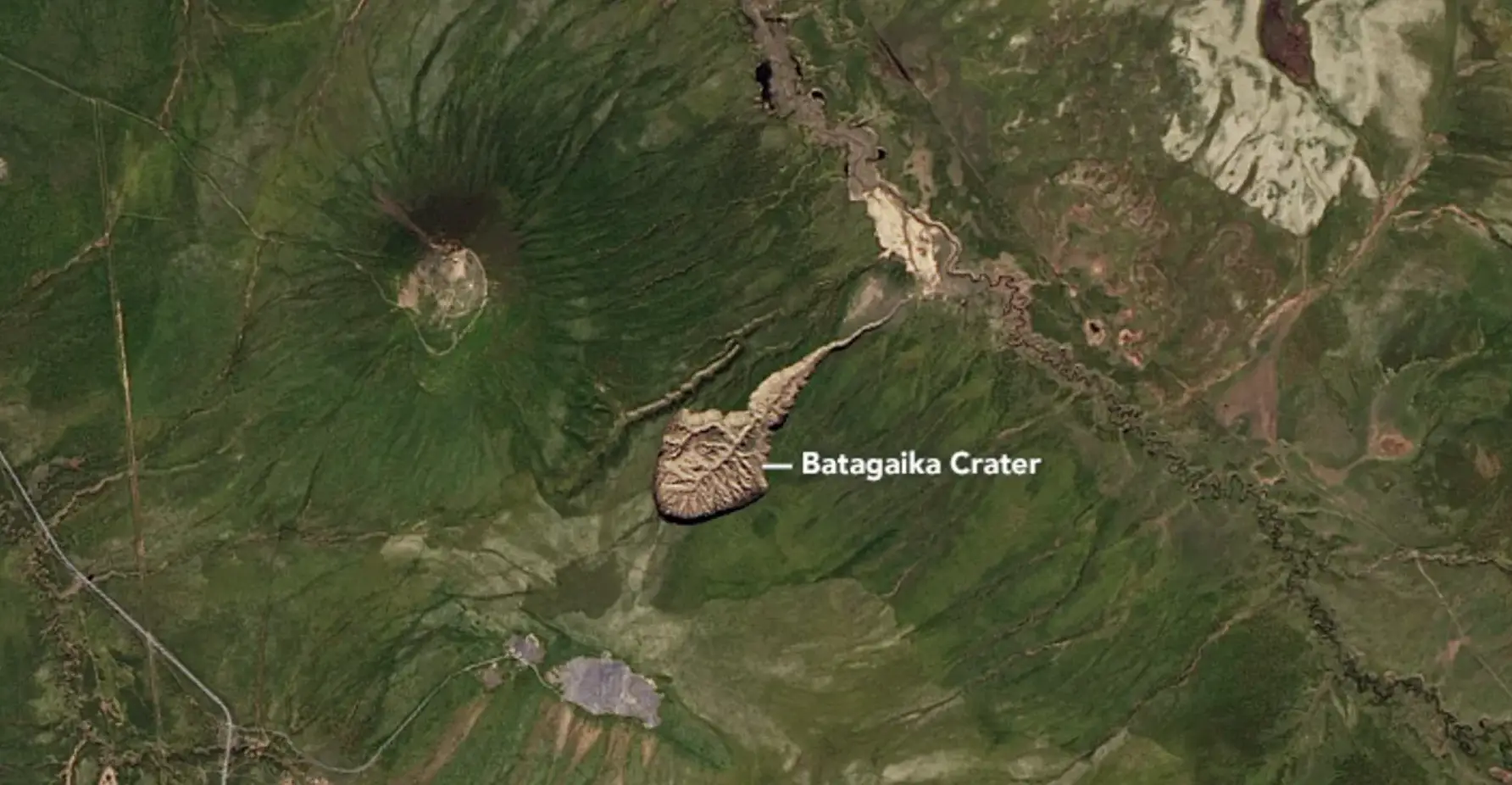
The Batagay crater is located in northern Yakutia, Russia (NASA Earth Observatory)

Advert

As to what has caused the permafrost to the thaw, it'll probably come as no surprise to you that it's all climate change related.

Permafrost like the one at Batagay is described as 'frozen dirt underground, which by definition you often can't see unless it's been exposed somehow', Roger Michaelides, a geophysicist at Washington University in St. Louis, told Business Insider.

Apparently there are thousands of slumps like these across the Artic, but it's the sheer size of Batagay crater that earned itself the title of a 'megaslump'.

Studies have shown that the slump grows a concerning one million cubic meters every year and, as of last year, the 'Gateway to Hell' stretched to 3,250 feet (990m) wide.
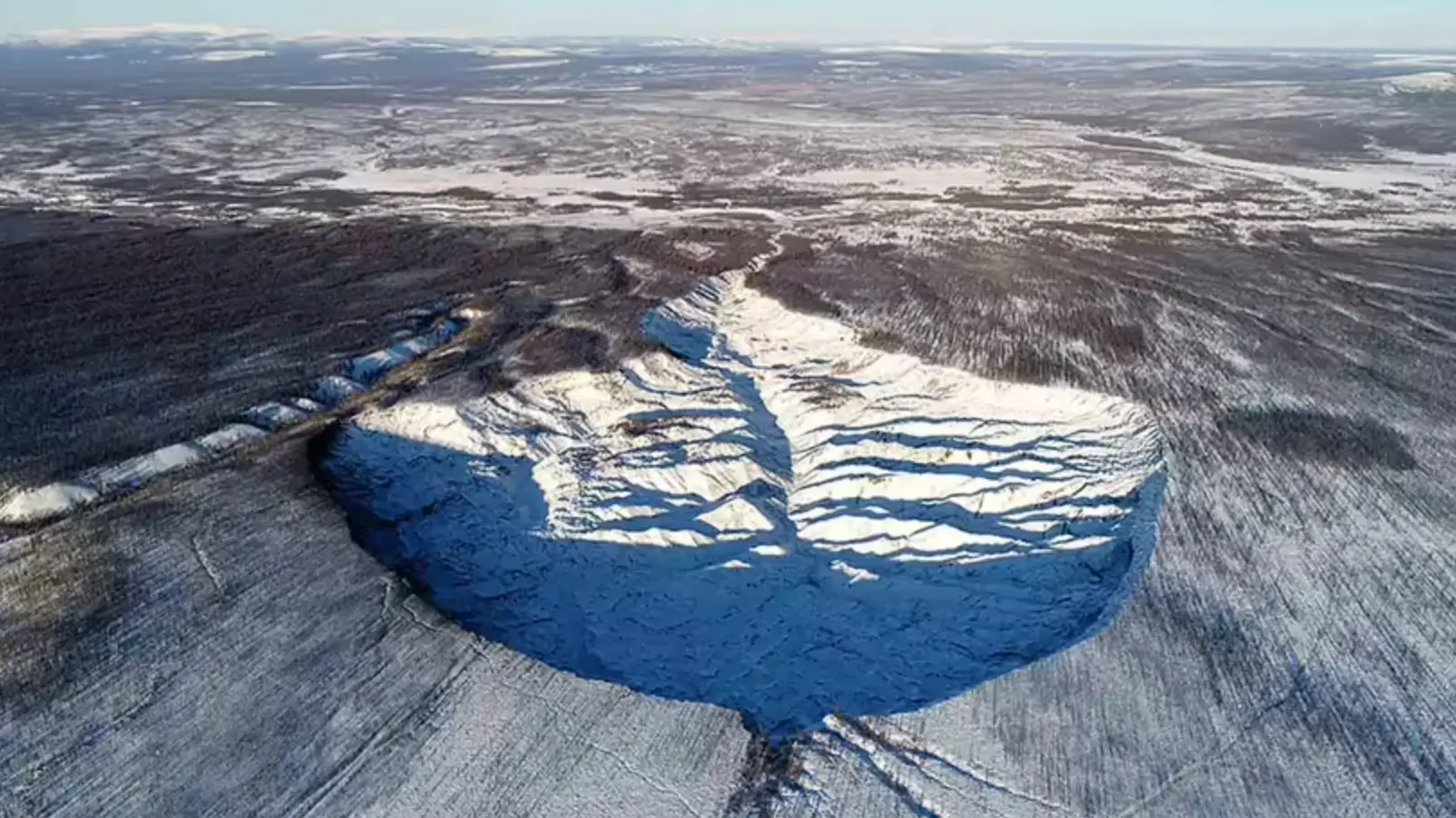
The huge crater started forming in the 1960s (Alexander Kizyakov, Lomonosov Moscow State University)

Undeniably, the thawing that's affecting many parts of the globe isn't a good thing as the process ultimately releases gases like carbon dioxide and methane, but scientists are hopeful that the Batagay megaslump could help them learn about such craters.

Michaelides said: "I think there is a lot we can learn from Batagaika, not only in terms of understanding how Batagaika will evolve with time, but also how similar features might develop and evolve over the Arctic.

"Even if they're a tenth or a hundredth the size of Batagaika, the physics is fundamentally the same."

Professor Julian Murton, a geologist at the University of Sussex, has echoed similar sentiments previously and said that the megaslump will 'provide a view to what has happened in the past and what is likely to happen in the future'.

This won't stop Batagay releasing around 4,000 to 5,000 tons of carbon each year, though.

In fact, it's predicted that the giant crater could emit 'as much planet-warming gases as a large industrial nation by 2100' if we don't start making climate change friendly changes as soon as possible.

Worryingly, as well as releasing greenhouse gases, thawing permafrost could potentially engulf the loosened ground around it. This is a huge concern for some parts of Russia as 65 percent of the country is made up of permafrost.

Featured Image Credit: Alexander Kizyakov, Lomonosov Moscow State University/NASA Earth Observatory

Topics: Climate Change, Environment, Russia, Science, News, World News

Niamh Shackleton
Niamh Shackleton

Niamh Shackleton is an experienced journalist for UNILAD, specialising in topics including mental health and showbiz, as well as anything Henry Cavill and cat related. She has previously worked for OK! Magazine, Caters and Kennedy.

X

@niamhshackleton

Advert

Advert

Advert

  • Atlantic Ocean could be swallowed by 'Ring of Fire’ after scientists analyze ‘sleeping’ subduction zone
  • Scientists left seriously alarmed after world smashes through key barrier for first time in history
  • Underwater drone discovers giant structures underneath antarctic ice before going missing
  • Scientists alarmed by discovery after sending robot under the 'Doomsday Glacier'

Choose your content:

12 mins ago
an hour ago
  • YouTube/Zack D Films
    12 mins ago

    Terrifying simulation shows how soldier survived after live grenade was launched inside his chest

    The video has gathered 19 million views for its shocking depiction of how a soldier survived a grenade attack

    News
  • KC Armstrong/Deadline via Getty Images
    an hour ago

    Legendary actress Catherine O'Hara has died aged 71

    The news was confirmed on Friday evening

    News
  • Getty Stock Images
    an hour ago

    Expert reveals 'ideal amount' of dark chocolate that can help reduce major health risks

    Dell Stanford, a qualified nutritionist of 15 years, insisted that dark chocolate must be eaten in moderation to reap its 'benefits'

    News
  • Universal Images Group via Getty Images
    an hour ago

    Doctor issues chilling warning for humanity as insects are falling 'silent'

    Insects play a crucial role in everyday ecosystems

    News