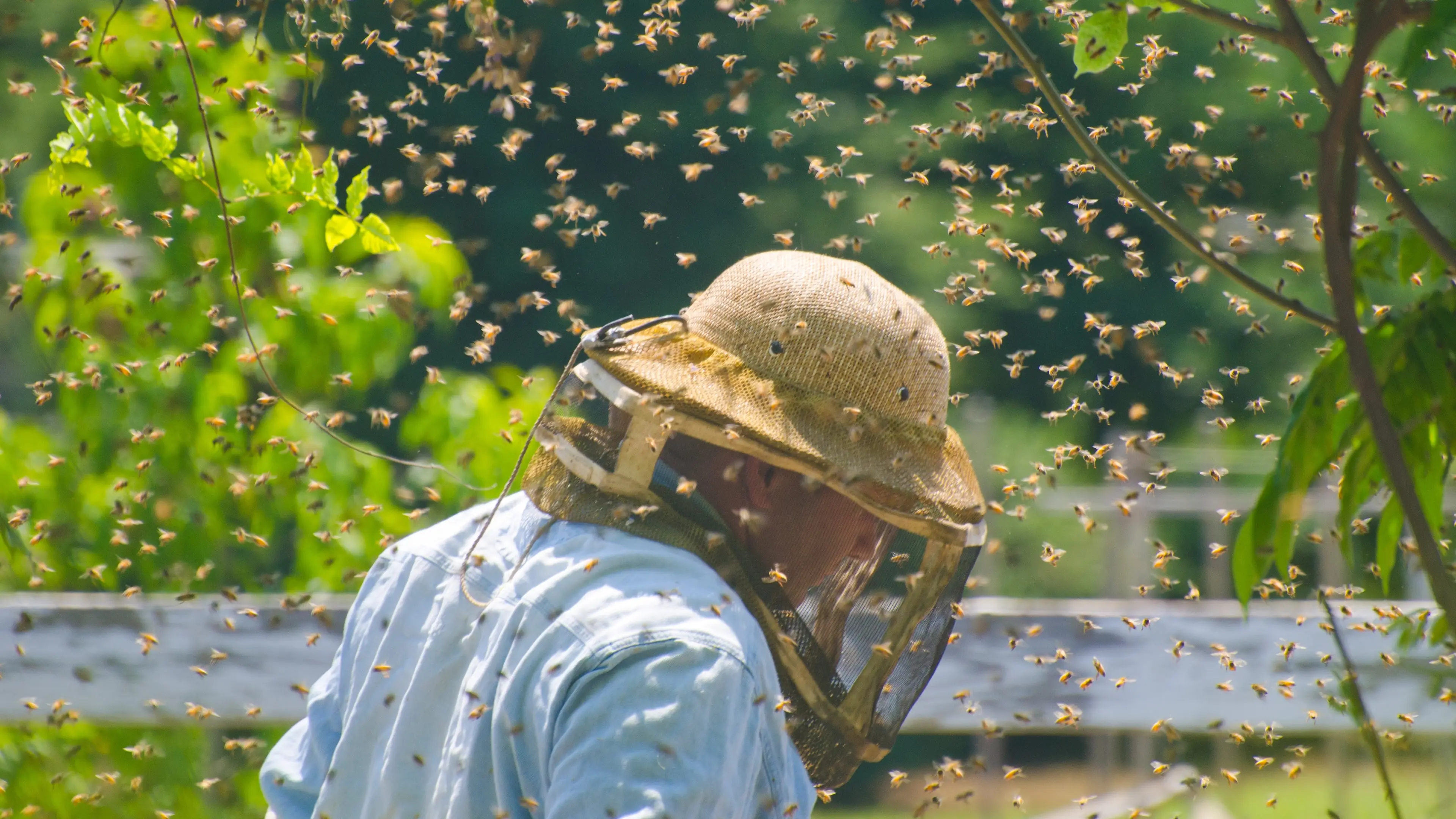
Doctor issues chilling warning for humanity as insects are falling 'silent'

A doctor has issued an ominous warning to the whole of humanity as the world's insects are said to be falling 'silent' at rapid speed.
It's not very often a warning is issued to humanity, but when it does, we really should stand up and listen.
The newest claims come from Dr Joseph Varon, who claims the likes of beetles, butterflies, moths, flies and bees are becoming a less common sight.
To be honest, many of these insects can be rather annoying, but the Houston-based doctor has noted they are crucial to our planet and humanity as a whole.
Advert
The expert detailed his thoughts in The Defender, which will raise some concerns for many who pondered the harm it would cause to our environment.
He wrote: "In medicine, silence can be more alarming than noise. For example, a patient who abruptly stops voicing discomfort or a monitor that ceases activity may signal system failure rather than resolution.
"Ecology presents a similar scenario, and currently, the silence is deeply concerning."
The doctor continued: "Insects are disappearing across vast regions globally. This is not a modest decline or a simple geographic shift, but a rapid vanishing of beetles, butterflies, moths, flies, mosquitoes, bees and entire functional groups."
So, what would happen to us on Earth if insects disappeared completely?
Well, you'd immediately notice that fruit and vegetables were in short supply, while the same could also be said for nuts and legumes.
Meanwhile, many nutrients, vitamins, minerals and antioxidants would no longer be a thing, which could lead to more health problems for the general population.
Scientists believe some folks would suffer from weakened immune resilience, as well as an increased risk of chronic disease.
To put it simply, insects are absolutely vital.
"The current silence should not be interpreted as stability. It is a warning," Varon added. "Without insects, food systems collapse not just quantitatively, but qualitatively. Nutrient diversity declines. Resilience vanishes. Dependency on industrial inputs increases."
Studies have suggested that by 2030, a staggering quarter of insects worldwide could be at risk of extinction, which could lead to devastating consequences, Varon has warned.
The doctor provided the example of someone who experiences 'recurrent respiratory infections', linked to that of shifts in pollen levels, due to 'changing insect populations'.
And before things get out of hand, Varon is urging people to do their bit now.
Offering his suggestions, the doctor added: "It is essential for medical professionals to integrate environmental health assessments into their practice, amplifying the connectivity between ecological and human health."
Topics: Insects, Environment
 Callum Jones