unilad homepage
  • News
    • UK News
    • US News
    • World News
    • Crime
    • Health
    • Money
    • Sport
    • Travel
  • Film and TV
    • Netflix
  • Music
  • Tech
  • Features
  • Celebrity
  • Politics
  • Advertise
  • Terms
  • Privacy & Cookies
  • LADbible Group
  • LADbible
  • SPORTbible
  • GAMINGbible
  • Tyla
  • UNILAD Tech
  • FOODbible
  • License Our Content
  • About Us & Contact
  • Jobs
  • Latest
  • Archive
  • Topics A-Z
  • Authors
Facebook
Instagram
X
Threads
TikTok
YouTube
Submit Your Content
Atlantic Ocean could be swallowed by 'Ring of Fire’ after scientists analyze ‘sleeping’ subduction zone

Home> News> World News

Published 16:56 21 Mar 2024 GMT

Atlantic Ocean could be swallowed by 'Ring of Fire’ after scientists analyze ‘sleeping’ subduction zone

It might take a few million years, but our planet could look very different

Emily Brown

Emily Brown

google discoverFollow us on Google Discover
Featured Image Credit: Mr. Elliot Lim, CIRES & NOAA/NCEI / Satellite Earth Art/Getty

Topics: Science, Environment, Climate Change, Nature

Emily Brown
Emily Brown

Emily Brown is UNILAD Editorial Lead at LADbible Group. She first began delivering news when she was just 11 years old - with a paper route - before graduating with a BA Hons in English Language in the Media from Lancaster University. Emily joined UNILAD in 2018 to cover breaking news, trending stories and longer form features. She went on to become Community Desk Lead, commissioning and writing human interest stories from across the globe, before moving to the role of Editorial Lead. Emily now works alongside the UNILAD Editor to ensure the page delivers accurate, interesting and high quality content.

Advert

Advert

Advert

We all know the Atlantic Ocean, right? The big thing that separates the US and Europe? Well, it turns out it could get swallowed up entirely.

It might sound like something out of a sci-fi movie, but it's actually a real finding from a study led by João Duarte, a professor in tectonics at the Faculty of Sciences of the University of Lisbon, Portugal.
The Atlantic ocean could look very different in the future.
Getty Stock Photo

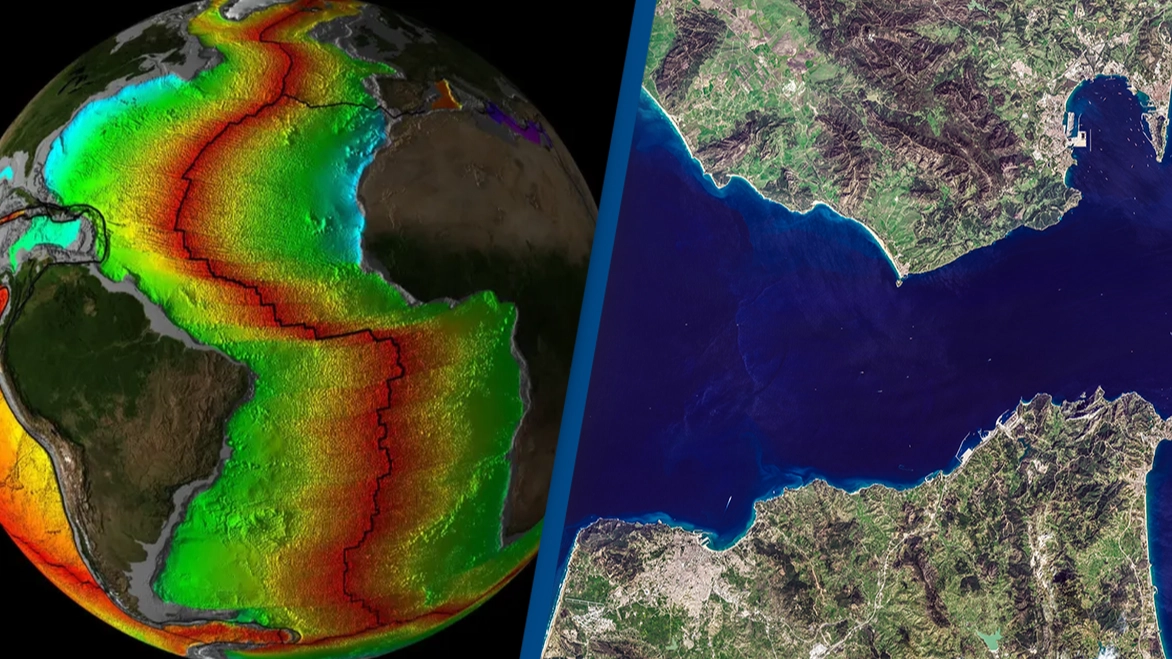
In the study, the scientists looked at a subduction zone, which is located beneath the Gibraltar Strait between Spain and Morocco.

Advert

Subduction zones are locations on Earth where one plate is pushed below another plate. Beneath the Gibraltar Strait, the African plate is subducting below the Eurasian plate - only it's happening 'very very slow' at the moment.

However, Duarte and his colleagues have warned that if 'new subduction zones' form, they could swallow up entire oceans.

And according to them, the process might already be underway with the Atlantic.

Speaking to the Mail Online, Professor Duarte said: "We have good reason to think that the Atlantic is starting to close.

"Subduction zones are what cause the oceans to close, by pulling their ocean floor back into the mantle, bringing the continents together."
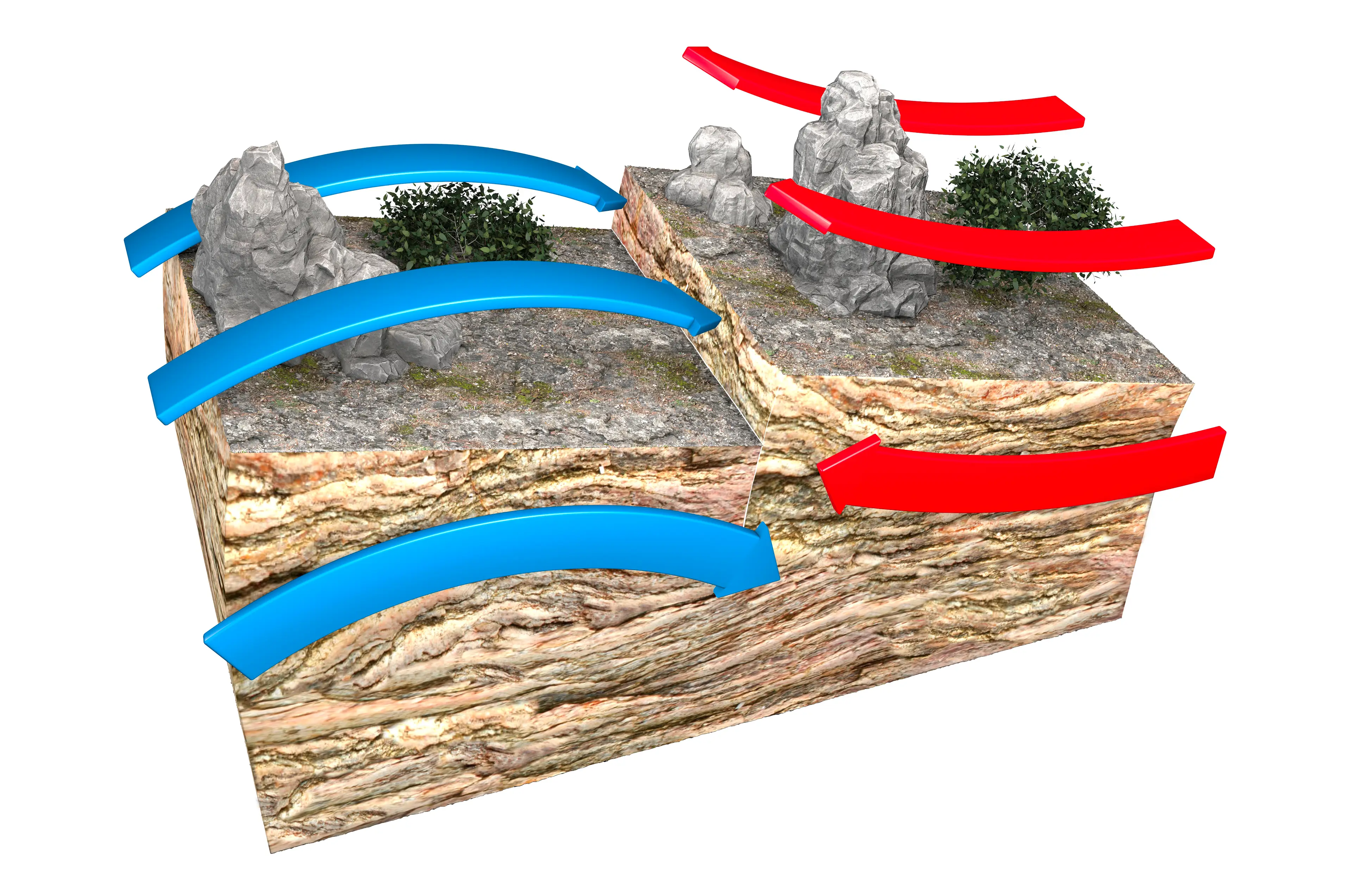
Subduction zones are where one plate sinks beneath another.
Getty Stock Photo

While the subduction zone below the Gibraltar Strait is currently about 125 miles long, it could eventually reach a length of about 500 miles.

Admittedly it might take approximately 20 million years for it to do so, but the team were able to use computer modelling to simulate the life of the subduction zone and anticipate how it might progress in the future.

Using the model, the scientists predicted the zone will move westwards and form a new Atlantic subduction system known as the 'Ring of Fire'.

As the subduction continues, it will shrink the basin of the ocean and effectively 'close up' the Atlantic.
The process will take millions of years.
Pixabay

In the study, published in the journal Geology, the researchers said: "The results suggest that the arc will propagate farther into the Atlantic after a period of quiescence (inactivity).

"The models also show how a subduction zone starting in a closing ocean can migrate into a new opening ocean through a narrow oceanic corridor.

"Subduction invasion is likely a common mechanism of subduction initiation in Atlantic-type oceans and a fundamental process in the recent geological evolution of Earth."

So, while we've got a good few million years left to enjoy the Atlantic Ocean, the landscape could look very different for future generations. Better snap those sunset-ocean pics while we can!

  • Experts make unexpected discovery after rare ‘Twilight Zone’ fish washes up on shore
  • Scientists reveal exactly how long before Earth will run out of oxygen in terrifying prediction
  • Scientists drilled to the bottom of the Great Blue Hole and uncovered worrying trend
  • Scientists issue shocking update on real-life ‘Gates of Hell’ that have been burning for more than 50 years

Choose your content:

11 mins ago
2 hours ago
3 hours ago
  • Chip Somodevilla/Getty Images
    11 mins ago

    Trump posts expletive-laden rant as he makes new demands to Iran

    The president gave Iran an ultimatum on Saturday

    News
  • Oliver Contreras / AFP via Getty Images
    2 hours ago

    Harvard scientist, Avi Loeb, responds to JD Vance claiming UFOs and aliens 'are demons'

    Vance appeared on The Benny Show with Benny Johnson, where he spoke about his 'obsession' with UFOs

    News
  • Dia Dipasupil/Getty Images
    2 hours ago

    Gigi Hadid gives response after finding out her name is in Epstein files

    The model has spoke about how 'disturbing' it was when she realized she was named in the files

    Celebrity
  • Chad Buchanan/Getty Images
    3 hours ago

    Former Playboy Bunny Holly Madison reveals ‘disgusting’ sex act with Hugh Hefner she 'hated'

    She opened up about one thing in particular that she 'hated'

    Celebrity