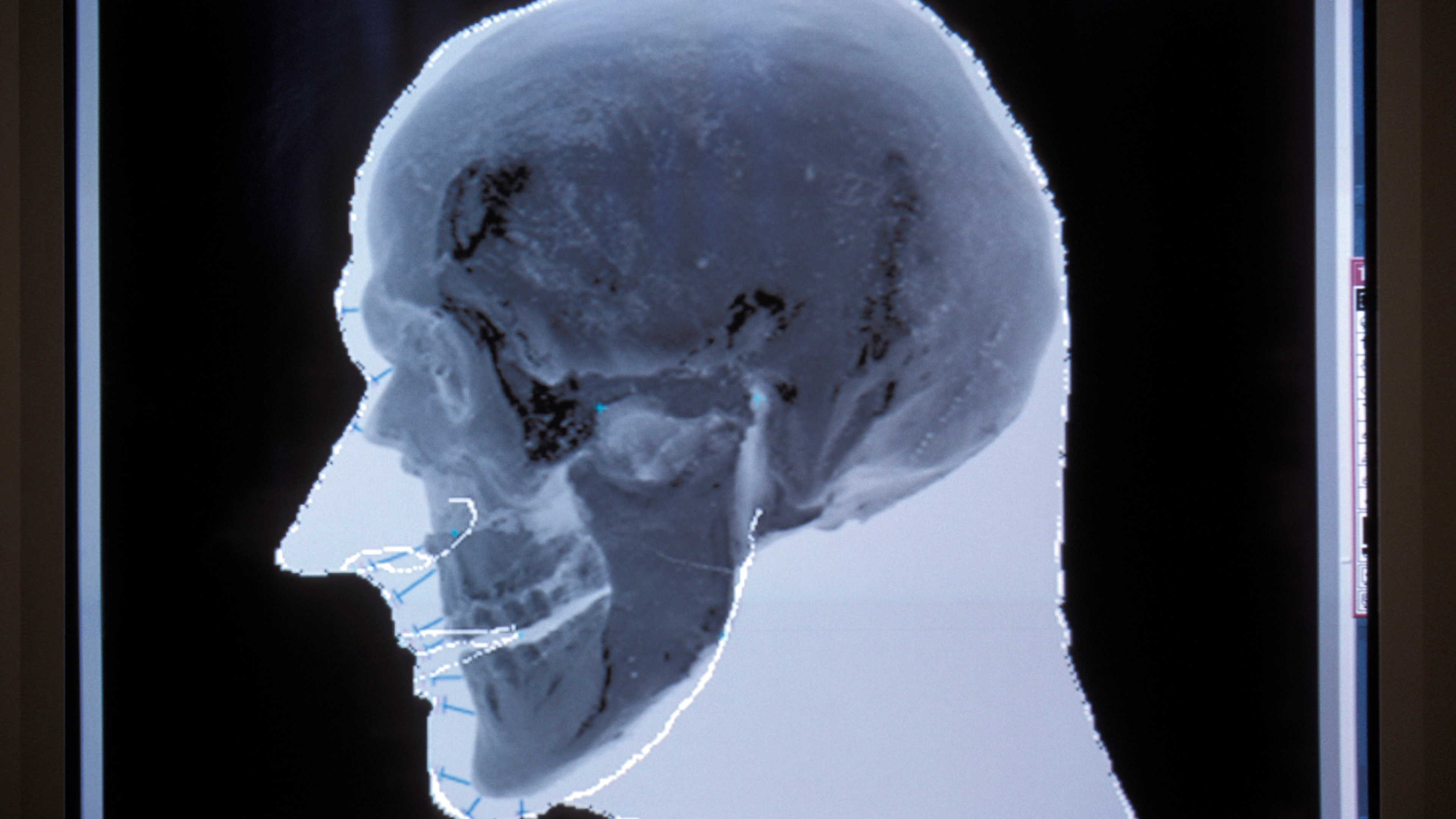
Scientists make sourdough bread from yeast found in 5000 year old mummy

A team of scientists has baked a loaf of sourdough bread using yeast harvested from one of the world's most famous mummies, and they're already eyeing up their next experiment.
The yeast came from Ötzi the Iceman, a 5,300-year-old corpse remarkably preserved after being frozen in Alpine ice near the Italy-Austria border.
Discovered in 1991, Ötzi has since become one of the most studied humans in history, offering an extraordinary window into prehistoric European life, from his diet and health to the tools he carried and the clothes he wore.
Researchers at Eurac Research's Institute for Mummy Studies have spent recent years examining the microorganisms preserved in and on Ötzi's remains, a field of study that has already produced significant findings about the ancient world.
Advert
One unexpected result of that ongoing work: they managed to extract viable yeast strains and use them to actually bake bread.
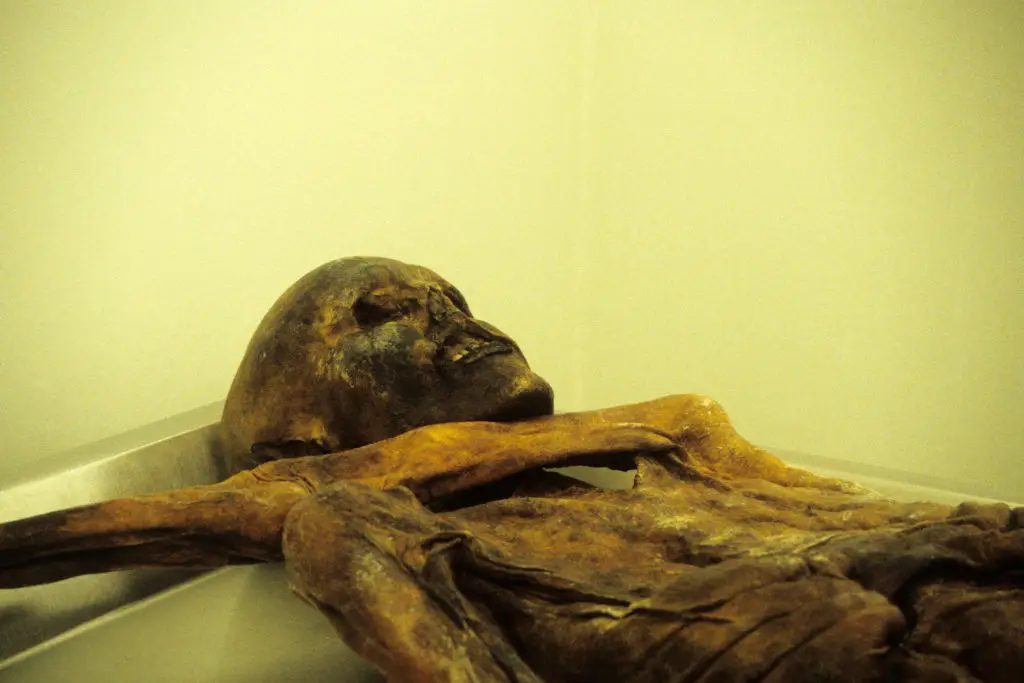
Ancient yeast produced 'completely normal dough'
Microbiologist Mohamed Sarhan said the results were surprisingly straightforward.
Speaking to Eurac Research, he said: "Eventually, we obtained a completely normal dough that rose within 24 hours, basically just like with ordinary yeast. We made some really good dough with it."
He was quick to temper expectations about the finished loaf, however. "I've never baked bread before, and it showed. So the result definitely had room for improvement.
"But as I said, these were our very first experiments," he added.
The team now has its sights set on something considerably more ambitious. Beyond bread, they want to explore what else these ancient microorganisms might be capable of producing, and they've already started having those conversations.
"We want to pursue this further and involve specialised research teams from the food sector in the process," Sarhan said. "Bread is currently one of the obvious applications we're considering; another is beer, we've already discussed this with experts from Weihenstephan," he said, referring to the renowned German brewer.
The harvested yeasts are only able to survive in cold conditions, leading researchers to believe they entered Ötzi's body after his death rather than being part of his living microbiome.
Genetic analysis suggested the window was relatively soon after he died, meaning the strains had been lying dormant in frozen Alpine conditions for the better part of five millennia before being coaxed back to life in a modern laboratory.
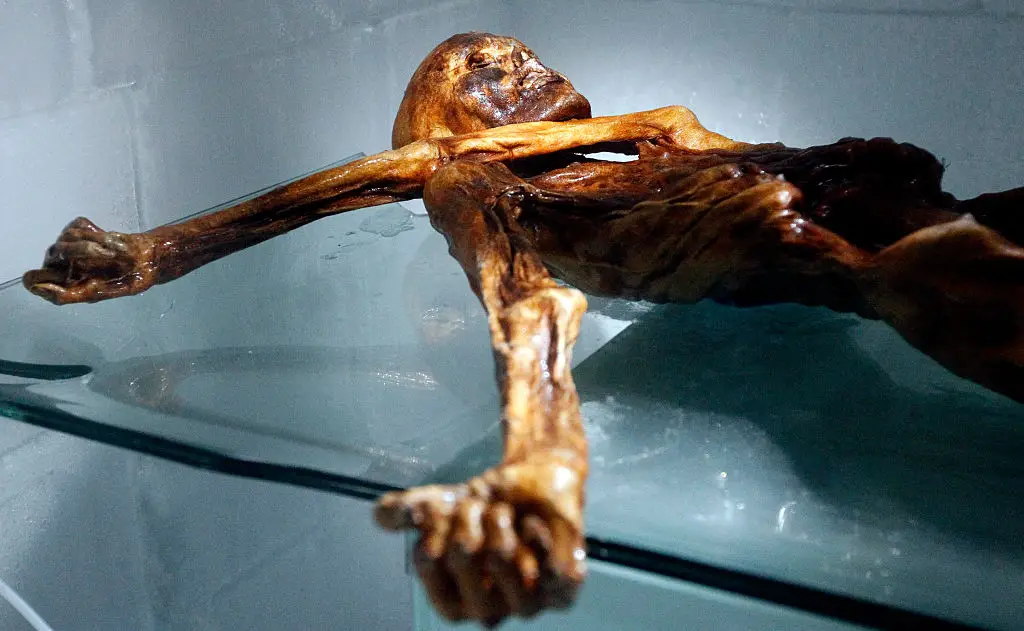
Ötzi the Iceman: one of history's most studied corpses
Ötzi himself remains a source of enduring fascination well beyond the latest bread-baking headlines. His body carries the oldest tattoos ever discovered, with 61 markings identified across his remains, a detail that has captivated archaeologists and anthropologists alike since their discovery.
The question of how he came to die alone in an icy Alpine wilderness more than five millennia ago has never fully lost its grip on researchers either.
He appears to have been shot in the back by an arrow, in what is frequently described as one of the world's oldest cold-case murders, a mystery that, despite decades of forensic study, still hasn't been entirely resolved.
Topics: Food and Drink, History, Europe, World News
 Thomas Bamford