• News
  • Film and TV
  • Music
  • Tech
  • Features
  • Celebrity
  • Politics
  • Weird
  • Community
  • Advertise
  • Terms
  • Privacy & Cookies
  • LADbible Group
  • LADbible
  • SPORTbible
  • GAMINGbible
  • Tyla
  • UNILAD Tech
  • FOODbible
  • License Our Content
  • About Us & Contact
  • Jobs
  • Latest
  • Topics A-Z
  • Authors
Facebook
Instagram
X
Threads
TikTok
YouTube
Submit Your Content
Date set for Japan's $26,300,000,000 economic boom after making 230,000,000 ton discovery

Home> News> World News

Updated 09:38 19 Dec 2024 GMTPublished 12:01 16 Dec 2024 GMT

Date set for Japan's $26,300,000,000 economic boom after making 230,000,000 ton discovery

The discovery could keep the country's economy topped up for 11 years

Ellie Kemp

Ellie Kemp

google discoverFollow us on Google Discover

A date has been set for the 'large-scale' extraction of Earth minerals which could provide a huge $26.3 billion boost to Japan's economy.

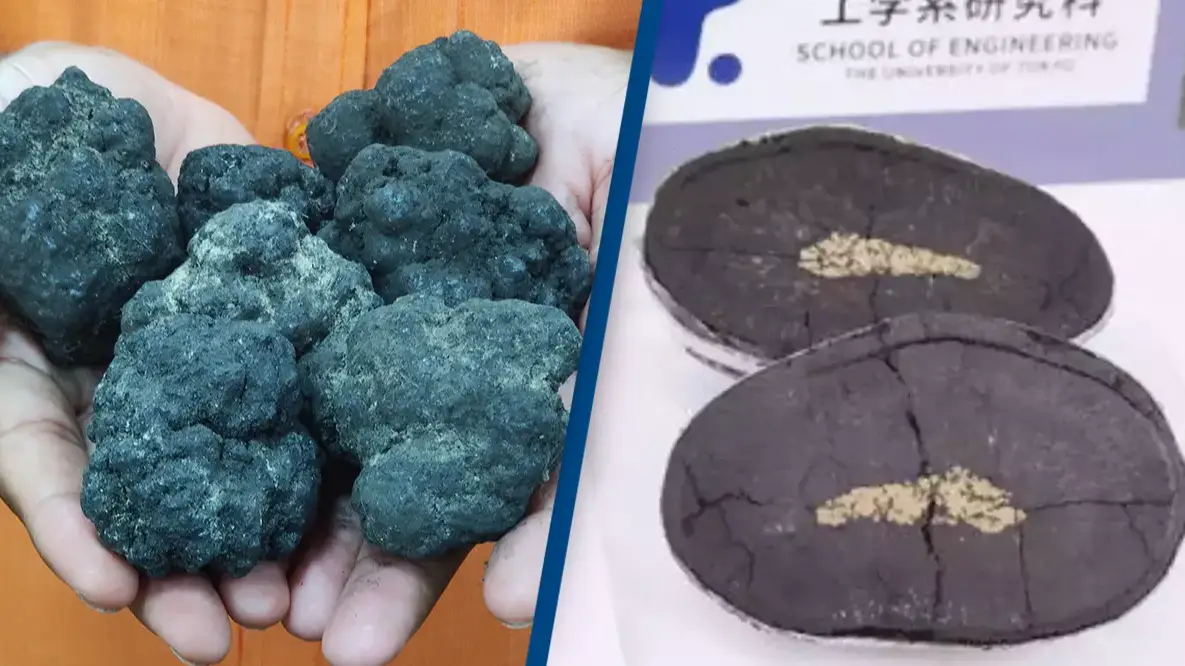
A recent survey by The Nippon Foundation and the University of Tokyo discovered a field of dense manganese nodules on the seabed of Minami-Tori-shima island - some 1,200 miles from Tokyo.

Located some 5,700 meters below sea level, the nodules contain millions of metric tons of cobalt and nickel.

The sought-after materials are two of the crucial components needed to create electric vehicle (EV) batteries: cobalt and nickel.

Advert
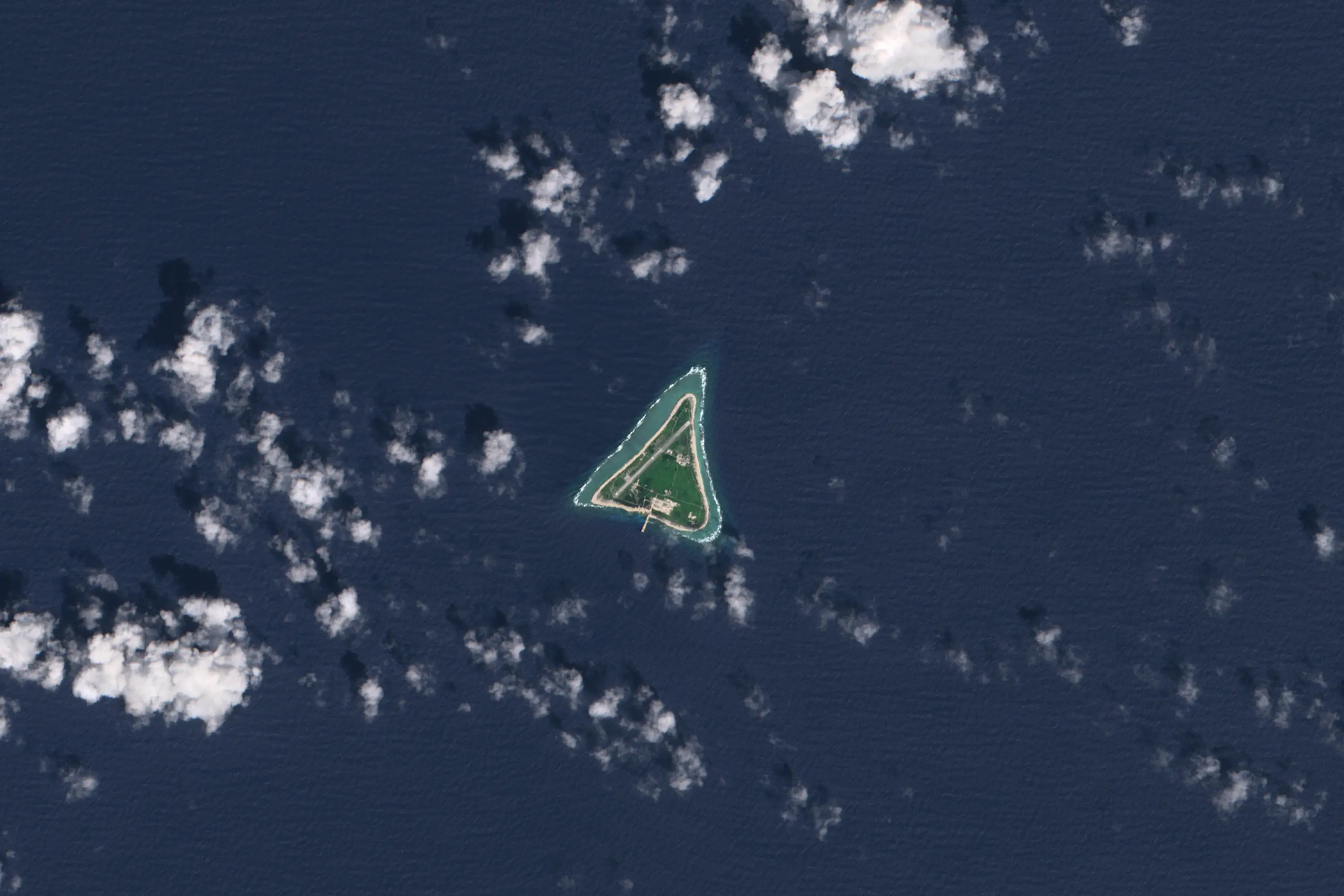
Minami-Tori-shima island (Gallo Images/Orbital Horizon/Copernicus Sentinel Data 2024)

How big of a find are we talking?

Around 610,000 metric tons of cobalt and 740,000 metric tons of nickel has been found, which equates to a staggering amount of money.

One metric ton of cobalt is worth $24,300 while nickel sees a value of $15,497, according to current market figures from Trading Economics.

This means Japan has amassed $14,823,000,000 worth of cobalt while the 740,000 tons of nickel comes in at $11,467,780,000.

That totals an eye-watering total of $26,290,780,000, at the time of writing.
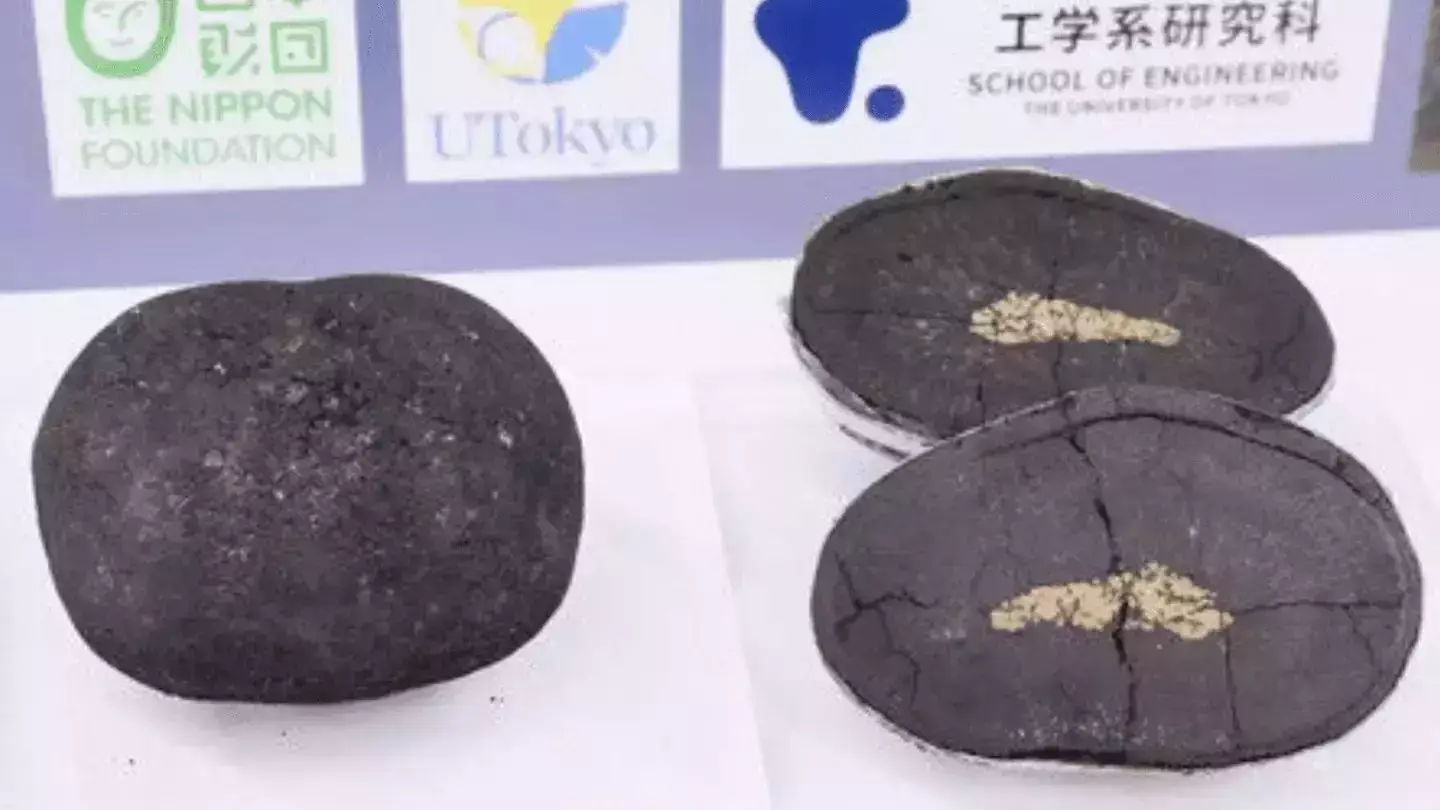
Some of the manganese nodules found on the sea bed (The Nippon Foundation)

When will Japan's economy benefit from the find?

Japan's economy could benefit from this discovery sooner rather than later.

The Nippon Foundation previously said large-scale extraction would begin by the end of fiscal year 2025 with the University of Tokyo contributing to material analysis.

The foundation added: "Starting in 2026, we expect to set up a joint venture with multiple Japanese companies to commercialize the minerals as domestically produced resources."
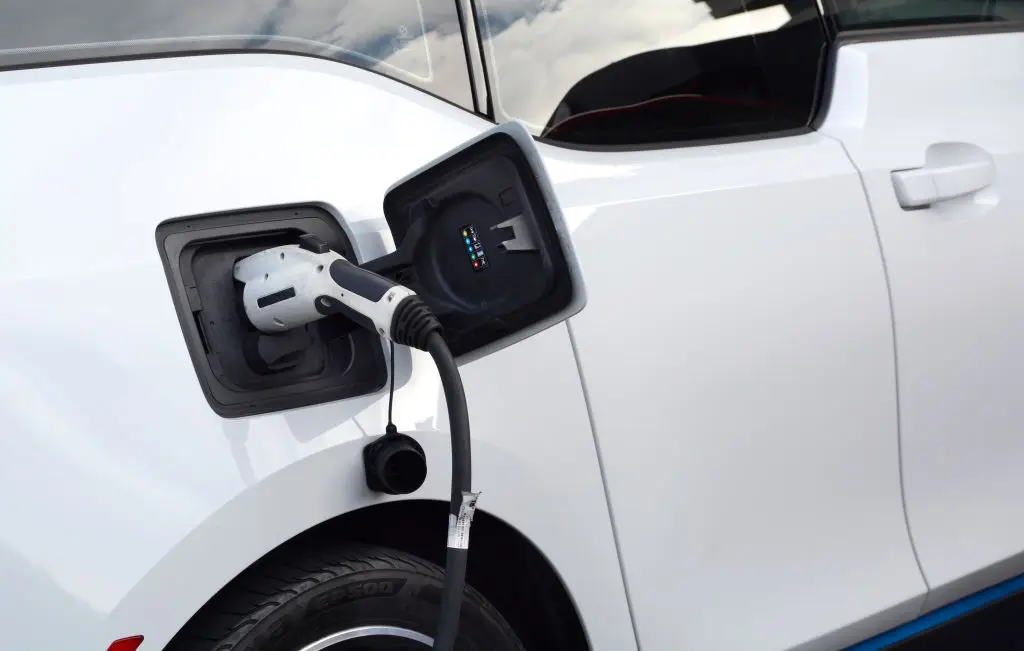
Cobalt and nickel are used in electric vehicle batteries (Robert Alexander/Getty Images)

Environmental concerns have been raised

Experts have previously spoken out about the potentially devastating environmental impacts deep sea mining could have.

One study, conducted by Travis Washburn, a researcher at the Geological Survey of Japan, found ocean creatures vanish from areas within and even outside deep-sea mining operations.

"These results suggest the impact of deep-sea mining could be even bigger than we think," Washburn said.

One year after the test was conducted, those working on the study found a massive 43 percent drop in fish and shrimp populations around the site.

Elsewhere Sophie Benbow, director of a marine programme at a conservation charity, told the BBC: "There is so much we could learn from ocean biodiversity. Medical advances and new technologies could be deciphered from the study of deep-sea species, but they could be wiped out before we even know they exist if deep-seabed mining is to go ahead prematurely."

Meanwhile, Colin Hamilton spoke about the complexity mining at such depths provides.

"Extraction will not be simple, and we see this as a potential test case for the benefits versus disadvantages of deep-sea mining of materials relating to the global fuel-to-materials transition," he said in a recent brief.

Featured Image Credit: Pallava Bagla/Getty Images/The Nippon Foundation

Topics: Japan, Environment, Technology, Money, World News

Ellie Kemp
Ellie Kemp

Ellie joined UNILAD in 2024, specialising in SEO and trending content. She moved from Reach PLC where she worked as a senior journalist at the UK’s largest regional news title, the Manchester Evening News. She also covered TV and entertainment for national brands including the Mirror, Star and Express. In her spare time, Ellie enjoys watching true crime documentaries and curating the perfect Spotify playlist.

X

@EllieKempOnline

Advert

Advert

Advert

Choose your content:

24 mins ago
an hour ago
  • ANDREW CABALLERO-REYNOLDS / AFP via Getty Images
    24 mins ago

    Trump says there will be no deal with Iran until they agree to this specific type of surrender

    Donald Trump has revealed his expectations for Iran going forward

    News
  • District Clerk Travis County
    an hour ago

    Parents of missing 8-year-old girl help get legal victory over camp where she was swept away in flood tragedy

    Camp Mystic has already controversially announced plans to reopen

    News
  • Getty Stock Image
    an hour ago

    Etiquette expert questioned for going 'too far' with his 'correct' way to eat cereal with fork and spoon

    William Hanson frequently posts videos advising people on modern day etiquette, but his latest one left some people with raised eyebrows

    News
  • Getty Stock Image
    an hour ago

    Doctor insists that this one thing will 'change your life' when it comes to sex

    The doctor said this thing will make sex go smoother

    News
  • Man who threw away $632,000,000 Bitcoin says he has 'finely tuned' plan to recover it after a decade
  • Japan has made a $26,290,780,000 discovery that'll keep its economy topped up for the next decade
  • Bank clerk accidentally transferred $234,021,110 after falling asleep with finger on the keyboard
  • Scientists issue warning as plan to refreeze the Arctic begins to show promising results