unilad homepage
unilad homepage
  • News
    • UK News
    • US News
    • World News
    • Crime
    • Health
    • Money
    • Sport
    • Travel
  • Music
  • Technology
  • Film and TV
    • News
    • DC Comics
    • Disney
    • Marvel
    • Netflix
  • Celebrity
  • Politics
  • Advertise
  • Terms
  • Privacy & Cookies
  • LADbible Group
  • LADbible
  • SPORTbible
  • GAMINGbible
  • Tyla
  • UNILAD Tech
  • FOODbible
  • License Our Content
  • About Us & Contact
  • Jobs
  • Latest
  • Archive
  • Topics A-Z
  • Authors
Facebook
Instagram
X
Threads
TikTok
YouTube
Submit Your Content
Scientists issue warning as plan to refreeze the Arctic begins to show promising results
Home>News>World News
Published 17:17 13 Dec 2024 GMT

Scientists issue warning as plan to refreeze the Arctic begins to show promising results

People have raised their concerts about the controversial plan

Niamh Shackleton

Niamh Shackleton

google discoverFollow us on Google Discover
Featured Image Credit: Real Ice/Getty Images/Ashley Cooper

Topics: Climate Change, Environment, Science, Technology, News, World News

Niamh Shackleton
Niamh Shackleton

Niamh Shackleton is an experienced journalist for UNILAD, specialising in topics including mental health and showbiz, as well as anything Henry Cavill and cat related. She has previously worked for OK! Magazine, Caters and Kennedy.

X

@niamhshackleton

Advert

Advert

Advert

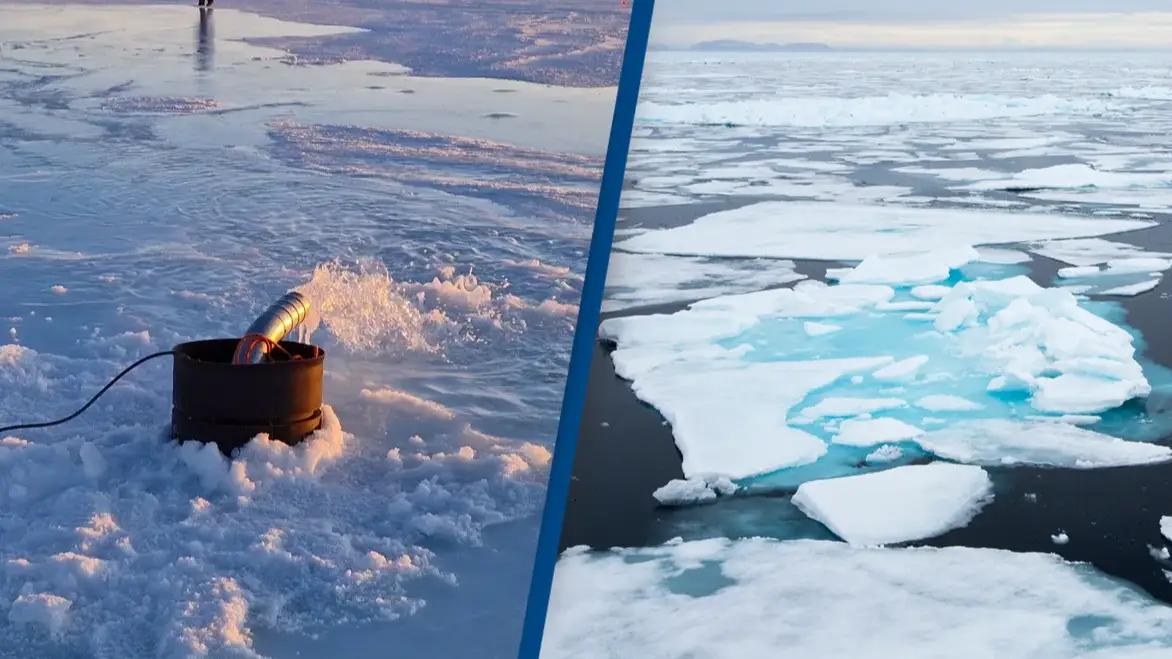
After warnings that the Arctic could be ice by the early 2030s, scientists hatched a plan to refreeze it.

Over recent decades, the Arctic has warmed as a result of climate change and it's had devastating affects on the area - and the rest of the world.

From more draughts and more severe storms, to rising sea levels and an increase in some diseases such as malaria, global warming is wreaking havoc on our planet.

The Arctic is one of the worst hit areas, with its ice shrinking by 12.2 percent per decade, NASA reports.

Advert

With this stark figure in mind, scientists thought up a way to try restore Arctic sea ice.
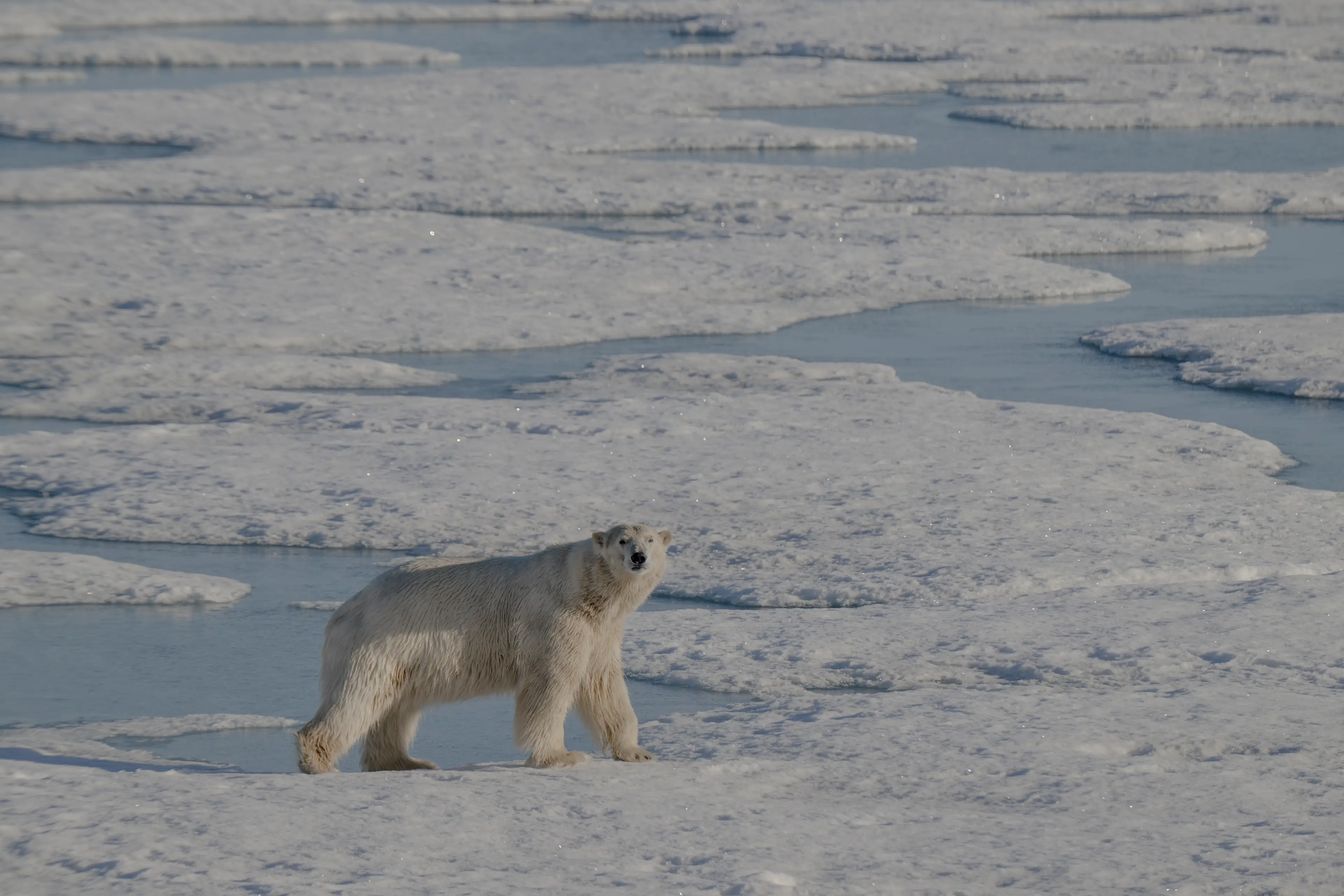
The Arctic loses over 12 per cent of its ice each decade (Sebnem Coskun/Anadolu via Getty Images)

As to how they've been doing this, UK start-up Real Ice has been drilling holes through the sea ice to pump out the seawater below and freeze it on the surface, CNN explained.

The group started tests in Cambridge Bay in Canada in January this year and following tests conducted last month, it's been found that four inches of ice has been formed so far.

It's still 'early days' though, says Shaun Fitzgerald, director of the Centre for Climate Repair at the University of Cambridge.

"I am optimistic, but we need more experiments and more data," he added.

As per Real Ice's website, the water that's being pumped onto the ice is 'delivered by an underwater drone with a hydrogen fuel cell energy system'.

These drones then melt holes in the ice from below using heated drills.
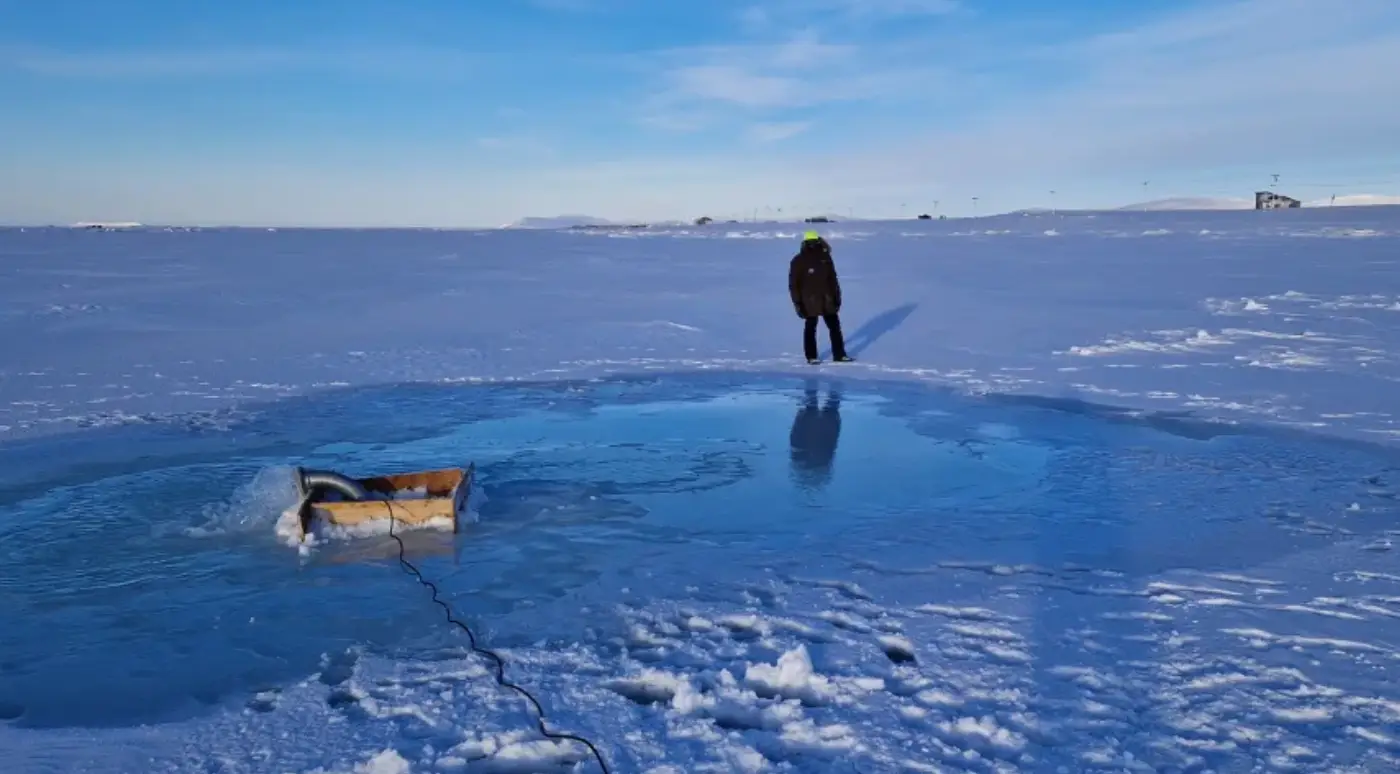
Real Ice has been drilling into the Arctic floor to get seawater to come to the surface (Real Ice)

The drones would be deployed carefully to avoid animal migration paths and ship lanes, noted Andrea Ceccolini, co-CEO of Real Ice.

While there's been some positive outcomes so far, other experts have expressed concerns about the plans.

Liz Bagshaw, associate professor in polar environmental change at the University of Bristol, labeled the plan as 'extremely questionable'.

"Such interventions are morally dubious at best, and at worst, ethically irresponsible," she added to CNN.

Jennifer Francis, a senior scientist at Woodwell Climate Research Center, also said that she has 'serious doubts' about it all and if it will make a real impact on ice levels in the Arctic.
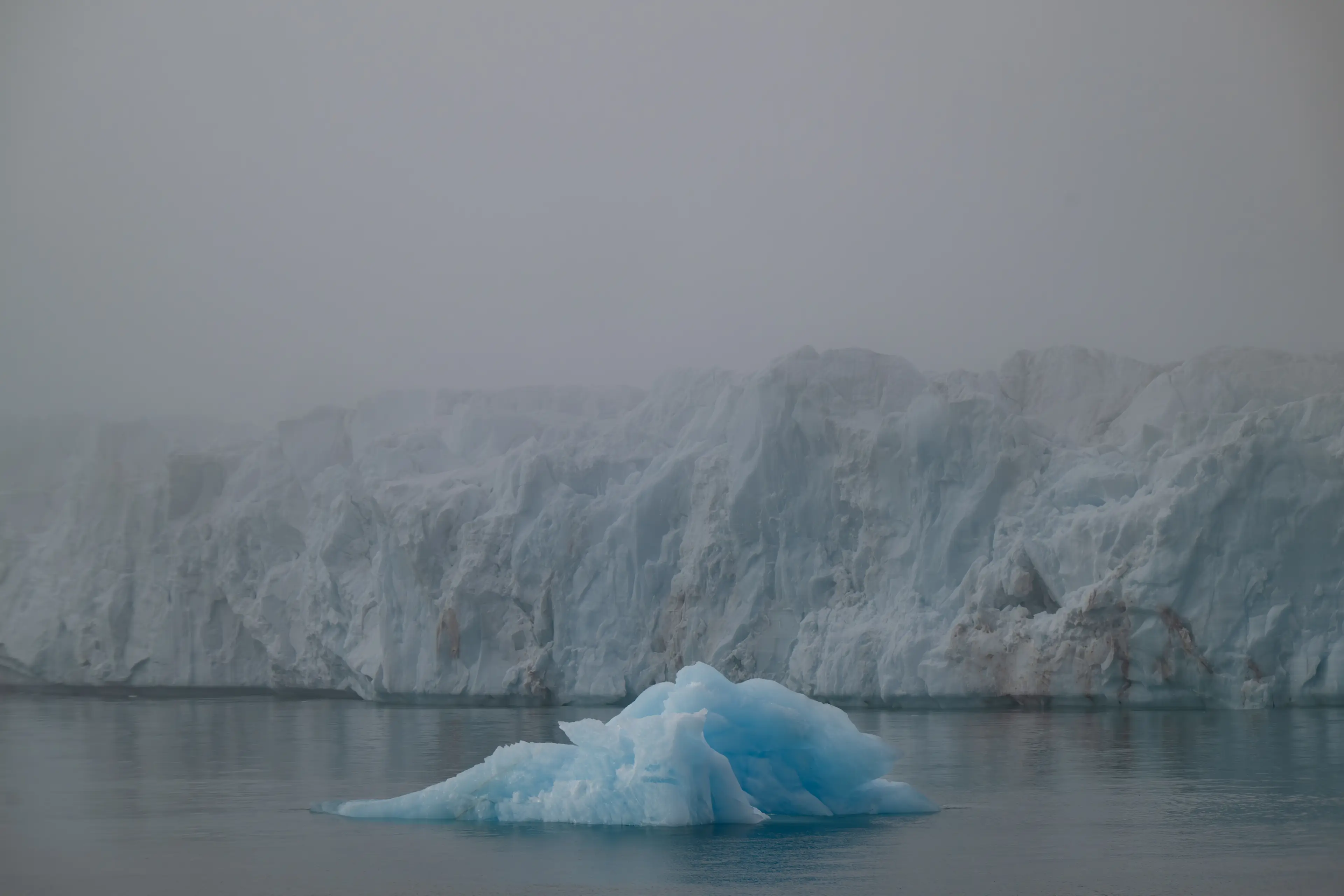
There are fears that the Arctic will lose most of its ice by the early 2030s (Sebnem Coskun/Anadolu via Getty Images)

It's also feared that it will have 'grave unforeseen consequences' - one being changes to marine environment.

A 2024 report titled 'Safeguarding the polar regions from dangerous geoengineering' argued that this could 'cause severe environmental damage'.

In regards to how damage caused by climate change can be avoided, the study says this will be 'best achieved by mitigating the cause of climate harm through immediate, rapid and deep decarbonization, rather than attempting interventions in fragile polar ecosystems'.

Choose your content:

an hour ago
3 hours ago
11 hours ago
  • Dave Kotinsky/Getty Images for SiriusXM
    an hour ago

    Sports commentator Stephen A. Smith facing backlash after 'ignorant' World Cup take

    "Could 2026 finally be the year Stephen A. Smith wins a clue about soccer ?"

    News
  • ABC7 New York
    an hour ago

    US senator issues warning after tourist, 18, killed in New York horse-drawn carriage crash

    Horse-drawn carriages in New York's Central Park have been a controversial topic for some time now

    News
  • John Phillips/Getty Images for The Other Songs
    3 hours ago

    The men most at risk of prostate cancer as Jeremy Clarkson reveals 'aggressive' diagnosis

    Jeremy Clarkson recently shared the news of his cancer diagnosis on his hit Prime Video show, Clarkson's Farm

    News
  • Luke Hales/Getty Images
    11 hours ago

    Merlin the jersey-wearing duck officially becomes the World Cup’s first viral mascot

    The two-year-old pet went viral after joining thousands of roaring fans in a custom mini kit—and now FIFA has officially gotten involved.

    News
  • Mysterious 'cold blob' could change weather across the US as scientists issue warning
  • How El Niño could trigger a spike in global food prices as the weather phenomenon officially begins
  • Scientists issue warning as Elon Musk reveals plan to block out the Sun to combat global warming
  • Experts issue 'catastrophe' warning as world's largest iceberg becomes visible from space