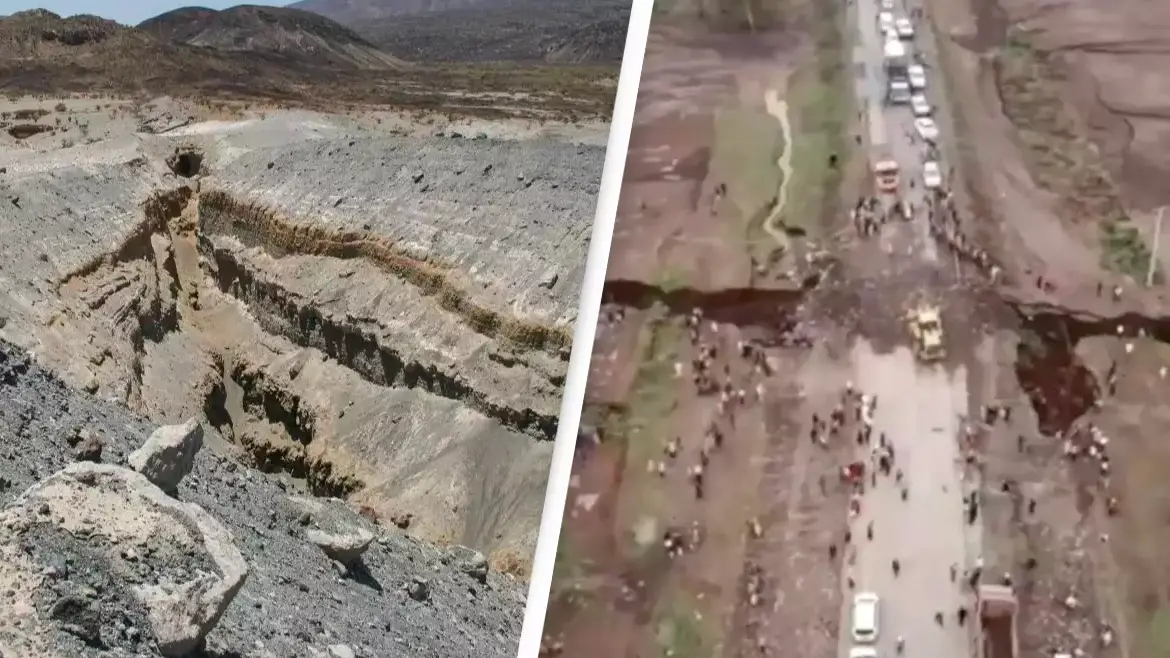
Shocking photos show Africa splitting apart as new ocean forms

Our world is an ever-changing place, and perhaps our best indication as to how much it's changing is by looking at pictures.
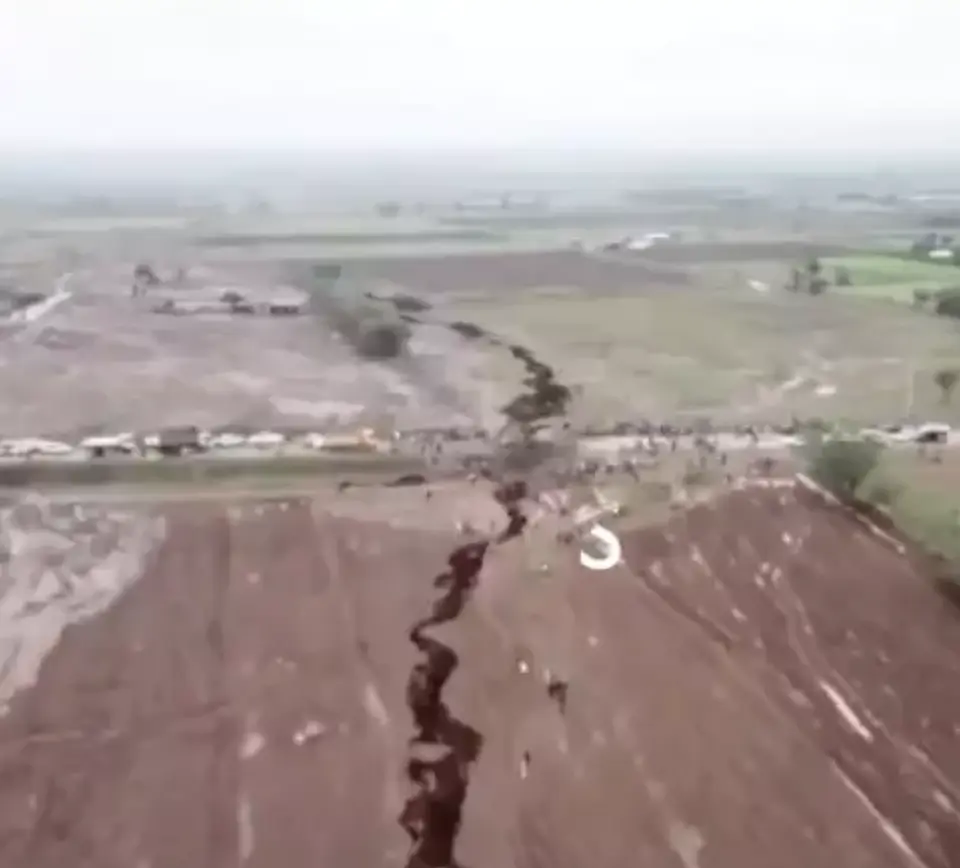
Earlier this year, shocking photographs showed Africa splitting apart as a new ocean began to form.
The photographs have shown just how deep the damage is, as parts of Africa are physically splitting apart and a new ocean is forming between them.
Advert
Two parts of land in Kenya have began to split apart over recent years, with the two masses now so far apart that a whole new ocean will run through the divide in the future.
If the separation continues, it’s thought that the African countries of Zambia and Uganda could one day have their own coastlines.
Expert research has also confirmed that a new ocean will one day run through the gap, named the East African Rift, millions of years from now.
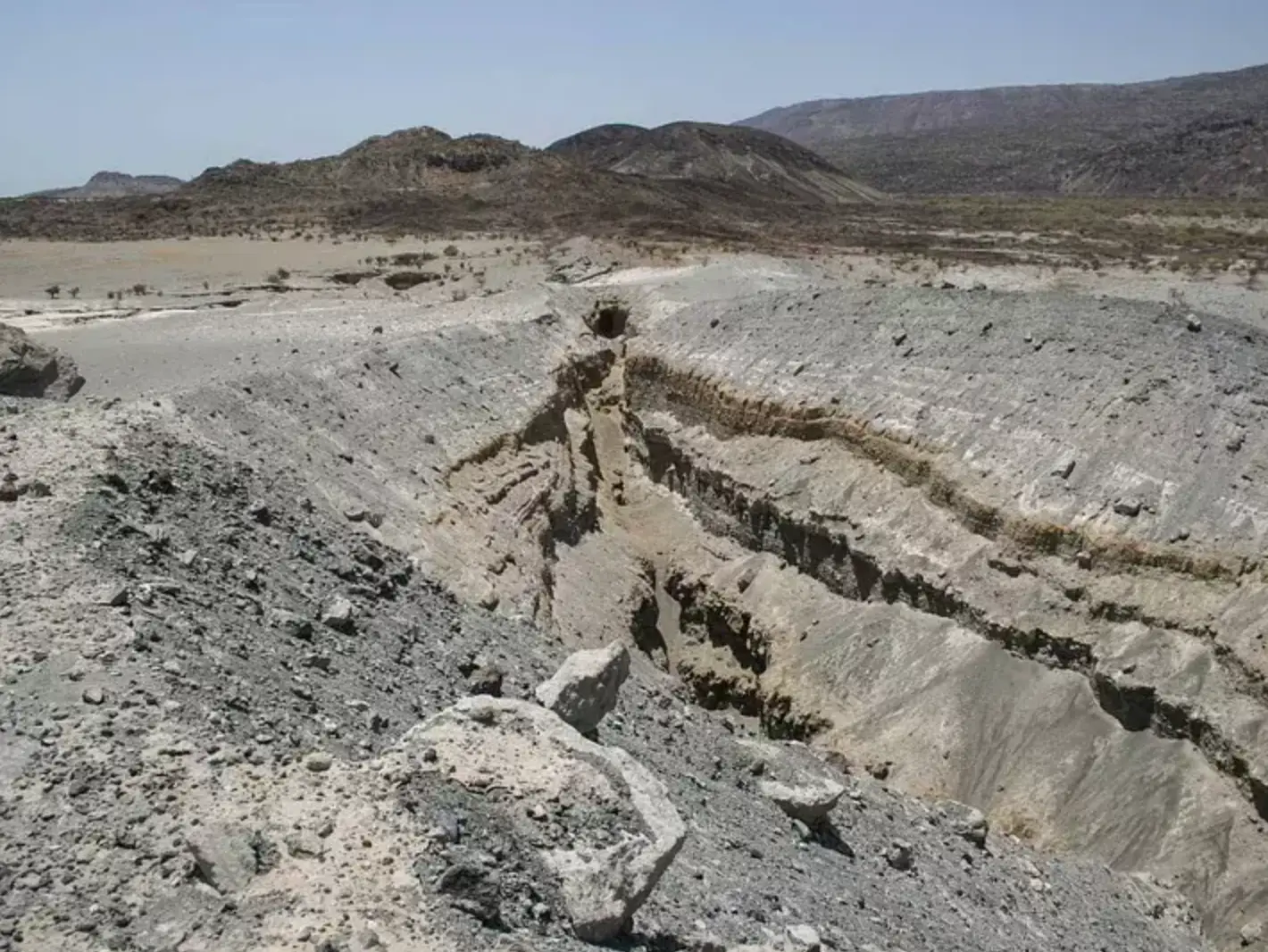
According to the peer-reviewed journal Geophysical Research Letters, experts know the exact spot where the crack began as the borders of three tectonic plates have been gradually moving away from each other.
The international effort has discovered that the crack currently runs 35 miles long, after first appearing back in 2005 in the Ethiopian deserts.
Christopher Moore, a Ph.D. doctoral student at the University of Leeds, told NBC News: “This is the only place on Earth where you can study how continental rift becomes an oceanic rift.”
Moore utilised satellite radar technology to monitor volcanic activity in the East African region, most commonly associated with the continent’s gradual breakup.
The crack resides on the borders of the boundaries of the African, Arabian and Somali tectonic plates.
For the past 30 million years, the Arabian plate has been slowly moving away from the African continent.
The gap is growing, but not so quickly that you’ll see it by looking at it, as the Arabian plate is moving away from Africa at a rate of approximately one inch per year.
It’s slower for both the African and Somali plate though, as they are reported to be breaking away at an even slower rate, at round half an inch to 0.2 inches every year.
It’s thought that the gap will continue to widen in the future, to the point where East Africa could form its own separate continent.
Ken Macdonald, a marine geophysicist and professor emeritus based at the University of California, explained: "With GPS measurements, you can measure rates of movement down to a few millimetres per year.
“As we get more and more measurements from GPS, we can get a much greater sense of what’s going on.
"The Gulf of Aden and the Red Sea will flood in over the Afar region and into the East African Rift Valley and become a new ocean, and that part of East Africa will become its own separate small continent.”
Topics: News, Science, World News, Weird
 Callum Jones