unilad homepage
  • News
    • UK News
    • US News
    • World News
    • Crime
    • Health
    • Money
    • Sport
    • Travel
  • Film and TV
    • Netflix
  • Music
  • Tech
  • Features
  • Celebrity
  • Politics
  • Advertise
  • Terms
  • Privacy & Cookies
  • LADbible Group
  • LADbible
  • SPORTbible
  • GAMINGbible
  • Tyla
  • UNILAD Tech
  • FOODbible
  • License Our Content
  • About Us & Contact
  • Jobs
  • Latest
  • Archive
  • Topics A-Z
  • Authors
Facebook
Instagram
X
Threads
TikTok
YouTube
Submit Your Content
Dinosaur skeleton the length of two buses and weighing 20,000 kilos sells for $6,400,000

Home> News> World News

Updated 14:26 22 Nov 2024 GMTPublished 14:25 22 Nov 2024 GMT

Dinosaur skeleton the length of two buses and weighing 20,000 kilos sells for $6,400,000

The remains belonged to a 'slow' species of dinosaur which had to 'constantly eat' to stay alive

Ellie Kemp

Ellie Kemp

google discoverFollow us on Google Discover
Featured Image Credit: Michel Stoupak/NurPhoto via Getty Images/Seng Kui Lim/500px/Getty Images

Topics: Dinosaurs, Science, World News, France

Ellie Kemp
Ellie Kemp

Ellie joined UNILAD in 2024, specialising in SEO and trending content. She moved from Reach PLC where she worked as a senior journalist at the UK’s largest regional news title, the Manchester Evening News. She also covered TV and entertainment for national brands including the Mirror, Star and Express. In her spare time, Ellie enjoys watching true crime documentaries and curating the perfect Spotify playlist.

X

@EllieKempOnline

Advert

Advert

Advert

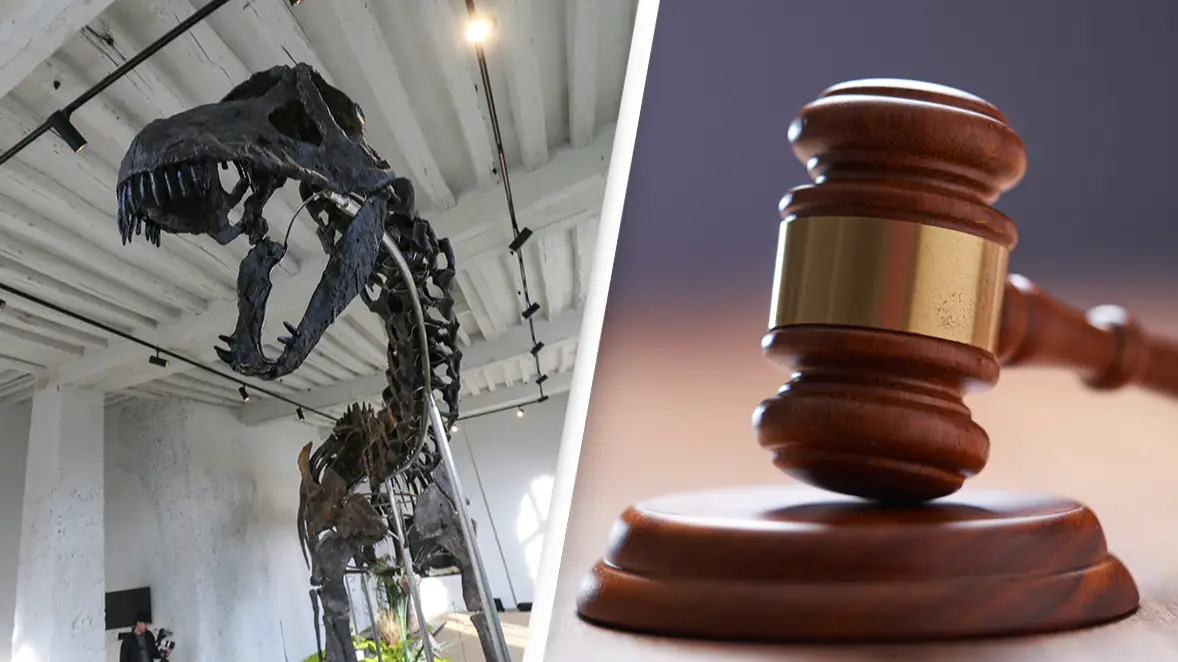
The largest ever dinosaur skeleton to go up for auction has fetched millions of dollars.

Nicknamed Vulcan, the remains went under the hammer in Paris, France earlier this month.

The skeleton, thought to be around 150 million years old, weighs a hefty 22 tons and stretches the length of two school busses.

An anonymous buyer snapped it up for a huge $6.4m (around €6.15m).

Advert

I can't say my Animal Crossing fossil collection has made anywhere near that amount of money.
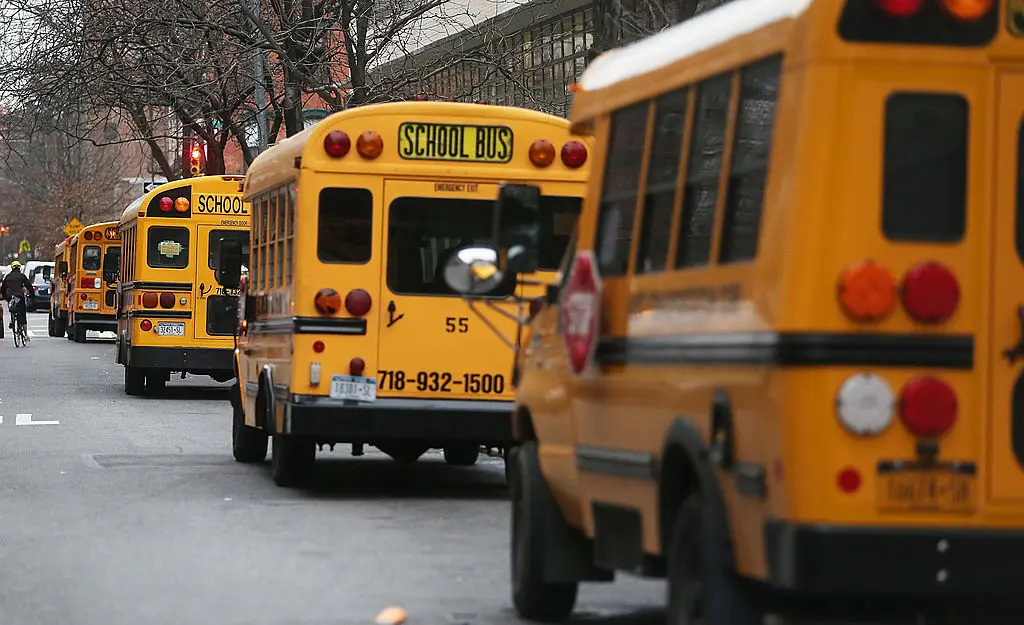
Measuring up at 70 foot, Vulcan is the length of two school buses (Mario Tama/Getty Images)

The new owner has since promised to keep it on public display and will continue to allow scientists to study it.

Impressively, the near-complete skeleton is in pretty decent shape.

It's made up of exactly 300 bones, of which up to 80 percent are believed to be authentic.

You can see its breath-taking, true scale in the video below.

The remains are that of an Apatosaurus, a plant-eating dinosaur that lived in North America during the Late Jurassic period, between 102 million and 145 million years ago.

The fossil was discovered at an unnamed site in Wyoming sometime between 2018 and 2021, according to French news agency AFP.

Auction house Barbarossa, which ran the bidding alongside Collin du Bocage, say Vulcan is now 'the biggest dinosaur ever sold at auction worldwide'.

It's not clear, however, which fossil previously held this record.

According to Rare Resource, the Apatosaurs were slow-movers and flocked together on riverbanks in herds.
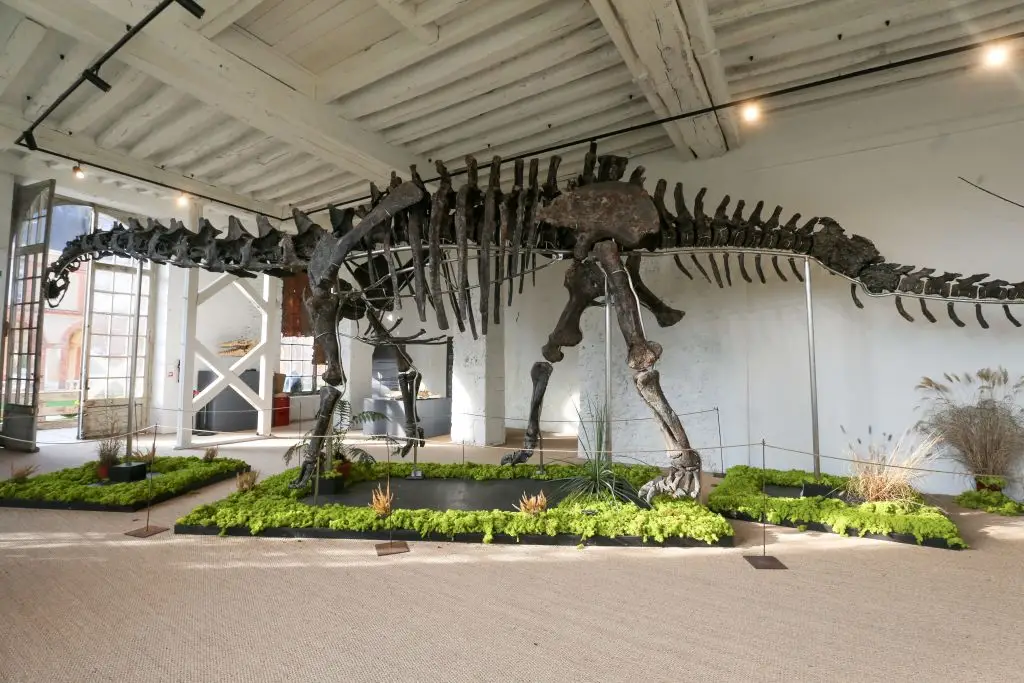
The 22-ton dinosaur skeleton is has almost all its bones (Michel Stoupak/NurPhoto via Getty Images)

They would eat a diet of only the leaves they could reach at the very top of trees.

Scientists reckon these dinosaurs 'could not raise their neck to an angle of 90 degrees, as doing so would sluggish blood flow to the brain'.

Meanwhile, studies of the arrangement of their vertebrae suggest their neck wasn't as flexible as previously thought.

Because of this, 'no one knows how Apatosaurs ate enough food to gratify their enormous bodies,' the site states.

It's believed they may have eaten 'constantly,' pausing only to 'cool off, drink or to remove parasites'.

These dinosaurs also had a single claw on each forelimb and three on each hindlimb. Its skull is said to resemble that of the Diplodocus.

It's also believed they may have used their tail as a whip to create loud noises, or, as more recently suggested, to feel things around them.
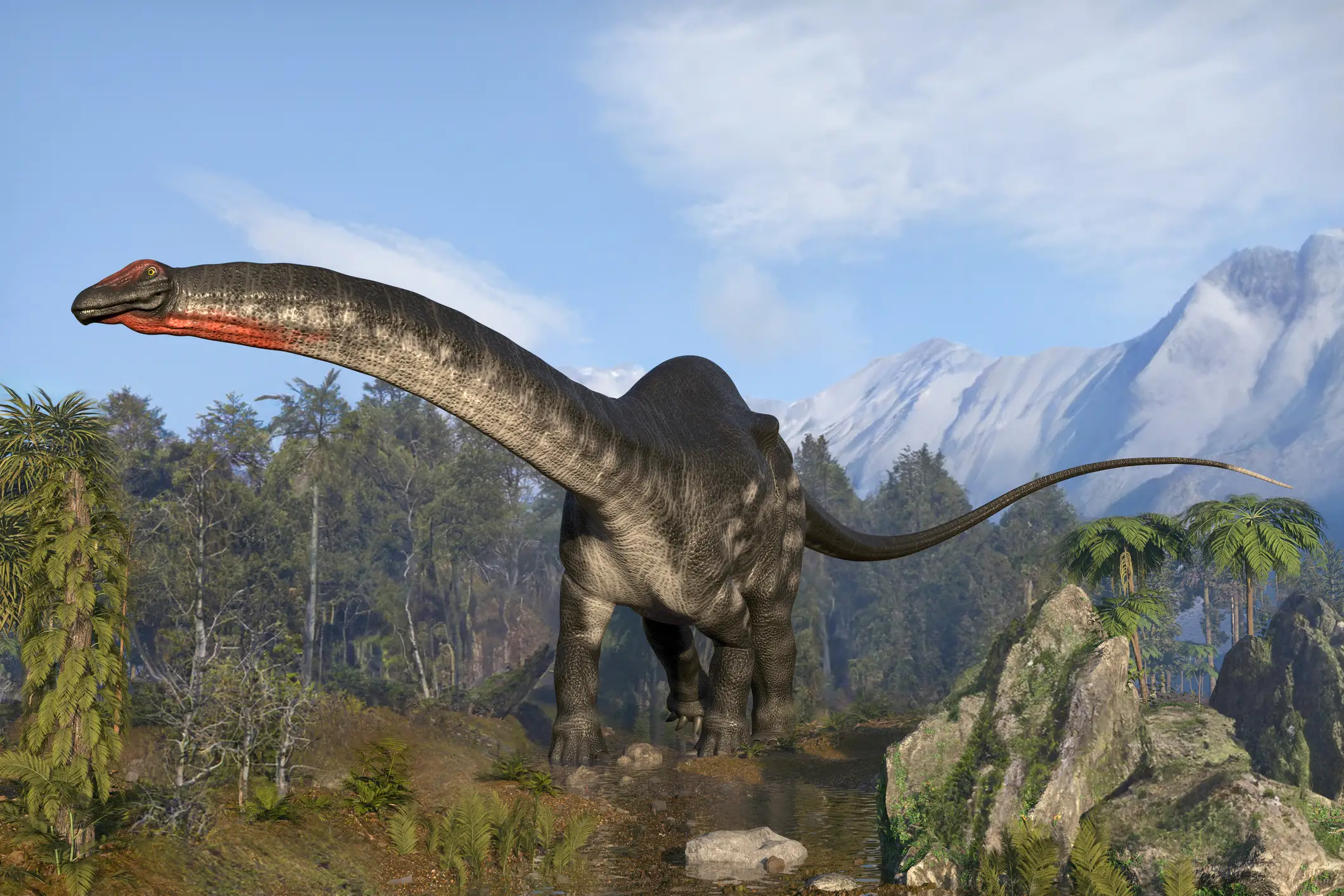
How Vulcan may have looked in better days (Roger Harris/Science Photo Library/Getty Images)

Their anatomy posed further issues for the dinosaurs.

It meant they must have slept standing upright, swinging their tails from side-to-side and stomping on predators in self-defence.

Let's face it, these poor Apatosaurs sound like they never stood a chance.

At least their legacy as largest dinosaur skeleton ever auctioned will live on...

Choose your content:

6 hours ago
7 hours ago
  • Adam Gray/Bloomberg via Getty Images
    6 hours ago

    What Kamala Harris said about running for president in 2028

    Kamala Harris was in New York when she let slip her thoughts on trying to become the next president

    News
  • Getty Stock
    6 hours ago

    Doctor explains what to do if you have 'Pruritus ani' as 61% of men experience issue

    Experiencing 'pruritus ani' can be unpleasant and embarrassing, but plenty of people will experience this common health issue

    News
  • Miguel J. Rodriguez Carrillo / AFP via Getty Images
    7 hours ago

    Jeff Bezos' Amazon salary explained as it's revealed he earns less than an average construction worker

    Bezos has been earning the same salary for decades

    News
  • Jung Yeon-je / AFP via Getty Images
    7 hours ago

    Exactly who is affected by US military draft as automatic registration begins this year

    Millions of young Americans will be automatically registered for the US military draft by the end of the year

    News
  • Scientists discover perfectly preserved dinosaur egg and everyone's saying the same thing
  • New dinosaur species found in South Korea in groundbreaking discovery
  • Mystery of cave known as 'most dangerous place on Earth' that left visitors with one of the deadliest diseases known to man
  • Scientists say length of days on Earth is increasing at an 'unprecedented' rate