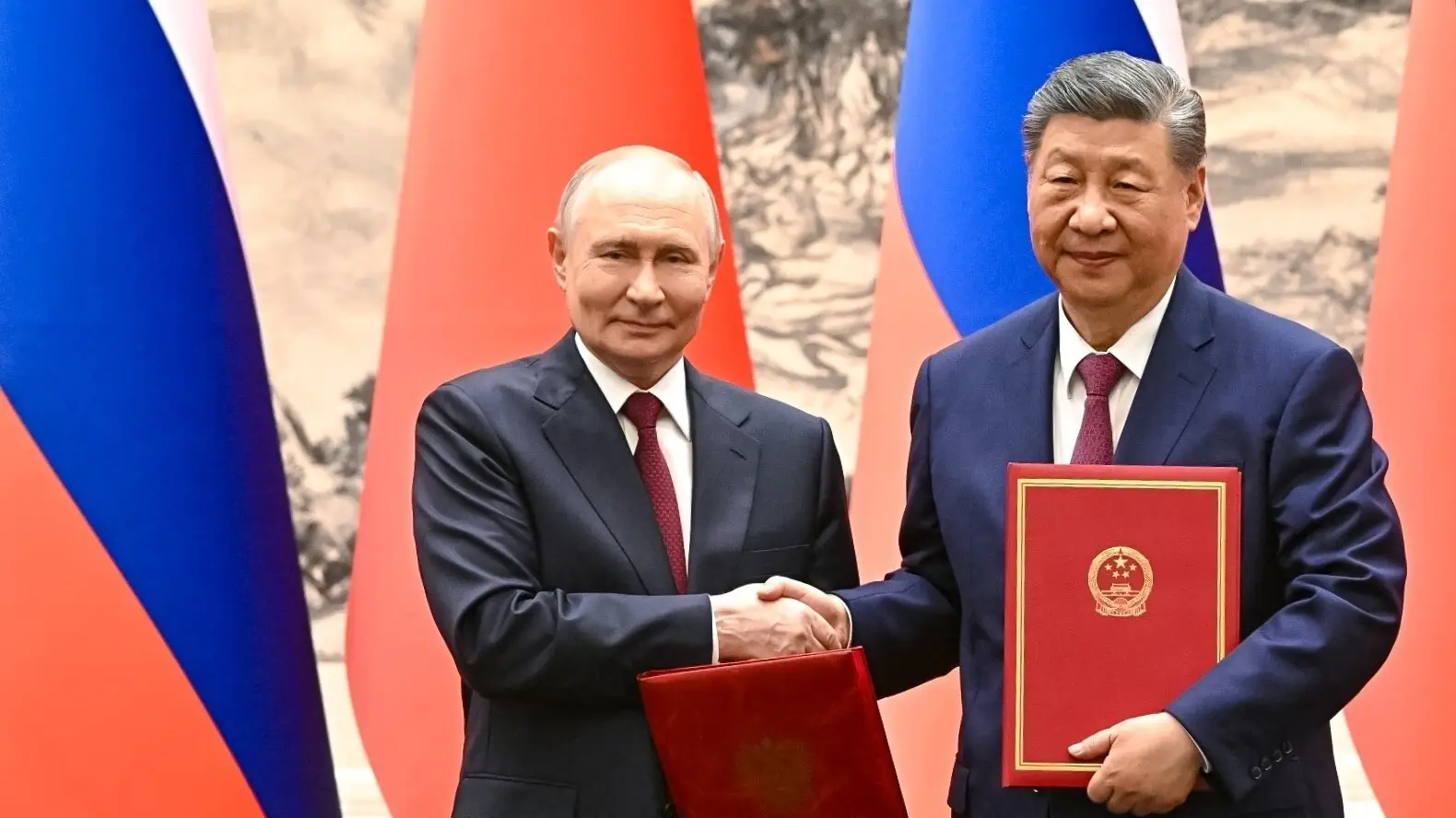
Body language expert breaks down 'interesting detail' in Putin's meeting with Xi

International diplomacy experts often describe our complicated current period in time as a 'multipolar' world order, but recent weeks have shown that our world may in face only have one pole of political power.
That is, the most populous country on Earth, China, which has managed to maintain its place as the insurgent superpower in the world without starting unpopular and deadly wars. Unlike its two rivals, Russia and the US.
The nominally communist country lead by President Xi Jingping has been touting its position as a stable global power in recent weeks, hosting major state visits from Donald Trump and Russia's President Putin within a matter of weeks.
And these two visits were similar, with everything from the choreography of China's Peoples Liberation Army to the the cheering crowds of children remaining the same for both Trump and Putin. The only major difference was in their body language.
Advert
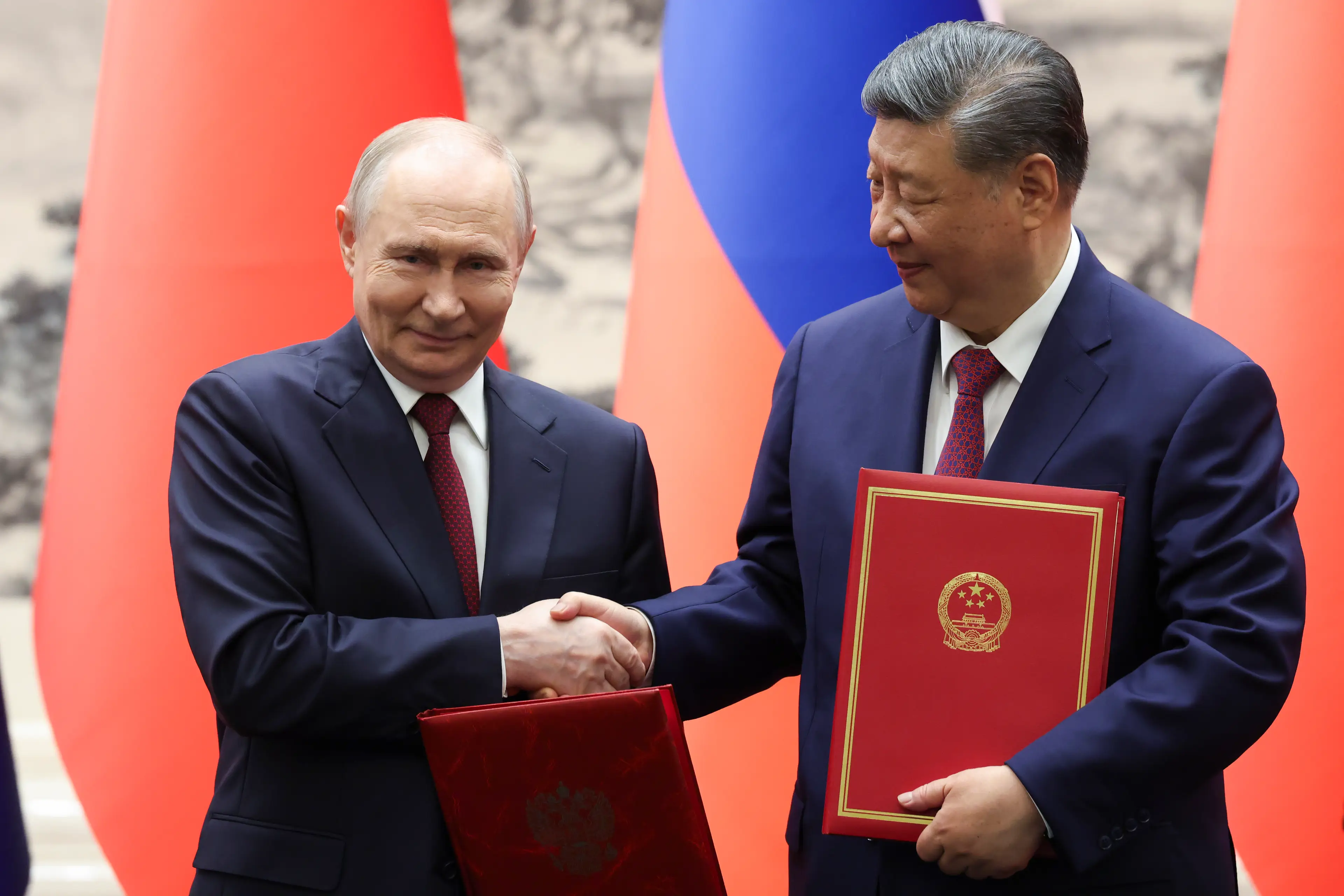
Speaking to UNILAD, body language expert Beth Dawson has explained how the positioning on Putin's trip this week reveals how China treats Russia differently to the US.
She said: “The handshake between Vladimir Putin and Xi Jinping in the BBC clip is short, but there’s actually quite a lot going on non-verbally.”
This is anything but incidental, the expert argued that this had been planned well ahead of time. They added: “It’s definitely choreographed.
"Both leaders approach at a similar pace, they maintain direct eye contact, and they position themselves squarely toward each other and nod heads and turn towards the press. All of this signals mutual respect and political alignment rather than tension or one man dominating the other."
The handshake itself is firm but it is controlled, as neither man appears to over-squeeze or pull the other inward. In body language terms, that’s important because dominant leaders sometimes use handshakes as power displays. Here, the energy is more 'strategic equals'.
The expert explained: “Xi keeps his posture extremely contained. Xi is famous for restrained emotional expression in public appearances. He rarely over-smiles or uses big gestures. In this clip, his calm facial expression and controlled movement reinforce an image of discipline and authority.
"This is also his baseline communication style so there are no surprises here.”
The body language expert, Beth Dawson, continued to say: “Putin mirrors that same restraint. Putin also tends to favour small gestures and controlled facial expressions. He doesn’t lean excessively forward or invade Xi’s space. That mutual restraint creates a kind of “cold solidarity” atmosphere.”
“One interesting detail is the length and pacing of the handshake. It lasts just long enough for the cameras but not so long that it becomes personal. Diplomatically, they are communicating “we are aligned” but “this is about politics and power, not warmth.”
"For the photo-op element, both leaders turn their bodies slightly outward so the media can capture the handshake clearly. That’s mainly for the international audience.”
But as with all meetings between major powers, what matters is not always the substance of what someone's ideas, but how they communicate their power.
Dawson said: “From a behavioural analysis perspective, the interaction projects stability, mutual strategic dependence and controlled confidence.
"What we don’t see is a genuine relaxed relationship. Compare this with leaders who touch the elbow, laugh naturally, or break posture. Here, everything is very deliberate and ceremonial.”
“There’s a wider geopolitical layer here, as these meetings are designed to visually reinforce the China–Russia partnership during periods of tension with Western countries. Even a handshake is very symbolic!”
Topics: China, Vladimir Putin
 William Morgan