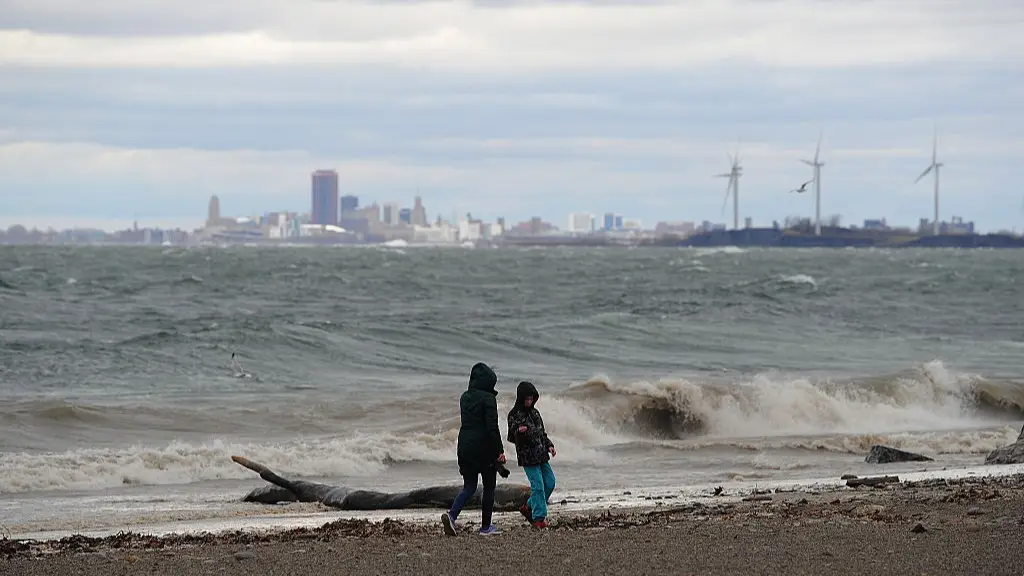
Alarming reason why water is vanishing from one of US’ largest lakes

One of the US' largest rivers is rapidly emptying for one particular reason.
Nature has its ways of keeping us on our toes, from mind-boggling ongoings in space to fascinating occurrences here on Earth.
And currently, Lake Erie - the fourth largest of the five Great Lakes in North America by surface area, and the 11th largest body of water globally - appears to be vanishing in front of our very eyes.
Boarding Ontario, Canada and the US states of Michigan, Ohio, Pennsylvania, and New York, those who frequent Lake Erie have noticed an unusual phenomenon.
Advert
With its water levels lowering, it's appearing to drain quickly - but why?
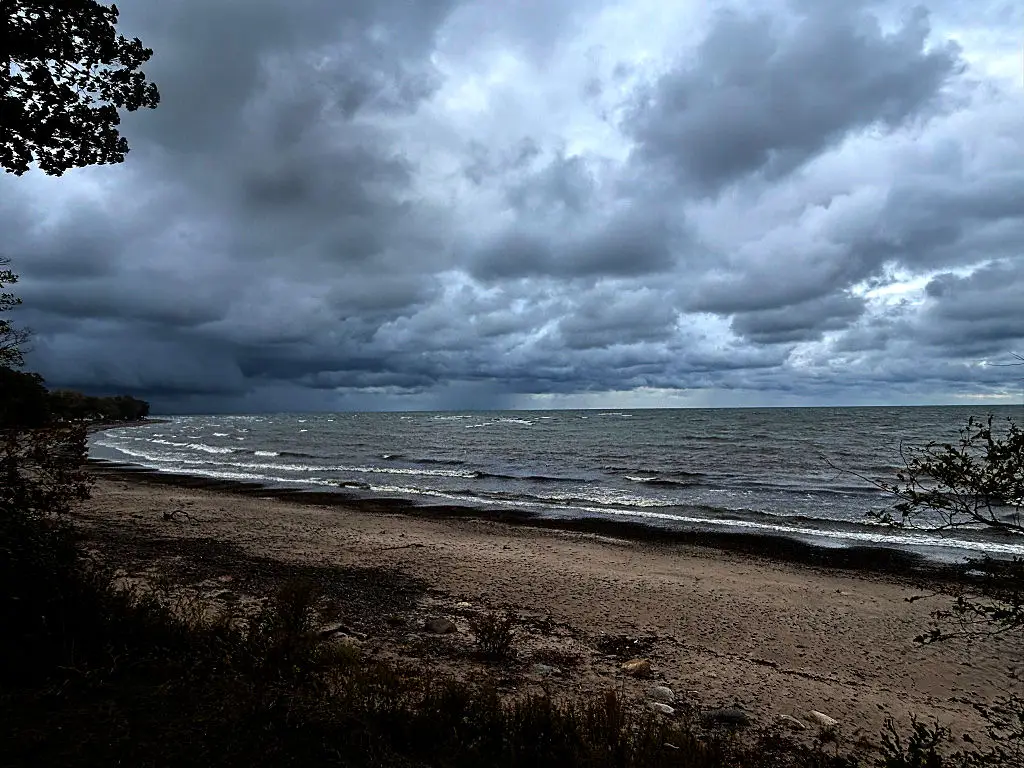
The Jet Express Ferry Facebook page posted a series of photos from their dock in Port Clinton, Ohio, where the once-flowing tide has now receded.
"Can you walk to Put-In-Bay now?" one social media user joked, as a second commented: "Looks like they didn't pay the bill and it was repo."
"Ok, who pulled the plug!?" a third joked.
Elsewhere in Kingsville, Ontario, a local man spotted a shipwreck in the receded water some 160 yards out from shore.
Matt Vermette told CBC News: "I certainly didn't expect to find a shipwreck... It was really cool.
"I saw some birds sitting on a structure and thought it must be an old dock... but no, it's definitely a shipwreck."
So, what exactly is behind this unusual water recession?
As Detroit Free Press explains, it's all to do with the weather and the shape of Lake Erie.
A powerful cold front causing strong winds of up to 46 mph, triggering gale warnings for the lake, is the ultimate culprit.
Lake Erie is shaped in a way that lets wind push water across it, with winds blowing from the southwest lining up perfectly.
This allows the wind to push massive amounts of water from the west to the east end of the lake.
So, up to to four feet of water is being pushed from the western basin - near Detroit, Toledo, Port Clinton - to the eastern basin, near Buffalo.
This makes shoreline areas in the west look like the lake is 'draining.'
Jay Austin, a professor of physics and astronomy at the University of Minnesota-Duluth, told Detroit Free Press: "The effectiveness of the wind to create these large coastal displacements is a function of how deep the lake is.
"Shallow lakes are more prone to that than a deep lake like Superior or Ontario."
In some cases, this can produce what's known as a 'seiche'.
Similar to when water is sloshed around in a bathtub, it can suddenly return and create a large returning wave.
Experts say the current conditions won’t cause a seiche because winds are expected to gradually weaken and their direction will slowly change, letting water return more slowly.
Seiches can be incredibly dangerous, however.
Back in 1844, 78 people were killed by a mammoth 22-foot seiche on Lake Erie. It was the tallest recorded, reports Lake Erie Living Magazine.
Perhaps it's time to re-think dreams of that vacation home by the lake...
Topics: Environment, US News, Canada, Science, Nature, Weather
 Ellie Kemp