
Laws on deepfakes explained after Italian Prime Minister shares lingerie photo

People across all levels of society, all around the world, are feeling the impact of the artificial intelligence revolution, and while it can boost productivity, for many people it has unlocked a new technological horror.
That is, the ability for anyone to take your likeness and create a sexualized deepfake with just a basic knowledge of AI. And in the past couple of years, this has become a serious problem for everyone from the Prime Minister of Italy to female school students across the country.
Earlier this week, Prime Minister Giorgia Meloni shared one such deepfake on her X account, saying that these AI images 'can deceive, manipulate, and strike anyone' while warning that 'today it happens to me, tomorrow it can happen to anyone'.
But despite anonymous internet users having access to a large number of image-generating tools for years now, lawmakers have struggled to crack down on this new wave of technological misogyny, until this week.
Advert

Previously, legislation set down by the European Union in 2024 had made it so that most AI image tools had to disclose in some way that the image was artificially generated, with a number of exceptions for political and satirical uses.
These rules did little to mandate criminal consequences for people making non-consensual sexualized deepfakes of other people, often called image-based sexual abuse, leaving the door open to unscrupulous 'nudifier' apps.
This software can be used to create a sexualized AI-generated image of someone and has been cited in schools around the world as an increasing problem facing their female students.
On Thursday, families gathered in Pennsylvania to call for greater protections for their daughters after multiple students were victimized after deepfake images of them were shared in their school.
One mom of an affected student said: "It's an acute event that creates trauma immediately. It's incredibly humiliating."
But many countries around the world, and states across the US, are now legislating to make the creation of these images entirely illegal.
In the European Union, whose technological legislation has in the past set the standard around the world for things like the USB-C port on all phones, they have decided to just ban these 'nudifier' apps completely.
They have also attempted to simplify the rules around what AI content is and is not illegal, by directing all of the EU's 27 constituent countries to make it a criminal offence to create sexually explicit deepfake images.
These new laws, coming into effect from December 2 across the European continent, state: "Content becomes illegal when it is used for purposes such as non-consensual pornography, defamation, terrorist content, violations of privacy, financial fraud, breaches of electoral law, racist or xenophobic hate speech, or infringements of intellectual property rights.”
Any companies that do not comply with this directive face a fine of €35 million or 7 percent of total worldwide annual turnover, whichever is higher, if they help users break these rules.
Similar laws to strictly criminalize the creation of these sexualized deepfakes exist to some extent or another in 46 states, with federal laws requiring platforms to remove deepfake images within 48 hours of being notified.
The act of creating the AI-generated abusive images was somewhat criminalized at a federal level in May last year, with criminal penalties of up to two years in prison for creating a non-consensual image of an adult, and just three years for creating a non-consensual image of a child.
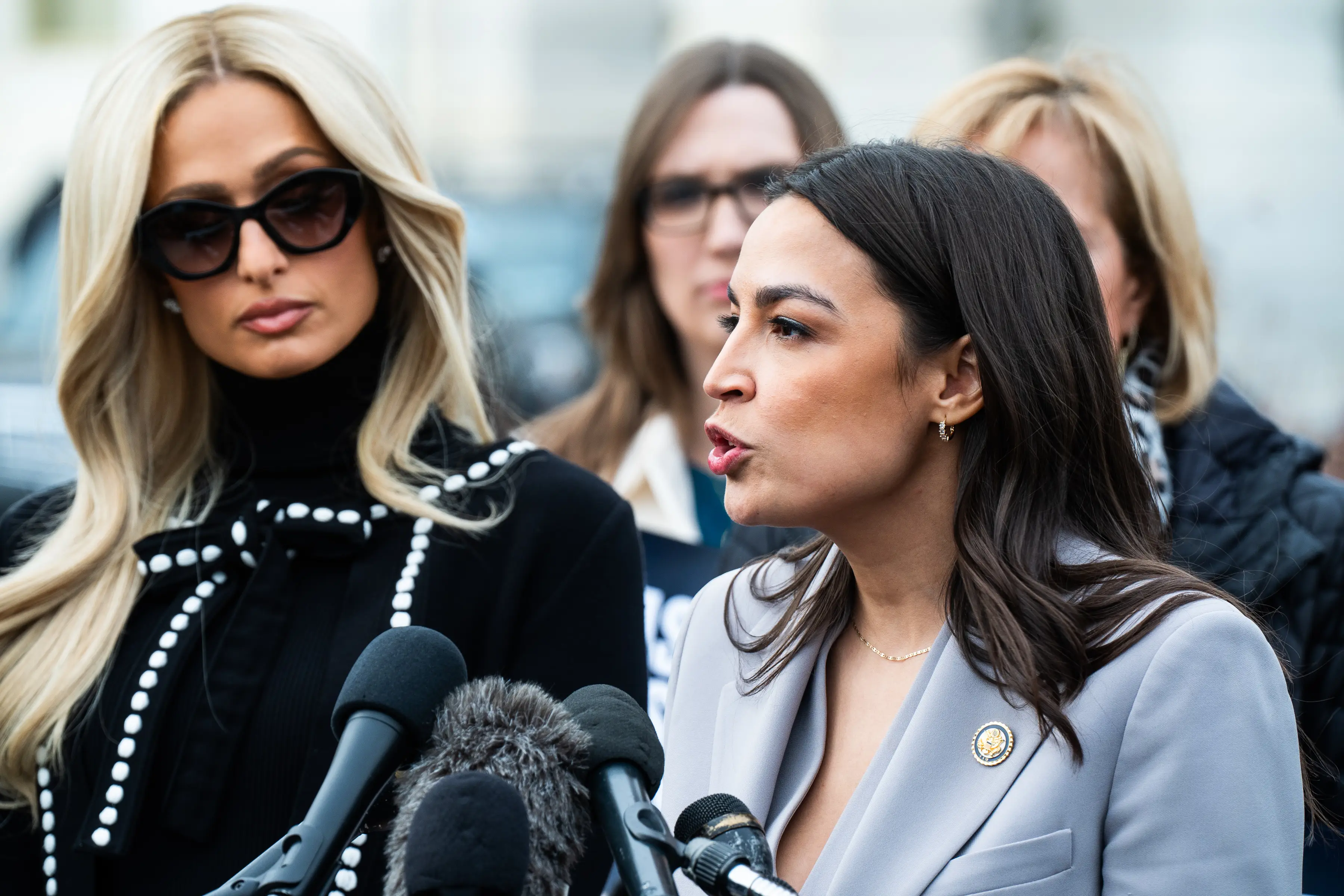
In January, socialite-turned-businesswoman Paris Hilton joined forces with Rep. Alexandria Ocasio-Cortez to bring greater penalties against the companies that allow users to create these sexual deepfakes.
Through their proposed DEFIANCE Act, which has passed the Senate but is being held up in the House, victims of these deepfakes would be able to sue their creators and the company responsible for up to $250,000.
Topics: Artificial Intelligence, Technology
 William Morgan