unilad homepage
unilad homepage
    • News
      • UK News
      • US News
      • World News
      • Crime
      • Health
      • Money
      • Sport
      • Travel
    • Music
    • Technology
    • Film and TV
      • News
      • DC Comics
      • Disney
      • Marvel
      • Netflix
    • Celebrity
    • Politics
    • Advertise
    • Terms
    • Privacy & Cookies
    • LADbible Group
    • LADbible
    • SPORTbible
    • GAMINGbible
    • Tyla
    • UNILAD Tech
    • FOODbible
    • License Our Content
    • About Us & Contact
    • Jobs
    • Latest
    • Archive
    • Topics A-Z
    • Authors
    Facebook
    Instagram
    X
    Threads
    TikTok
    YouTube
    Submit Your Content
    Truth behind the 'crocodile invasion' of beach in Brazil

    Home> News

    Updated 13:07 24 May 2024 GMT+1Published 18:31 16 Sep 2022 GMT+1

    Truth behind the 'crocodile invasion' of beach in Brazil

    Here's what actually happened behind the alleged reptile attack

    Rhiannon Ingle

    Rhiannon Ingle

    google discoverFollow us on Google Discover
    Featured Image Credit: @kenradio/Twitter

    Topics: World News

    Rhiannon Ingle
    Rhiannon Ingle

    Rhiannon Ingle is a Senior Journalist at Tyla, specialising in TV, film, travel, and culture. A graduate of the University of Manchester with a degree in English Literature, she honed her editorial skills as the Lifestyle Editor of The Mancunian, the UK’s largest student newspaper. With a keen eye for storytelling, Rhiannon brings fresh perspectives to her writing, blending critical insight with an engaging style. Her work captures the intersection of entertainment and real-world experiences.

    Advert

    Advert

    Advert

    It's clear that, sometimes, the internet can get a little carried away with its imagination and it was no different for this 'crocodile invasion'.

    With heaps of speculation popping up all over social media – the theories have since been put to rest about the alleged reptile raid.

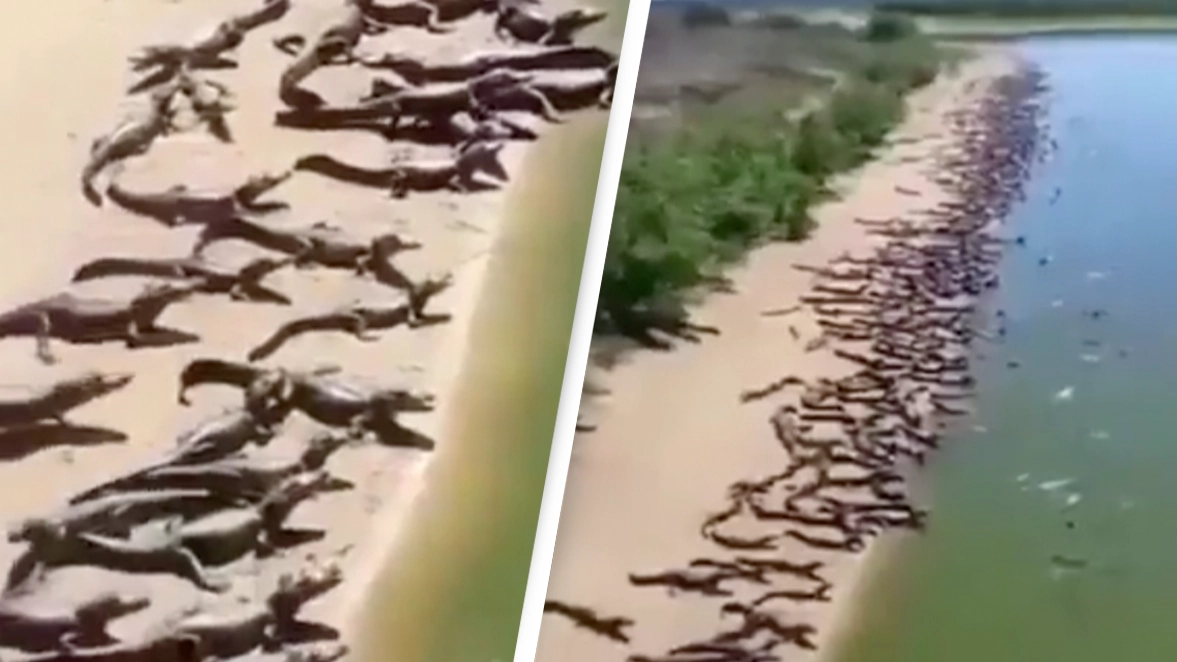
    The video in question that has recently surfaced shows a whole flock of reptiles gathering at a waterfront in Brazil.

    News of the alleged 'crocodile invasion' was spread by a whole host of people including American radio presenter and talk show host Ken Rutkowski, and has since shocked and panicked people online.

    Advert

    Watch the video below:

    Taking to Twitter, Rutkowski posted a video of a beach bank covered head-to-toe with crocodiles, captioning the tweet: "In Brazil, an invasion of crocodiles that have flooded one of the beaches with several hundred, even thousands, and the local population is panicking."

    However, the talk show host didn't seem to get it completely right.

    The so-called 'invasion' did not actually take place on a tourist trap hotspot like Ipanema or Copacabana beach but, instead, happened on the Pantanal Wetlands of Brazil.
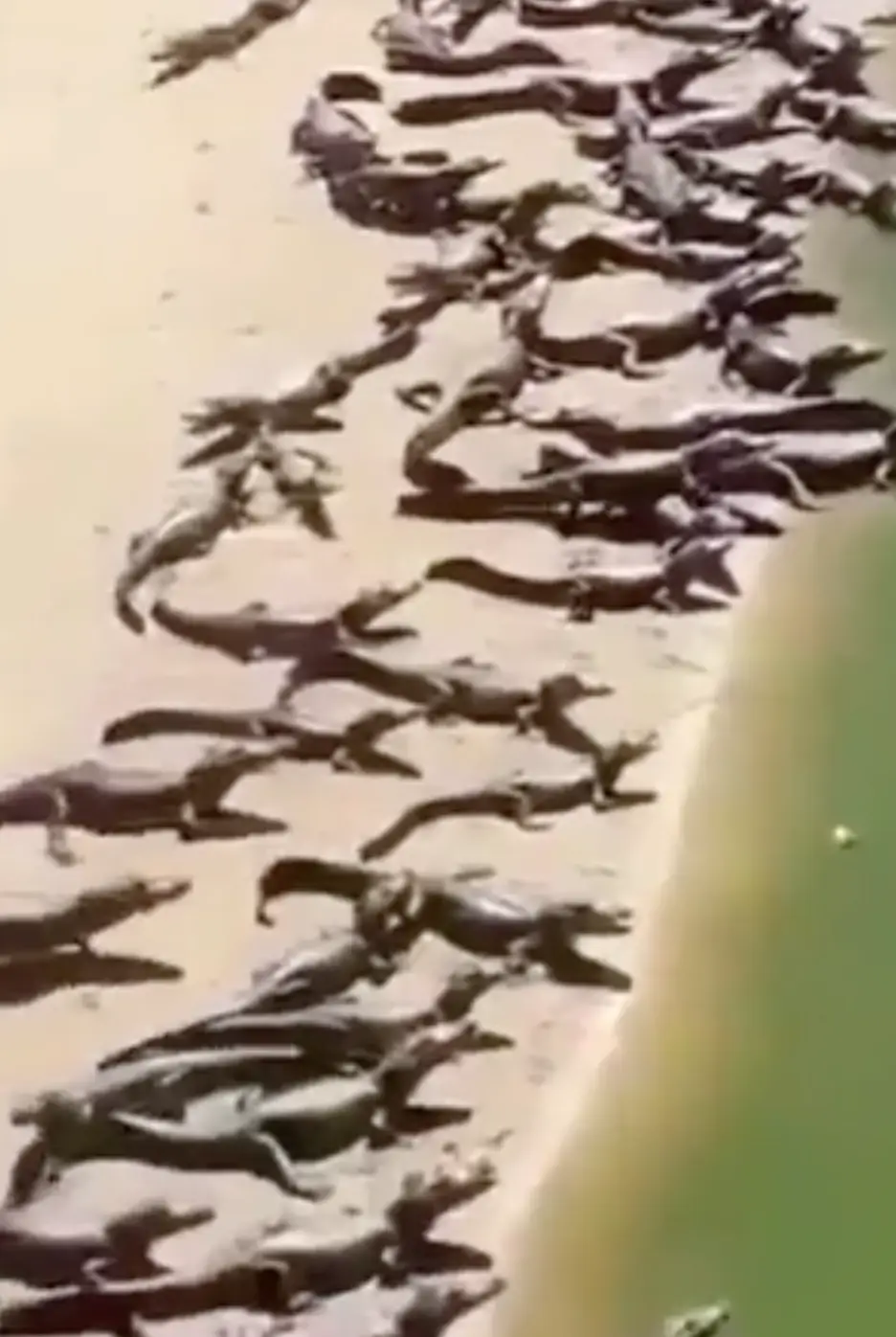
    The TV host said 'the population is panicking'.
    @kenradio/Twitter

    A Canadian zoologist, who goes by the handle Dr. Wildlife on Twitter, has since cleared things up with a thread of tweets.

    "Hi. Zoologist here. I am so tired. This is not an invasion, locals are not panicking.

    "This 'beach' is part of the Pantanal aka the largest tropical wetland, as well as perhaps the most pristine, in the world. 

    "Oh, and, these are not crocodiles – they are Yacare caiman.

    The zoologist concluded the tweet saying: "If you're talking about them online, RESEARCH YOUR FACTS AND CONTENT." 

    The video, which was only posted yesterday (15 September), has spread like wildfire and has since received more than 6.2 million views, 129.2k likes and 18.5k retweets.

    Thousands rushed to react to the alleged 'invasion of crocodiles', with many people, like Dr Wildlife, being quick to fact-check the legitimacy of video's caption.

    One Twitter user commented: "Those are not crocs and that’s no beach. It’s a river bank. Crocs don’t dwell in the ocean."
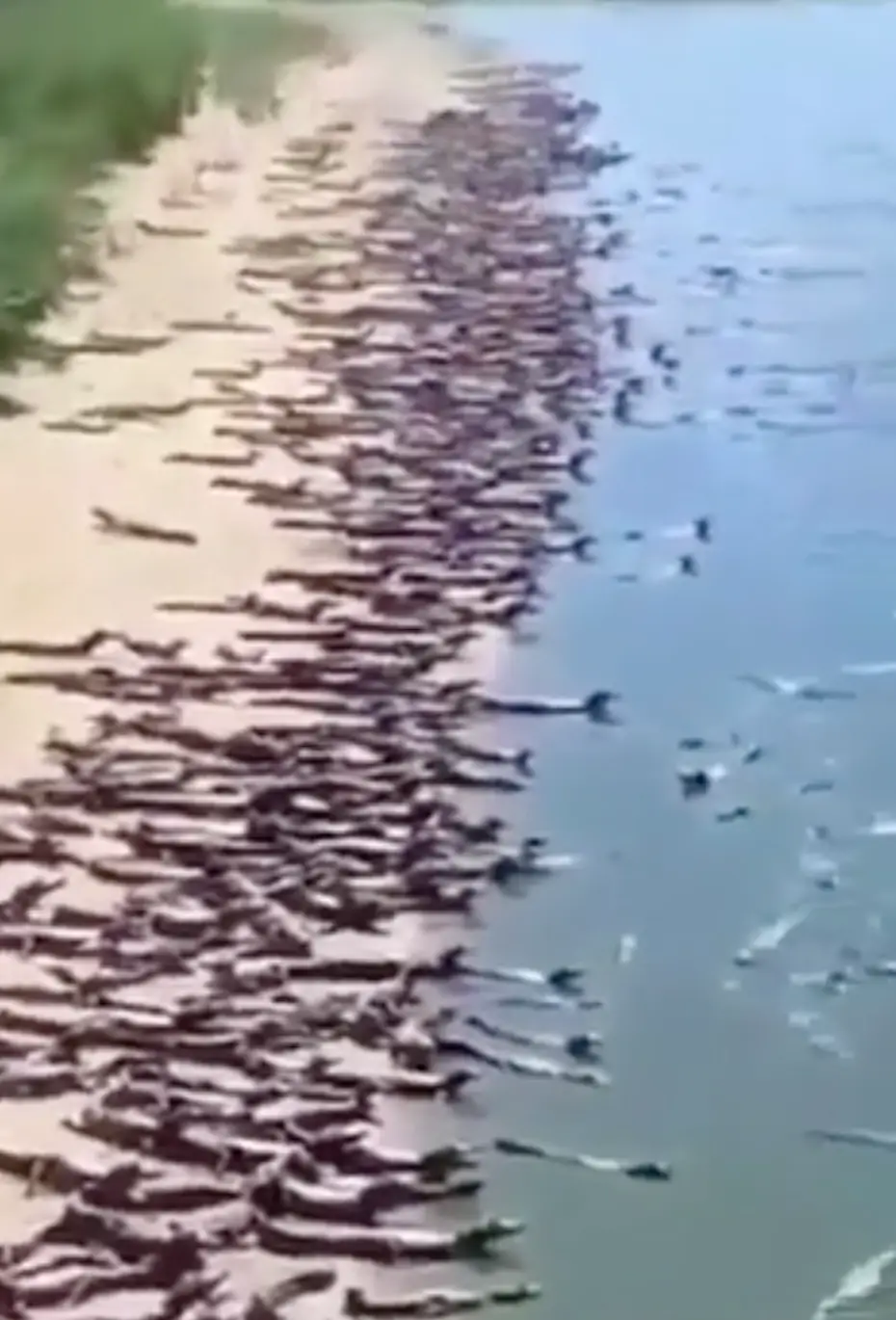
    The viral video was a huge misunderstanding.
    @kenradio/Twitter

    A second, also quick to realise the mischaracterisation, chimed in with: "They are called caimans, that is a river, and yes, animals live in the wild."

    "This is their natural environment, there is no invasion," a third added.

    According to the Word Wildlife Fund (WWF), the Pantanal region 'has the largest concentration of crocodiles in the world, with approximately 10 million caimans.'

    If you have a story you want to tell, send it to UNILAD via [email protected]

    • Hailey Bieber reveals the truth behind Billie Eilish’s surprise Coachella appearance
    • Worker at Shakira gig killed in Brazil after suffering 'crushing injuries' during set up
    • Woman warns of disturbing truth behind DNA tests after uncovering 45-year-old family secret
    • People are just learning heartbreaking truth behind infamous 'Afghan girl' photo that will change the way you look at it forever

    Choose your content:

    17 hours ago
    • Getty Stock
      17 hours ago

      Body removal technician shares the sight that 'breaks their heart every time' while working with the dead

      The body removal technician works in Toronto

      News
    • Michael M. Santiago/Getty Images
      17 hours ago

      Astronauts who spent 10 days in space reveal 'weird' experience as they approached dark side of the Moon

      The Artemis II astronauts have spoken about what it was like to visit the dark side of the Moon for the first time ever

      News
    • Getty Stock
      17 hours ago

      10 most common habits making your acne worse revealed by expert

      Dermatologists strongly advise that you don't do these things

      News
    • (Mel Melcon / Los Angeles Times via Getty Images)
      17 hours ago

      Jury hears texts MLB star Scott Erickson allegedly sent day after seeing lover kill two boys on crosswalk

      Mark Iskander, 11, and Jacob Iskander, eight, were fatally hit while crossing a road with their family in California

      News