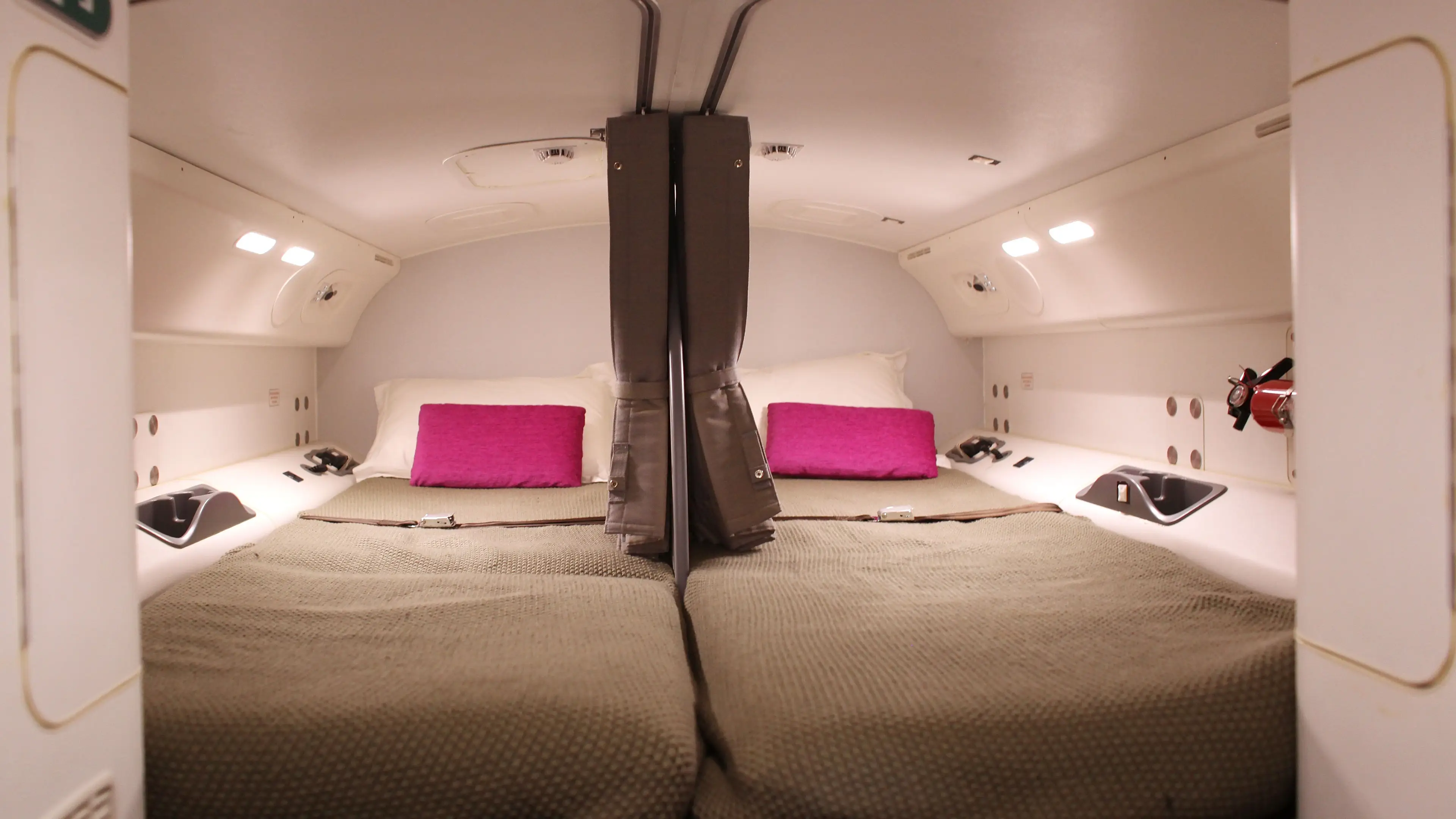
Flight attendant describes 'coffins' where crew sleep when they're on long-haul flights

Being a traveler on a plane will see you having to nap at 30,000 feet in a tiny chair, but if you’re a flight attendant...you’ll get your very own ‘coffin’ for snoozing.
You’re probably wondering what on Earth I’m talking (writing) about, and this isn’t much of an exaggeration.
According to Kris Major, a British flight attendant who has worked on everything from short-haul to long-distance with numerous layovers, it’s a real thing that happens.
For many, a flight is just something we do to get us from point A to point B, and it’s not usually too disruptive to catch a few Zs.
Advert
But when you work on flights all the time and maybe have back-to-backs and little time for yourself, it’s important that you can also snooze.
However, where would a sleeping accommodation set up be on a plane?
According to Major, there’s a designated spot and it’s akin to a vampire’s lair.
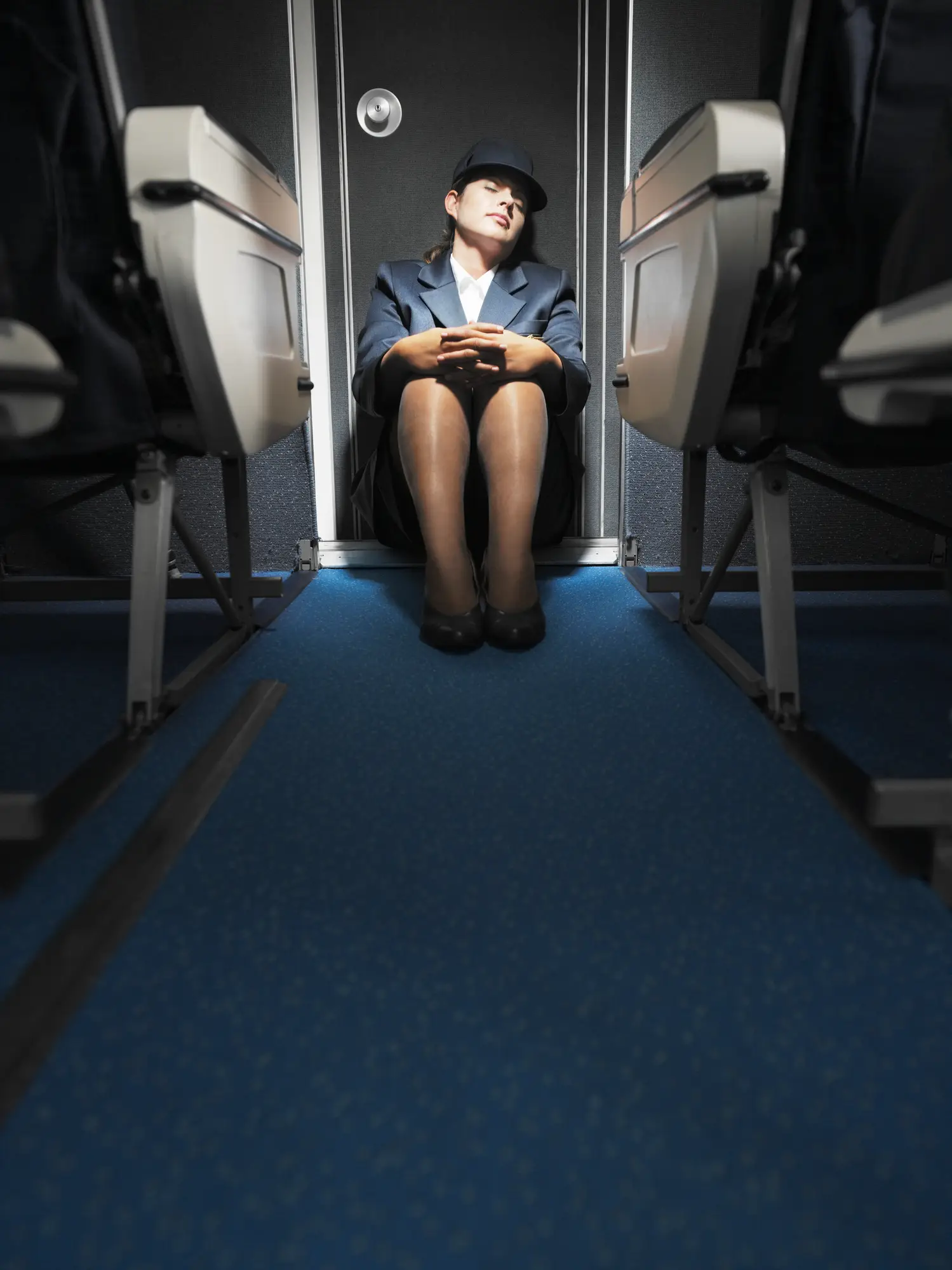
Major explained to CNN Travel all about the crew’s rest areas – which he revealed exist on all airplanes.
But he went on to reveal that the look and size depends on the craft.
“If we’re going somewhere over, say, 13 hours, we need to have good rest areas,” said Major.
He added that typically, crew are allowed to sleep for 90 minutes, to ensure they’re able to work.
“You need at least one sleep cycle scientifically to be of any use, to keep your ability to operate safely, your decision making processes, your communication skills,” the attendant said.
Calling the beds ‘technically coffins’, he revealed that while he finds them easy to sleep in, others aren’t so cozy.
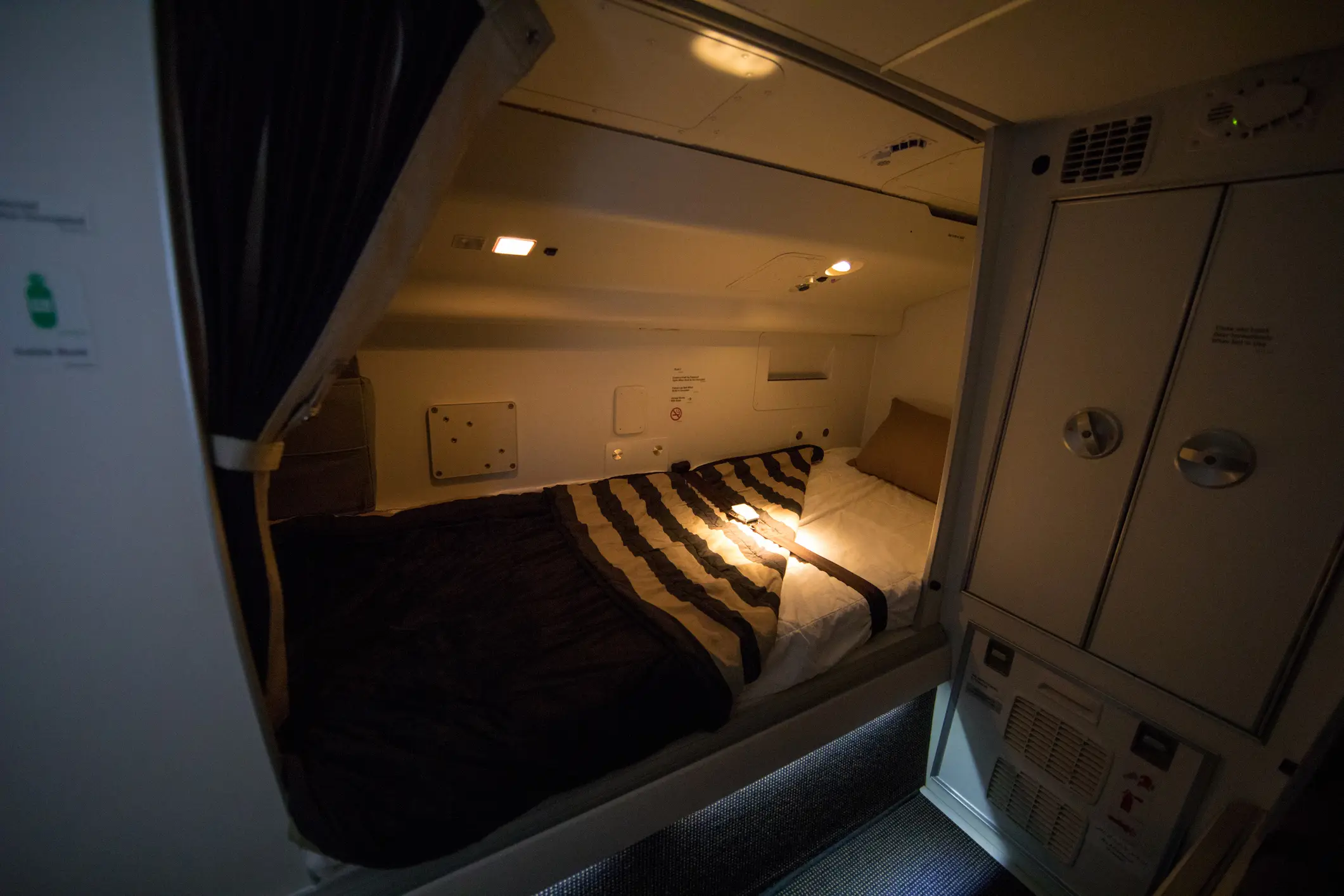
“There are some crew that really struggle with the bunks, they’re not pleasant,” said Major, that’s because sometimes, they’re cramped, long, thin, and separated by other bunks with a small piece of fabric.
“You push yourself right in, so they’re long and thin, because they’re up in the aircraft, so there’s not a lot of space. They are like what you’d imagine you’d see on a submarine,” he revealed.
But not only is there a bed, there’s also nightwear.
He explained that staff can change out of their flight clothing and into casual sleep clothing, which he typically puts down as a simple tee and lounge pants.
As a senior flight attendant, he said he also uses his discarded tie as a way to let people know he’s sleeping in a certain bunk in cases of emergency by hanging it outside.
“So that if there’s any emergency whilst I’m in the bunk, they know exactly which one I’m in, even though there’s usually one designated for the senior,” Major said.
 Britt Jones