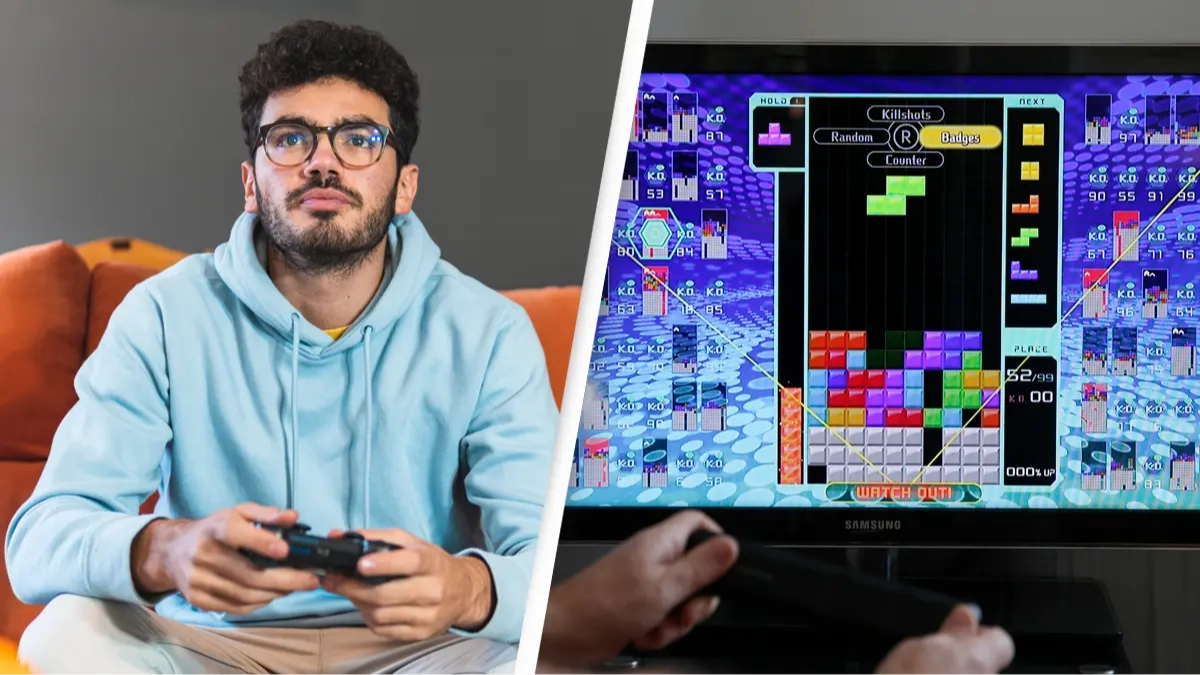
Bizarre reason why playing Tetris can actually prevent PTSD symptoms

If you’re an avid Tetris player, we have some good news for you.
It seems the 8-bit block-building game is more than just a satisfying way to appease the control freak within you.
It has been proved that the game may be helpful for way more than just killing some time, allowing those who play it regularly to deal with some pretty traumatic events they may have experienced.
Created in 1985 by Soviet software engineer Alexey Pajitnov, the puzzle game has been at the centre of a study ran by UK and Swedish scientists looking at its surprising beneficial effects.
Advert
First published in 2017, the results of this oddly specific research highlighted how Tetris, with its focus on eye movement, could be an ally in preventing traumatic memories from sticking.
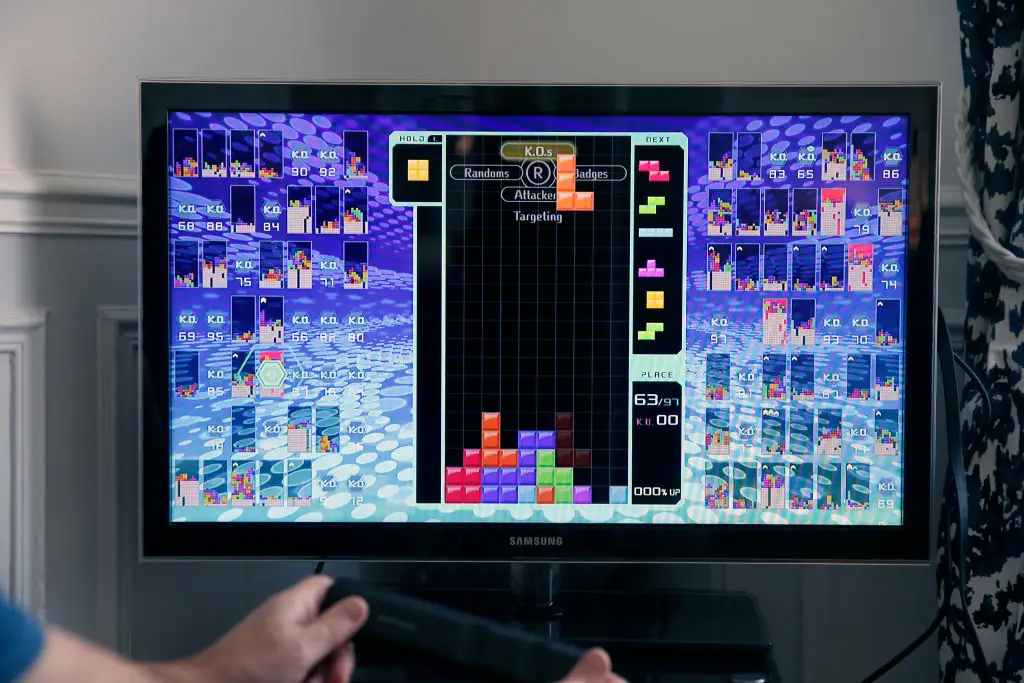
The study showed how a ‘Tetris-based intervention’ consisting of a 20-minute gaming session could help with the PTSD following a car accident, and can help prevent the formation of the painful, intrusive memories that can follow a traumatic occurrence.
The scientist observed 71 patients who had presented to the John Radcliffe Hospital A&E in Oxford, England, within six hours of being in a car accident. While waiting to be seen by doctors, the individuals (who were paid for their contribution to the study) were first asked to look back on their trauma and recount the worst moments of their accidents.
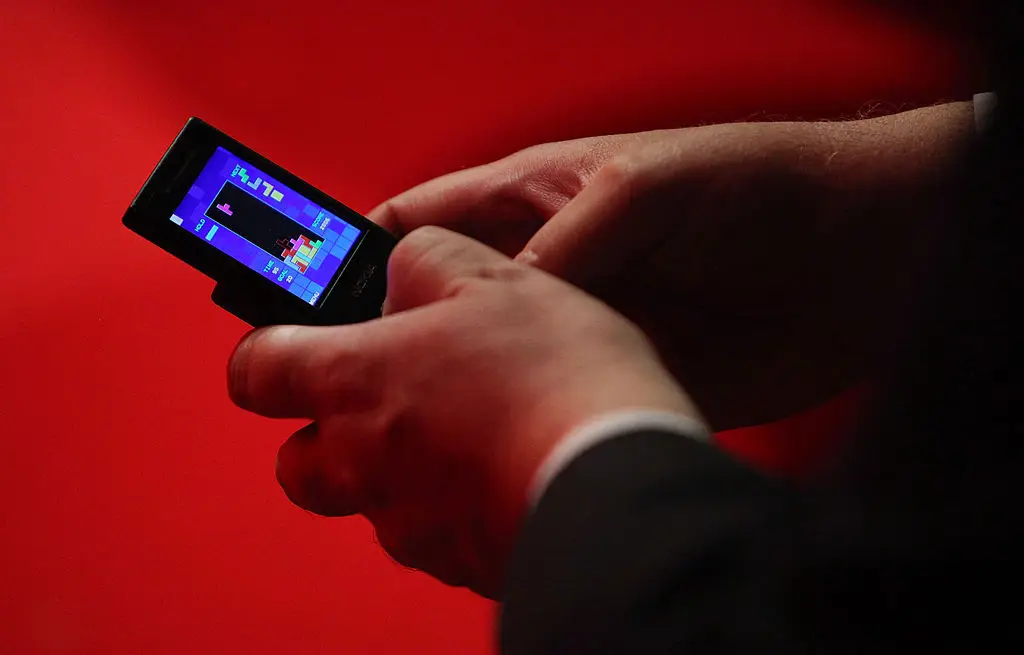
Then, a group chosen at random was asked to play Tetris for 20 minutes on a handheld Nintendo DS XL system, while the other group (the control group) was asked to fill out an activity log of what they had experienced since arriving at the hospital.
Those who were given Tetris to play experienced 62% fewer intrusive memories in the first week after their accidents compared to the control group. On top of that, their bad memories diminished more quickly than in the other half of the group.
While the study had a relatively small scope, the scientists behind it think the results are positive enough to justify a bigger follow-up study on the positive effects of Tetris on trauma.
"More research is definitely needed to develop this approach," said Emily Holmes, a psychology professor at the Karolinska Institute in Sweden and lead author of the study, as per NPR.
"But we're encouraged. And we need to develop preventative interventions that can be delivered soon after trauma to prevent the buildup of symptoms."
Years later, Holmes led another study on the benefits of Tetris and its mental rotation — that is, looking at an object from one angle and imagining what it’d look like if it rotated.
Dr Holmes and her team at Uppsala University observed that Tetris helped health care professionals who worked during the COVID-19 pandemic.
Of the 164 hospital workers included in the study, half were given to play Tetris, while others were given a non-visual task: listening to the radio. All participants were asked to then keep a diary about their flashbacks.
Published in September 2024, the results showed that those who played Tetris experiencing fewer intrusive memories compared to the control group.
Topics: Science, Gaming, Health, Psychology
 Stefania Sarrubba