Wild ‘slow swimming pool’ conspiracy theory hits the Olympics with viewers claiming it’s payback

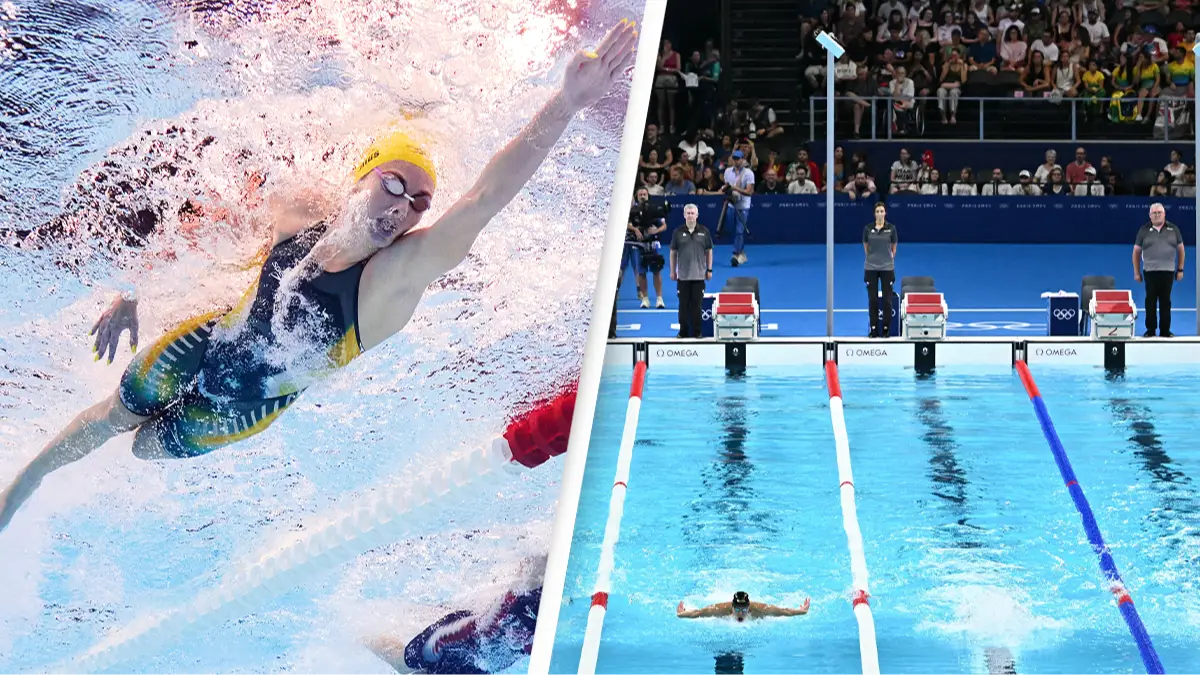
The Paris 2024 Olympics has yet to see a swimmer break any world record and there's a theory as to why.
With the Paris 2024 Olympics having kicked off on 26 July, the city's La Defense Arena has seen the world's best swimmers take to its pool, however, not a single swimmer has broken a world record.
Why? Well, Australian swimmer Kyle Chalmers said: "It has to be a slow pool." But what does that mean?
Advert
What is a 'slow' pool?
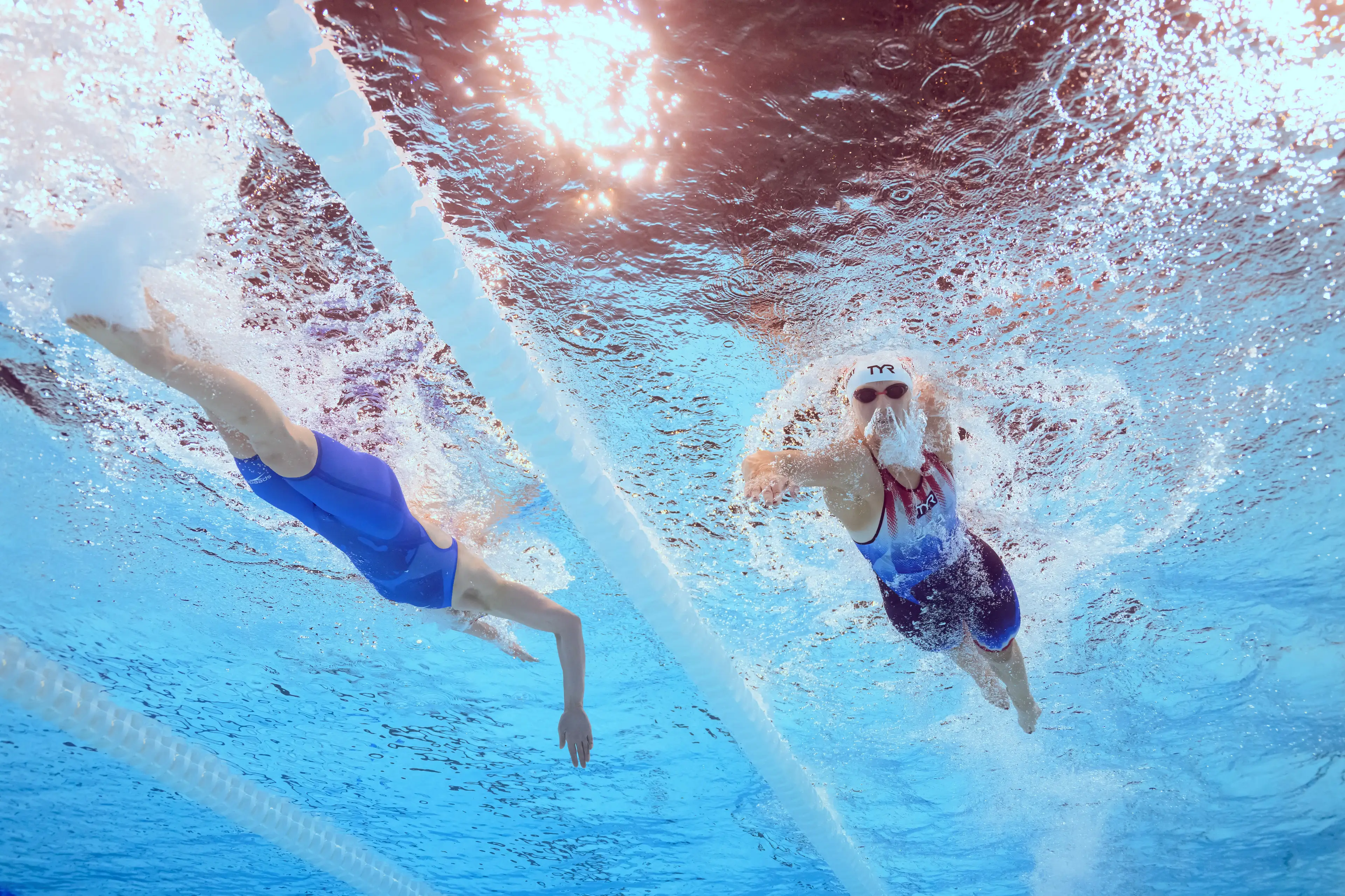
Basically, the shallower a pool, the more waves can build up, which means there's more resistance for swimmers and it can be more difficult for them to manoeuvre through the water.
Former British Olympian Mark Foster explained to BBC Sport: "When you swim you create waves underwater and they go down to the bottom, bounce back and hit you. The more water there is the less disturbance."
So, the deeper the water, the less waves and the smoother a race. But how much more 'shallow' - and subsequently 'slow' - is the Paris Olympics pool?
Is the Paris Olympics pool 'slow'?
World Aquatics recommends all Olympic pools have a depth of 2.5 meters (8.2 feet).
Typically, most International competitions use pools which measure around three meters deep (9.8 feet).
However, Paris La Defense Arena's pool measures 2.15 meters (7.5 feet).
And - shocker - it's not taken long for conspiracy theorists to flock online, with all sorts of 'reasons' as to why the Paris Olympics pool may have 'deliberately' been made 'slow'.
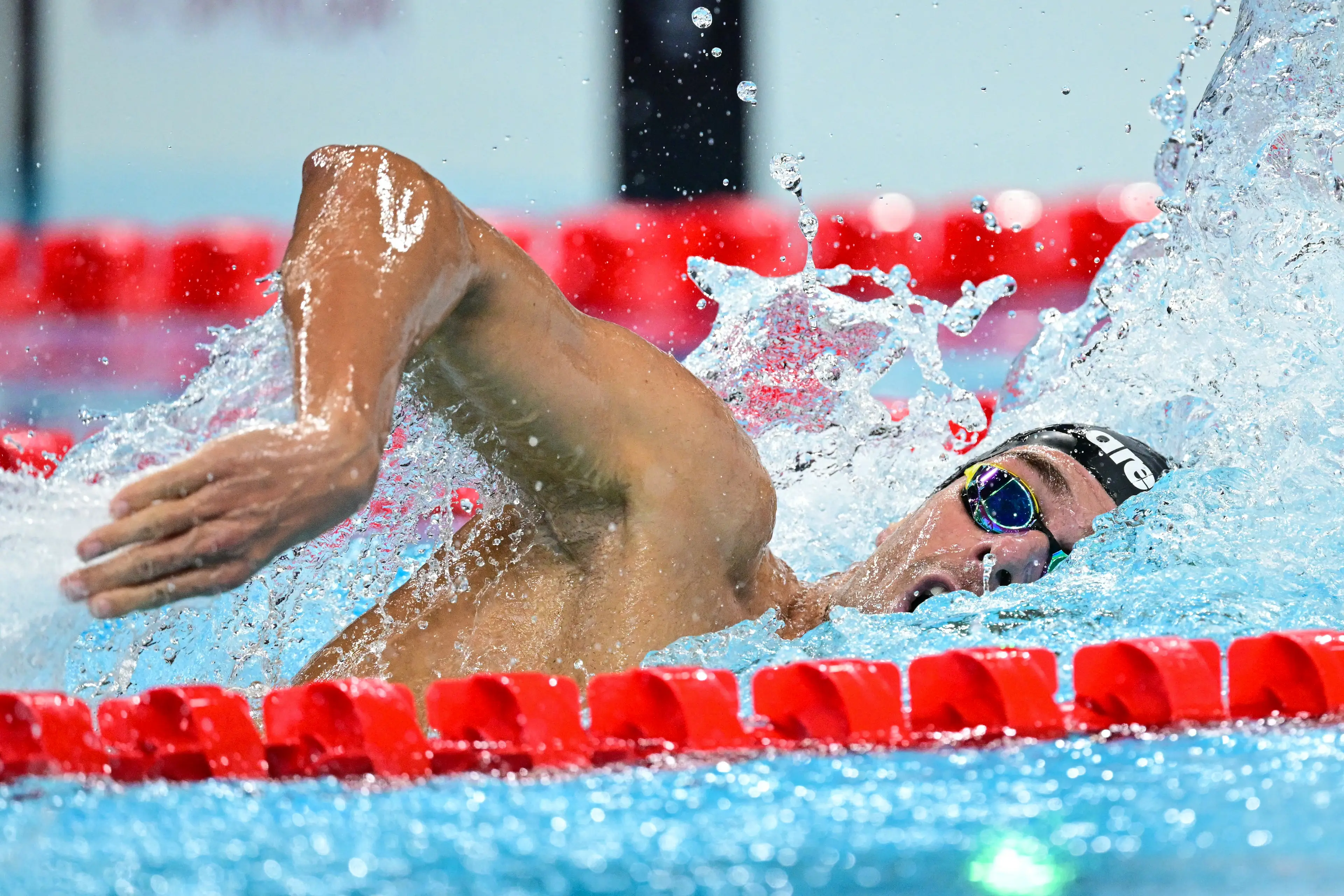
One conspiracy theorist said: "What if President Macron and [2008 French swimmer] Alain Bernard are still so p*ssed about the 2008 relay that they built a two metre pool instead of a three metre because they know American swimmers rely more heavily on underwaters due to short-course yards.
"I think it's an inside job to a level the playing field by taking away the US Team's biggest advantage."
Does it actually make much difference?
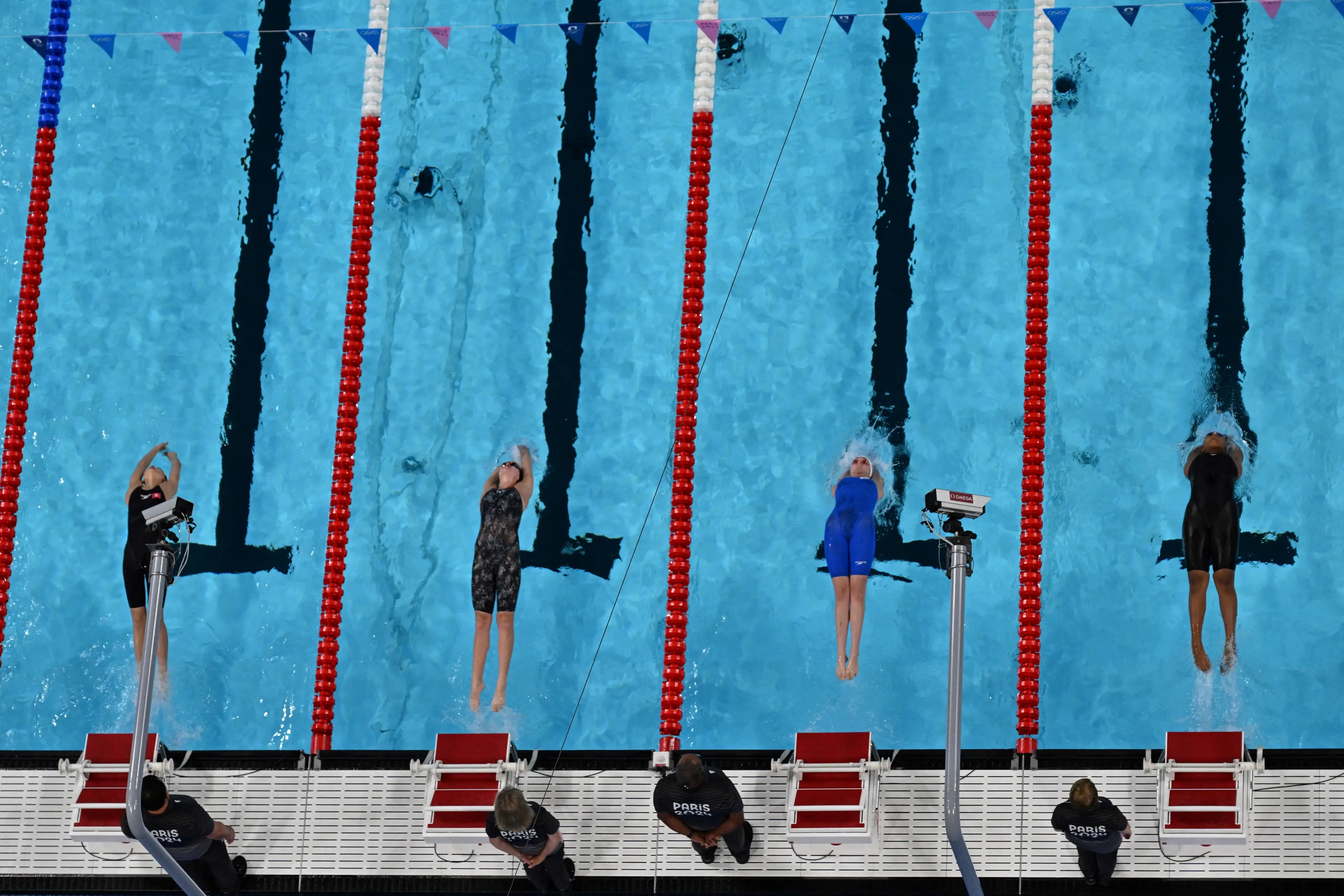
CEO of Italian company Myrtha Pools - which built the Paris La Defense Arena's pool - Roberto Colletto, told French broadcaster RMC Sport: "I know that people talk about the fact that if the pool is deeper, the performances are better.
"But … on the technical side, there is no problem with the pool."
Team GB freestyle swimmer Jacob Whittle told the Sun it's 'nothing [swimmers] can't deal with' and feels 'a bit like swimming in the sea but not to that extent'.
"It's just like the 0.1 of a second, but it's just something mentally that you have to deal with," he added.
Team GB's silver medallist Matt Richards' told BBC Sport he actually 'quite like[s] it being a bit shallower' because it stops him 'messing up' when he switches from his underwater stroke to regular stroke.
And given all of the swimmers are competing alongside one another in the same pool, while they may not beat their own records, a 'slow swimming pool' won't make them at any lesser chance of beating their opponents and losing out on a medal.
Richards echoed: "It's the Olympic Games. It's rare you see really, really fast swimming. Often it's about the racing. No-one cares about times at the Olympics. It's about where you come on the podium. I don't care about the times. I am here for placement."
Team USA's current medal count - 30
Gold medalists
- Lee Kiefer: Fencing - Women's individual foil
- Torri Huske: Swimming - Women's 100m butterfly
- Jack Alexj, Chris Guiliano, Hunter Armstrong, Caeleb Dressel, Ryan Held, Matt King: Swimming - Men's 4x100m freestyle
- Simone Biles, Sunisa Lee, Jordan Chiles, Jade Carey, Hezly Rivera: Artistic Gymnastics - Women's team competition
- Katie Ledecky: Swimming - Women's 1500m freestyle
Silver medalists
- Nic Fink: Swimming - Men's 100m breaststroke
- Lauren Scruggs: Fencing - Women's individual foil
- Gretchen Walsh: Swimming - Women's 100m butterfly
- Haley Batten: Mountain Bike - Women's cross country
- Kate Douglass, Gretchen Walsh. Torri Huske, Simone Manuel, Erika Connolly, Abbey Weitzel: Swimming - Women's 4x100m freestyle
- Sarah Bacon and Kassidy Cook: Diving - Women's springboard 3m synchronised
- Katie Grimes: Swimming - Women's 400m individual medley
- Jagger Eaton: Skateboarding - Men's street
- Regan Smith: Swimming - Women's 100m backstroke
- Bobby Finke: Swimming - Men's 800m freestyle
- Carson Foster, Brooks Curry, Chris Guiliano, Luke Hobson, Drew Kibler, Blake Pieroni, Kieran Smith: Swimming - Men, 4x200m freestyle
- Perris Benegas: Cycling - Women's BMX freestyle
- Torri Huske: Swimming - Women's 100m freestyle
Bronze medalists
- Carson Foster: Swimming - Men's 400m individual medley
- Katie Ledecky: Swimming - Women's 400m freestyle
- Chloe Dygert: Cycling - Women's individual time trial
- Frederick Richard, Brody Malone, Stephen Nedoroscik, Paul Juda, Asher Hong: Artistic Gymnastics - Men's team competition
- Nick Itkin: Fencing - Men's foil individual
- Emma Weyant: Swimming - Women's 400m individual medley
- Ryan Murphy: Swimming - Men's 100m backstroke
- Luke Hobson: Swimming - Men's 200m freestyle
- Nyjah Huston: Skateboarding - Men's street
- Ilona Maher, Kayla Canett, Lauren Doyle, Alev Kelter, Kristi Kirshe, Sarah Levy, Alena Olsen, Ariana Ramsey, Steph Rovetti, Alex Sedrick, Sammy Sullivan, Naya Tapper: Rugby 7s - Women's team competition
- Katharine Berkoff: Swimming - Women's 100m backstroke
- Evy Leibfarth: Canoe slalom - Women's Canoe Single
Topics: France, Olympics, Sport, Conspiracy Theories
 Poppy Bilderbeck