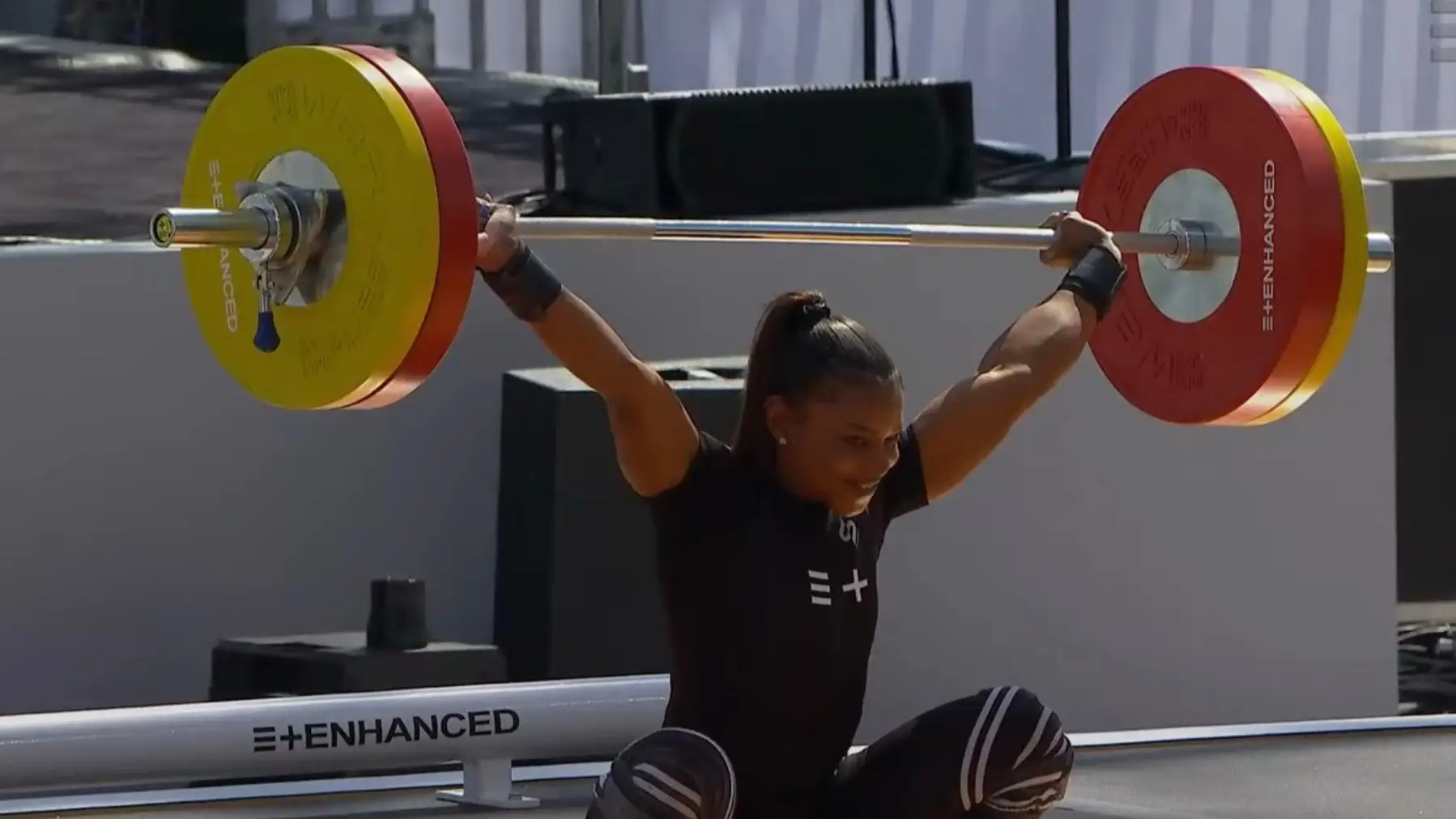
Enhanced Games gets off to chaotic start as official live stream freezes minutes into first event

The Enhanced Games got off to a chaotic start on Sunday evening, when just minutes into the first event the official livestream was hit by technical difficulties meaning millions tuning in around the world were unable to see the action for themselves.
Unlike the Olympics, which has terrestrial TV coverage, the Enhanced Games is streamed entirely online via the official Enhanced Games stream and Roku TV - yet unlike the competitors, it appeared that the stream itself wasn’t enhanced enough to keep up.
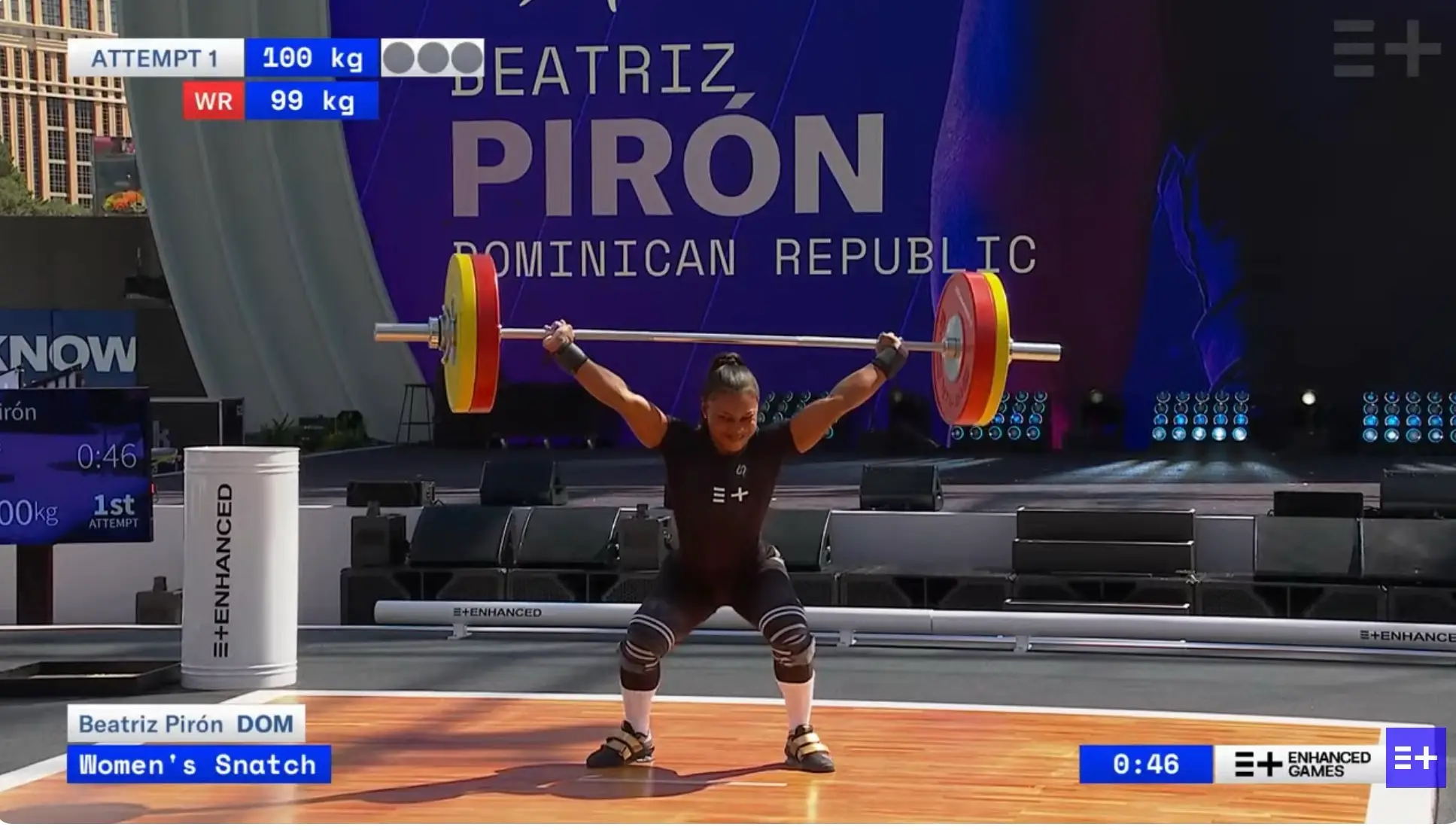
The frustrating gaffe came just as the first event, the women’s snatch, had started, with the first competitor Beatriz Pirón taking her first lift attempt for 100kg. Sadly, she didn’t manage to complete the world-record setting lift, although came remarkably close - but just as her rivals came to take their turn, the official livestream froze, prompting officials to comment: “TECHNICAL DIFFICULTIES. STANDBY PLEASE”
After an extended break of eight minutes, during which time the event had continued off-camera, finally the stream was restored - but not without fans having missed some pivotal action.
Advert
And to make matters worse, the stream didn't even show a replay or apologise to fans for the disruption, instead jumping straight ahead to the men's event instead.
The unfortunate blunder was not the best start to the first ever games, which had already come under fire due to its controversial policy of allowing performance enhancing drugs to be used in active competition.
Why were the Enhanced Games created?
The idea for the Enhanced Games first came about in 2023 when Australian entrepreneur Aron D'Souza wanted elite, professional athletes to 'be in charge of how they look after their bodies, what they eat, and what they put in their bodies', according to Sky Sports.
This is how he came up with the Enhanced Games, which allows athletes to use performance-enhancing substances without being subject to drug tests.
The Games 'challenge traditional models of sport by embracing science, innovation, and measurable performance enhancement under regulated conditions', according to the official website.
D'Souza's idea was backed by a venture capital fund which includes Donald Trump Jr - the son of the US president - and billionaire entrepreneur Peter Thiel. After being launched as a concept, in which it was presented as an opportunity to beat 'world records' for cash prizes up to $1 million, the first official event has begun.
While athletes competing in the events, which includes the likes of swimming, athletics and weightlifting, are allowed to use performance-enhancing drugs that are approved by the United States' Food and Drug Administration (FDA), certain substances are still banned, including heroin and cocaine.
The Enhanced Games also said it will carry out some doping measures under medical supervision.
What are the rules on doping at the Enhanced Games?
Though the Enhanced Games allows athletes to use performance-enhancing substances to compete - such as testosterone, anabolic steroids, hormones and growth factors (including HGH and EPO), metabolic modulators and stimulants - there are still rules for them to follow.
And it certainly isn't a free-for-all when it comes to using substances.
Competitors are limited to only using substances that are approved by the Food and Drug Administration (FDA), meaning drugs such as cocaine, heroin and other illicit, non-prescription drugs are strictly prohibited.
However, there will be medical supervision for the athletes using performance-enhancing substances, which will see them undergo continuous physiological monitoring and medical profiling to prevent dangerous over-use
And it's important to note that athletes don't have to use these substances to compete - 'un-enhanced' athletes are also welcome to compete, which helps to establish a format that tests both medically augmented and entirely natural physical limits.
 Phoebe Tonks