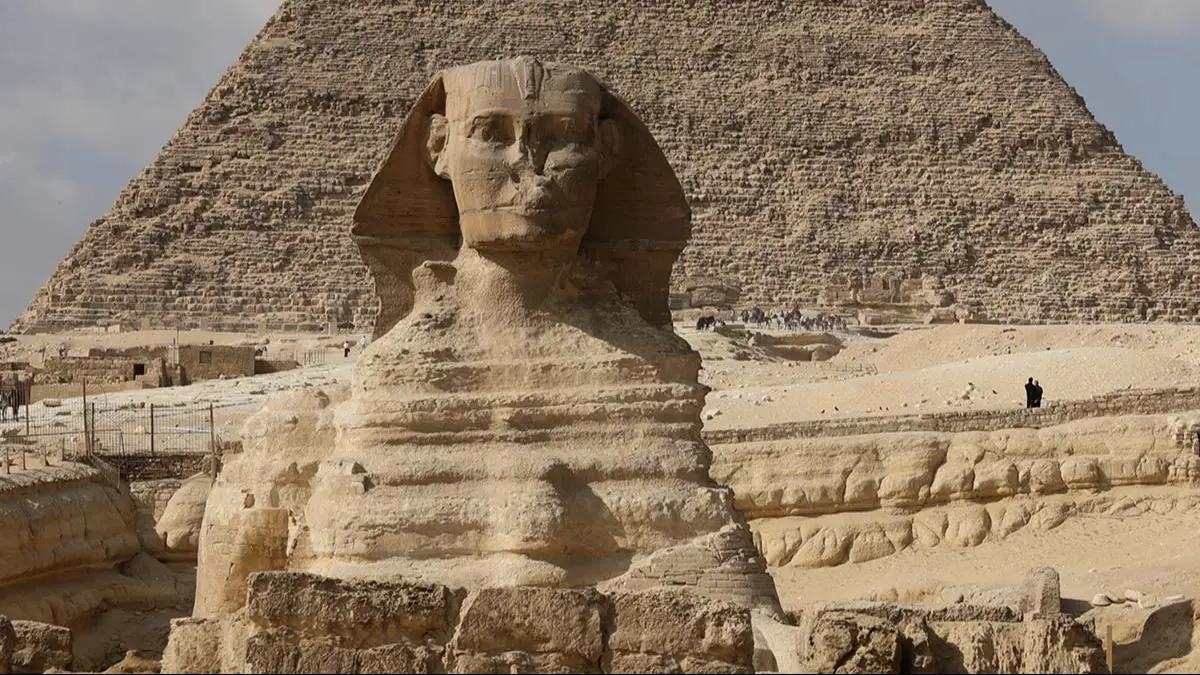
Scientists claim to discover a second Sphinx in Egypt after conducting underground scans

A new Sphinx has entered the chat, according to scientists investigating new data in Egypt.
Researchers who conducted underground scans of the area around the Great Pyramid of Giza have said they believe they've found evidence of a second Sphinx that could be buried deep beneath the ground.
Radar engineer Filippo Biondi said on the Matt Beall Limitless podcast that he was 'very confident to announce’ what is believed to be evidence of a second Sphinx. While the research team worked to confirm the theory, he put his own confidence rating at ‘about 80 percent’.
Biondi is one of a team of Italian researchers who believe they have located a 'vast underground city' hidden beneath the Khafre pyramid, one of the three pyramids at the Giza complex.
Advert
The team used radar signals below the pyramid and converted the signals they received back into sound waves which allowed them to get a picture of underground structures.
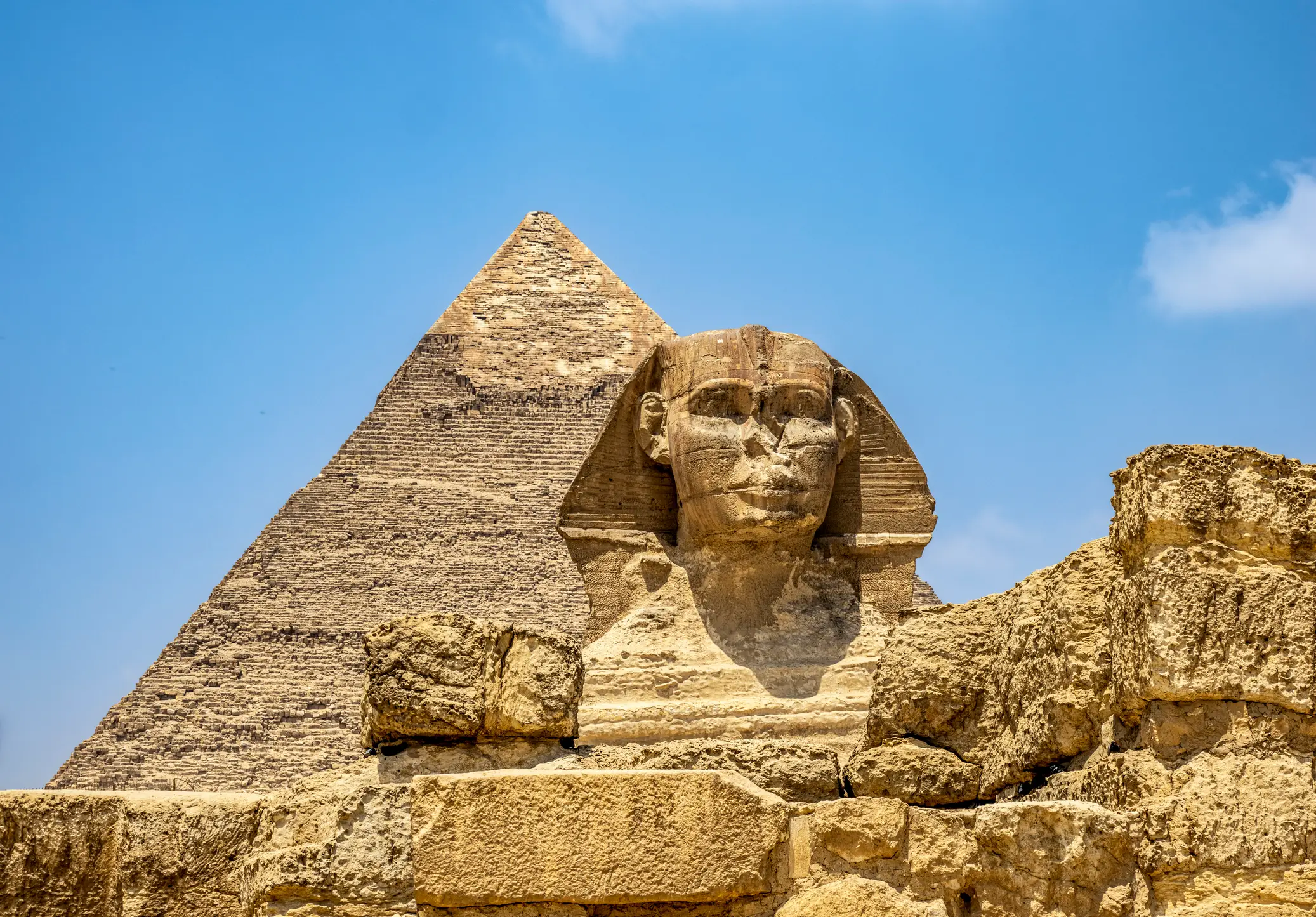
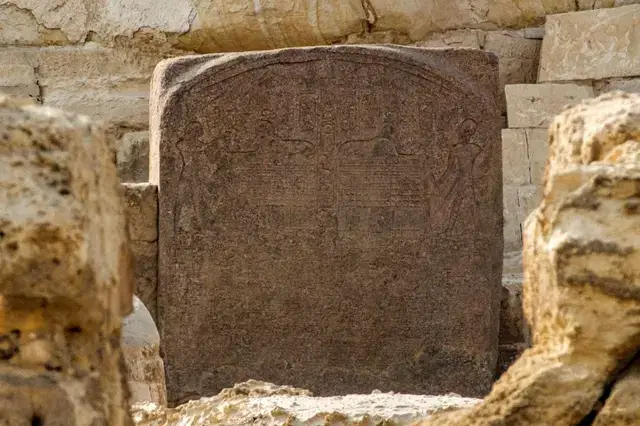
The new claims are fascinating in many ways, but mainly because the Dream Stele, a granite slab placed between the paws of the Great Sphinx of Giza, includes carvings that appear to show two Sphinx figures. Some experts have suggested this could mean the site was originally intended to have two Sphinxes rather than just one, with ‘intended’ being the key word here.
However, experts caution that these carvings are likely symbolic or artistic, and there is no archaeological evidence of a second Sphinx at Giza, as of right now. The Great Sphinx remains the only confirmed monument.
However Biondi believes there is evidence to suggest otherwise, claiming, 'We scanned the first Sphinx, all the pyramids, the conjunction between the Sphinx and the Khafre pyramid' to build a picture of what lay below the ground.
According to his findings those structures were made of 'vertical shafts, horizontal passages', and claimed that even beyond a Sphinx was an 'underground megastructure'.
He said: "Down underneath the Giza Plateau, there is something very huge that we are measuring. There is an underground megastructure."
However, the claims made by Italian researchers Biondi, Corrado Malanga, and Armando Mei have faced strong criticism from the broader scientific community.
When the researchers first announced their alleged discovery of a ‘secret underground city’ last year, theoretical physicist Sabine Hossenfelder dismissed the claims as unfounded and questioned why other scientists hadn’t replicated their methods if they were truly effective.
Similarly, Egypt’s former Minister of Antiquities, Dr. Zahi Hawass, told The National that the researchers’ conclusions were 'completely wrong,' noting that their methodology was “neither scientifically approved nor validated.” He added that all previous studies at the site had only identified small voids, with no evidence of a hidden city.
 Greg Harris