unilad homepage
unilad homepage
    • News
      • UK News
      • US News
      • World News
      • Crime
      • Health
      • Money
      • Sport
      • Travel
    • Music
    • Technology
    • Film and TV
      • News
      • DC Comics
      • Disney
      • Marvel
      • Netflix
    • Celebrity
    • Politics
    • Advertise
    • Terms
    • Privacy & Cookies
    • LADbible Group
    • LADbible
    • SPORTbible
    • GAMINGbible
    • Tyla
    • UNILAD Tech
    • FOODbible
    • License Our Content
    • About Us & Contact
    • Jobs
    • Latest
    • Archive
    • Topics A-Z
    • Authors
    Facebook
    Instagram
    X
    Threads
    TikTok
    YouTube
    Submit Your Content
    World's first brain implant to treat depression to start second human trial

    Home> News

    Published 09:33 12 Jan 2023 GMT

    World's first brain implant to treat depression to start second human trial

    The technology was created by start-up Inner Cosmos and saw an implant put into a patient's skull that releases electrical pulses

    Tom Wood

    Tom Wood

    google discoverFollow us on Google Discover
    Featured Image Credit: Inner Cosmos

    Topics: Science, Health, Mental Health, Technology, Weird

    Tom Wood
    Tom Wood

    Tom Wood is a LADbible journalist and Twin Peaks enthusiast. Despite having a career in football cut short by a chronic lack of talent, he managed to obtain degrees from both the University of London and Salford. According to his French teacher, at the weekend he mostly likes to play football and go to the park with his brother. Contact Tom on [email protected]

    X

    @TPWagwim

    Advert

    Advert

    Advert

    Scientists recently implanted electrodes into the skull of a patient in order to treat their depression, with the hope that their condition might be eased by short and small electric pulses into the brain, and now they’re awaiting the start of a second trial.

    This technology was actually unveiled back in September, when doctors in St Louis shaved off some bits of the patient’s skull in order to install electrodes into it.

    The surgery was performed by start-up Inner Cosmos, just one of several companies working on technology that can be implanted into the brains of patients.

    Of course, the most high-profile of those companies is Neuralink, owned by Elon Musk.

    Advert

    That business has been the subject of some recent controversy, but also claims to have trained monkeys to play video games with their mind.
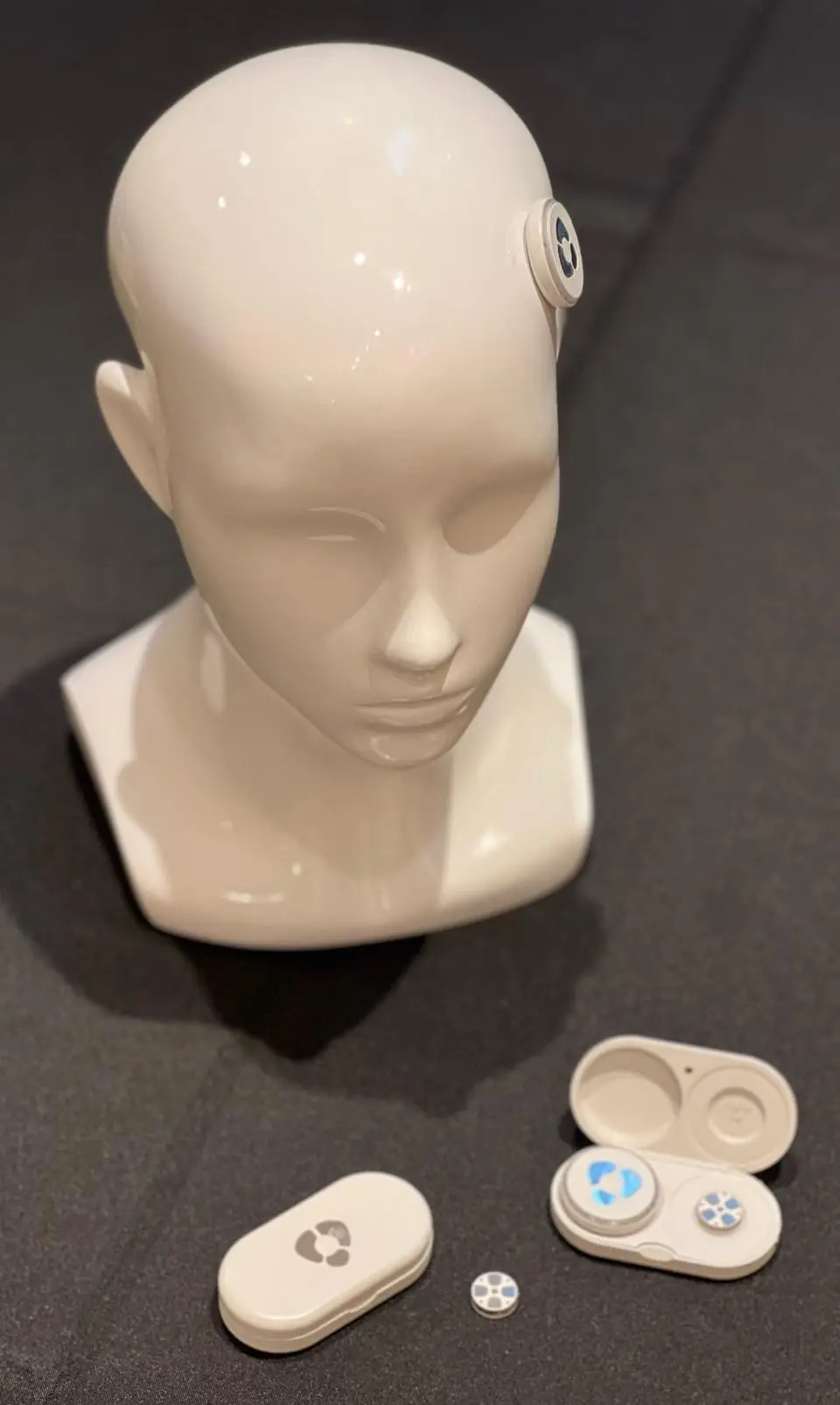
    Here's an idea of how Inner Cosmos' technology works.
    Inner Cosmos

    This trial was the first of its kind to use implants directly into the skull to treat depression, and could herald in a new age of science treating mental health issues with hardware rather than more traditional methods such as psychiatry and psychology.

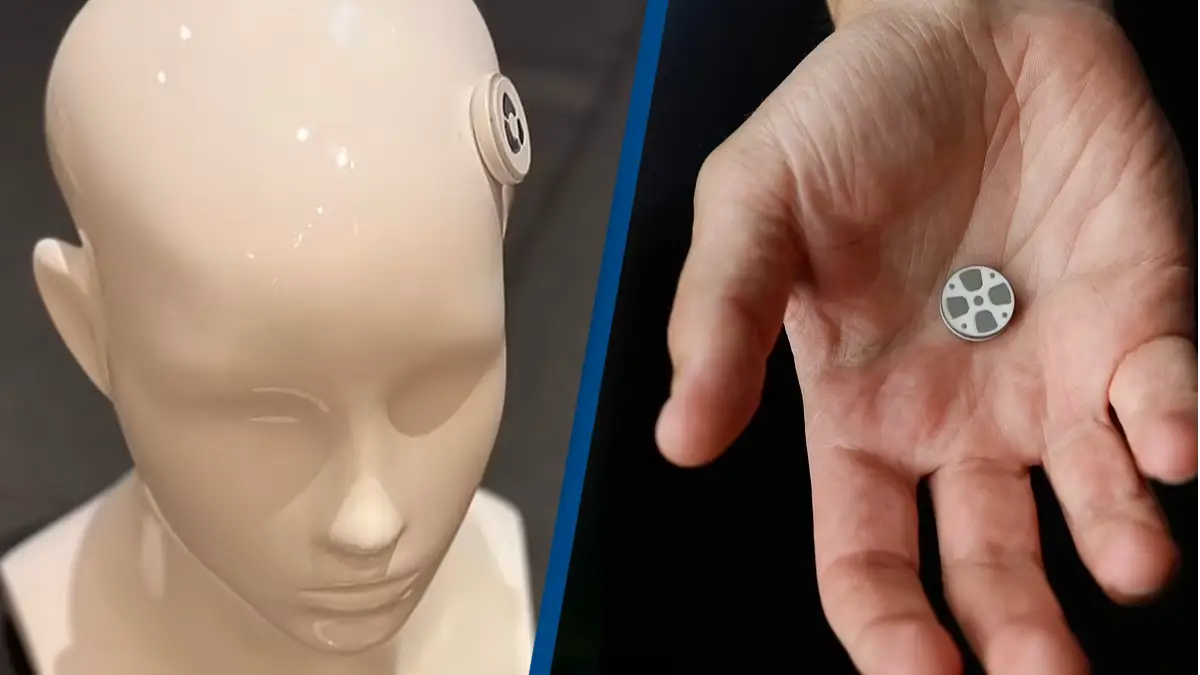
    The Inner Cosmos hardware is about the size of a penny and works by sending a pulse through the patient’s left dorsolateral prefrontal cortex, measuring neuronal activity to determine the correct amount of stimulation as it goes.

    That happens for about 15 minutes once every day.

    This first trial is expected to last for around a year, with the potential for a few more patients to be involved.

    Then, another trial is set to begin next month, according to MailOnline.

    There is some debate about which part of the brain is best to stimulate in order to achieve the desired results, but this Inner Cosmos technique targets an area that is also targeted by another method called transcranial magnetic stimulation.

    It’s still very early days, but it’s interesting stuff, you’d have to admit.

    The idea is that the surgery needs to be as non-invasive as possible in order to achieve the best level of take-up, and – in fact – some companies are working on completely surgery-free methods, such as an electrode helmet.

    This first device is a bit larger than Inner Cosmos intends its final product to be in time, but it’s only the first one.

    The idea isn’t exactly a new one, given that similar techniques have been used for years to treat epilepsy and Parkinson’s, but treating depression in this way is a pretty fresh idea.
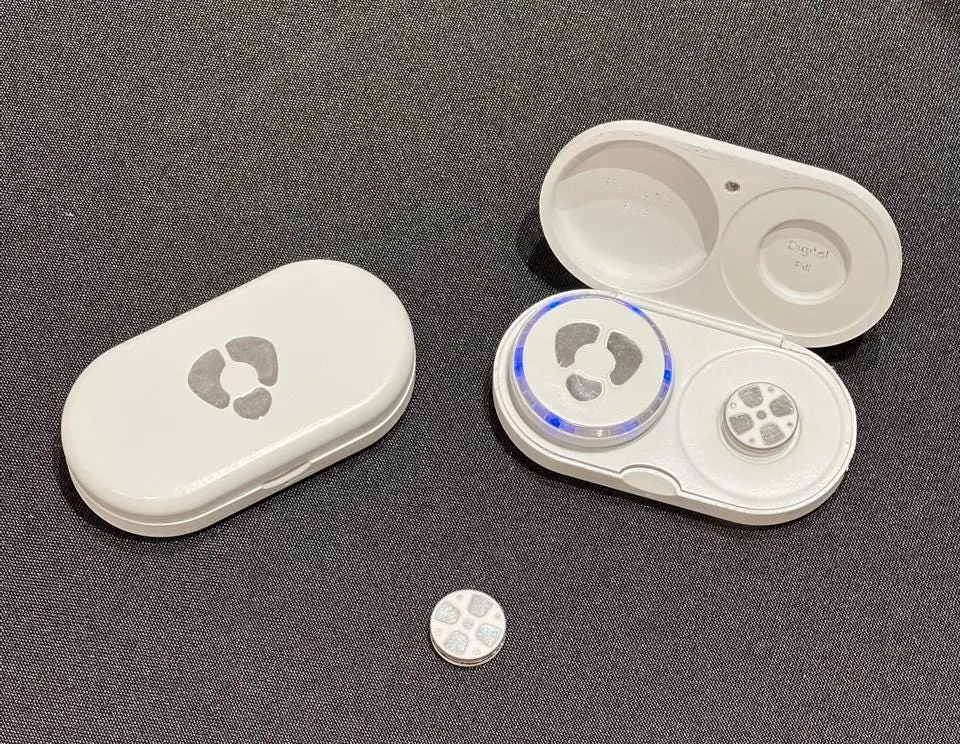
    The device is about the size of a penny.
    Inner Cosmos

    Inner Cosmos CEO Meron Gribetz said: “Our mission is to create a world that restores humanity's cognitive power by rebalancing the human mind,

    “The world is in a state of severe disorder, leading to a disordered cognition

    “The effects are being felt by millions, leading to surging levels of depression.

    “We believe our approach can allay the lives of those suffering from depression, and eventually scale to other cognitive disorders.”

    We’ll have to see how things develop from here, but it’s definitely a fascinating start.

    Choose your content:

    6 hours ago
    7 hours ago
    8 hours ago
    • Getty Stock Image
      6 hours ago

      Pilot explains why there are tiny holes in every plane window

      Despite the small size, they actually serve a pretty important purpose...

      News
    • YouTube/Lex Clips
      7 hours ago

      Why island home to uncontacted tribe is off limits to everyone in the world

      Many have tried, and failed, to visit North Sentinel Island - and suffered the huge consequences

      News
    • Anna Moneymaker/Getty Images
      7 hours ago

      5 famous world leaders photographed when they were young

      President Trump has variously called some of these world leaders 'handsome' with a 'great aura'

      News
    • Getty Stock Image
      8 hours ago

      Woman who spent 500 days in dark cave reveals why leaving was the most difficult part

      Beatriz 'wasn't expecting' what was to come as she came out of the cave

      News
    • Bizarre ‘never-aging’ animal could hold key to human limb regrowth
    • Symptoms of one of world's most devastating diseases explained as doctors successfully treat it for the first time
    • Depression diagnosis at two key life stages linked to higher dementia risk
    • 'Popcorn brain' explained as study shows scrolling social media could be severely impacting our mind