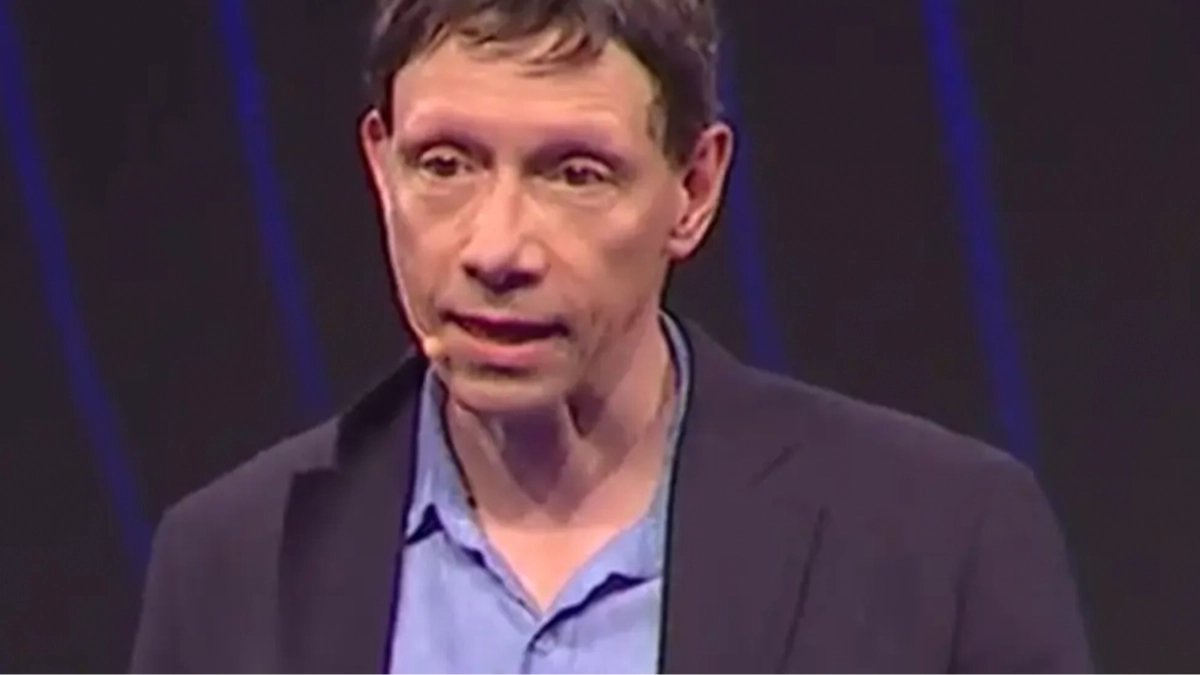
Scientist claims humans could soon live until 150 due to 'biological clocks'

A pioneering geneticist who has revolutionized the field of life-extending science has claimed there's 'no doubt' that humans will soon be living for much, much, longer than they ever have before.
Inventor of the epigenetic biological clock and former UCLA professor Steve Horvat has shared his confidence that human beings are on the precipice of more than doubling the global life expectancy - meaning that we could end up living until we are 150.
After creating the first method to calculate the age of human cells, tissues, and organs in 2010, Horvath's work has drastically expanded the field of life-extending research by giving scientists a way to measure how effective their anti-aging therapies are.
Although living to 150 would once have sounded like pure science-fiction, the award-winning biologist told Time 'I have no doubt it will happen, no question' thanks to the rapid development of anti-aging technology over the past decade.
Advert
This is in part due to his radical discovery of various scientific methods of measuring aging on a cellular level, which makes it possible to evaluate whether or not a therapeutic treatment was effective in slowing, or even halting, the aging process.
Horvath established that you could calculate the age of a human cell, different from a person's 'chronological age', by measuring the amount of chemical tags accumulated in its genetic code, a process called 'DNA methylization'. The quantity and pattern of these chemical tags can then be used to calculate the age of that cell, which is impacted by environmental factors like inflammation, stress, and toxins.
Having created this 'quintessential tool to find interventions for rejuvenation', Horvath has since plowed his efforts into discovering new methods to help reverse the aging process with biotech firm Altos Labs.
This has included developing a number of new 'clocks' that can help scientists to more accurately measure the ages of different tissues and organs in the human body, as well as one that claims to predict when you will die.

Called GrimAge, this tool measures specific biomarkers that statistical analysis suggests are strong indicators of mortality, giving the health conscious a rough estimate of when they will die from a blood sample and brief interview. But the breakthrough treatment that will reverse the impact of aging on cells throughout our bodies is yet to be invented, with Horvath arguing that 'we're not close at all' and even calling the idea 'totally science fiction'.
Yet, the statistician who revolutionized genetic research said that the rate of breakthroughs in the field indicated that some of us could see this fiction become a reality.
He told the publication: "I do think at some point there will be drastic extensions of lifespan.
"Imagine we have 100 more years of biomedical innovations—what will that do for health? Of course, we would expect major breakthroughs.
"So in an abstract sense, if we don't wipe each other out in a nuclear holocaust and if we can avoid wars and pandemics, I think our species at some point will find ways to extend lifespan drastically."
 William Morgan