unilad homepage
unilad homepage
  • News
    • UK News
    • US News
    • World News
    • Crime
    • Health
    • Money
    • Sport
    • Travel
  • Music
  • Technology
  • Film and TV
    • News
    • DC Comics
    • Disney
    • Marvel
    • Netflix
  • Celebrity
  • Politics
  • Advertise
  • Terms
  • Privacy & Cookies
  • LADbible Group
  • LADbible
  • SPORTbible
  • GAMINGbible
  • Tyla
  • UNILAD Tech
  • FOODbible
  • License Our Content
  • About Us & Contact
  • Jobs
  • Latest
  • Archive
  • Topics A-Z
  • Authors
Facebook
Instagram
X
Threads
TikTok
YouTube
Submit Your Content
Scientists warn that 'testicle mutations' could mean the extinction of men
Home>News>Health
Updated 07:46 12 Nov 2024 GMTPublished 07:30 12 Nov 2024 GMT

Scientists warn that 'testicle mutations' could mean the extinction of men

Scientists believe men have an expiration date... but not everyone agrees that our testicles are a ticking time-bomb

Joe Yates

Joe Yates

google discoverFollow us on Google Discover
Featured Image Credit: Getty Stock Image

Topics: Science, Health

Joe Yates
Joe Yates

Joe is a journalist for UNILAD, who particularly enjoys writing about crime. He has worked in journalism for five years, and has covered everything from murder trials to celeb news.

X

@JMYjourno

Advert

Advert

Advert

This is not a great way to start off the day, reading about how the fellas next to your winky may pack in.

Okay, it's not exactly your testes that will fail but somewhere down the line after we all pass away, so your children's, children and so on... theirs could due to 'testicle mutations' which may see Y chromosomes stop working.

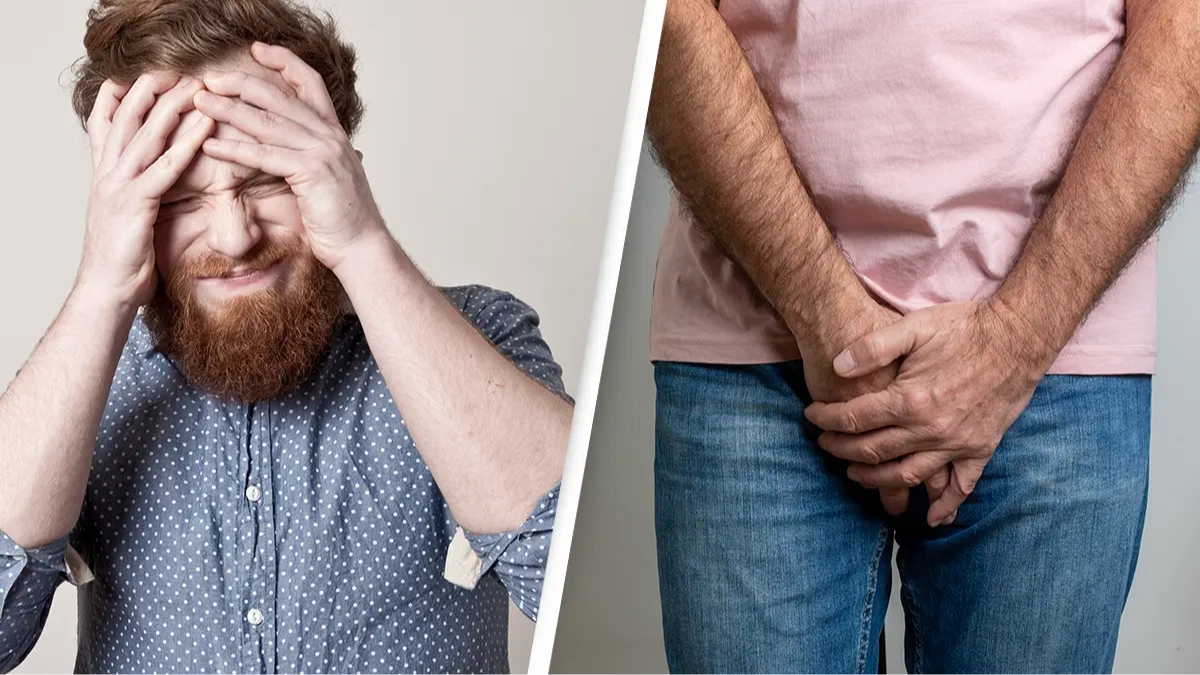
Scientists believe men may have an expiration date (Getty stock)

As I'm sure you're aware, our gender is determined by whether we've got X and Y chromosomes - which people assigned male at birth do - while people assigned female have two X chromosomes.

Advert

Well, research has suggested that the Y chromosome is decreasing - which would eventually only mean one thing... maybe Beyoncé knew something when she released 'Run the World (Girls)' back in 2011.

Professor Jennifer Graves of Australian National University came out with a theory that in five million years' time there will be no more men on Earth - or anywhere else for that matter.

Her doomsday prediction is based on the rate in which the genes are disappearing from the chromosome.

If Graves' forecast isn't spooky enough, genetics professor Brian Sykes released a book back in 2003 titled Adam's Curse: A Future without Men and according to Sykes, our testicle time-bombs are ticking at a much faster rate - claiming that in as little as 100,000 years we'll be extinct.

But not everyone anticipates the demise of man.

Fellas' days may be numbered (Getty Stock Image)

Jennifer Hughes has challenged these claims and believes how Graves and Sykes have gotten to their assumption may be well off.

Alongside fellow scientists at the Whitehead Institute in Cambridge, Massachusetts, she explained how research published in 2005 compared human Y chromosomes to that of a chimpanzee - whose ancestry diverged from that of humans roughly six million years ago.

Now, Hughes and co's research has done the same thing but with the rhesus monkey - whose lineage we separated from 25 million years ago.

"The Y is not going anywhere and gene loss has probably come to a halt," Hughes told BBC News.

Hell yeah boys, we might just exist in six million years then... or at least our descendants will! (Getty stock)

"We can't rule out the possibility it could happen another time, but the genes which are left on the Y are here to stay.

"They apparently serve some critical function which we don't know much about yet, but the genes are being preserved pretty well by natural selection."

Yes, her conclusion from comparing the two studies is that the decline has been minimal - explaining that the Y chromosome has lost no additional genes in the last six million years... while it only lost one in the last 25 million years.

So what do you think, are we here to stay fellas?

  • Scientists discover worrying link between hantavirus and sperm that can increase risk
  • Scientists warn of 'massive' black holes forming inside of planets that could have apocalyptic impact
  • Scientists warn New Orleans will be underwater by 2100 - and half the city is already below sea level
  • Scientists settle debate on whether baths or showers are more hygienic

Choose your content:

16 mins ago
an hour ago
  • @scotchdolly97/Instagram
    16 mins ago

    Woman whose breasts ‘never stop growing’ describes how medical condition macromastia makes dating more difficult

    Doctors told her that even if she had a reduction, the breast tissue would just 'grow back'

    News
  • (Photo by Chris Haston/NBCU Photo Bank/NBCUniversal via Getty Images via Getty Images)
    an hour ago

    Secret '10-1' code actors use to make awkward request while on set

    Trixie Mattel, a RuPaul's Drag Race contestant, revealed all about what it takes to be a star

    Film & TV
  • Brendan SMIALOWSKI / AFP via Getty Images
    an hour ago

    9/11 hero who saved lives in the Twin Towers is set to receive a posthumous national honour

    Welles Remy Crowther - also known as the 'Man in the Red Bandana' - will receive the highest civilian honor

    News
  • Facebook/Maldives government
    an hour ago

    Bodies of Italian divers who died in Maldives scuba tragedy returned to Italy

    Officials reported that their bodies were 'found together in an area of the cave'

    News