How doctors really know you're asleep when you're put under anesthetic

Waking up in the middle of an operation sounds like something straight out of a horror movie.
Fortunately, doctors follow a pretty rigorous system to ensure we remain completely knocked out while under the knife.
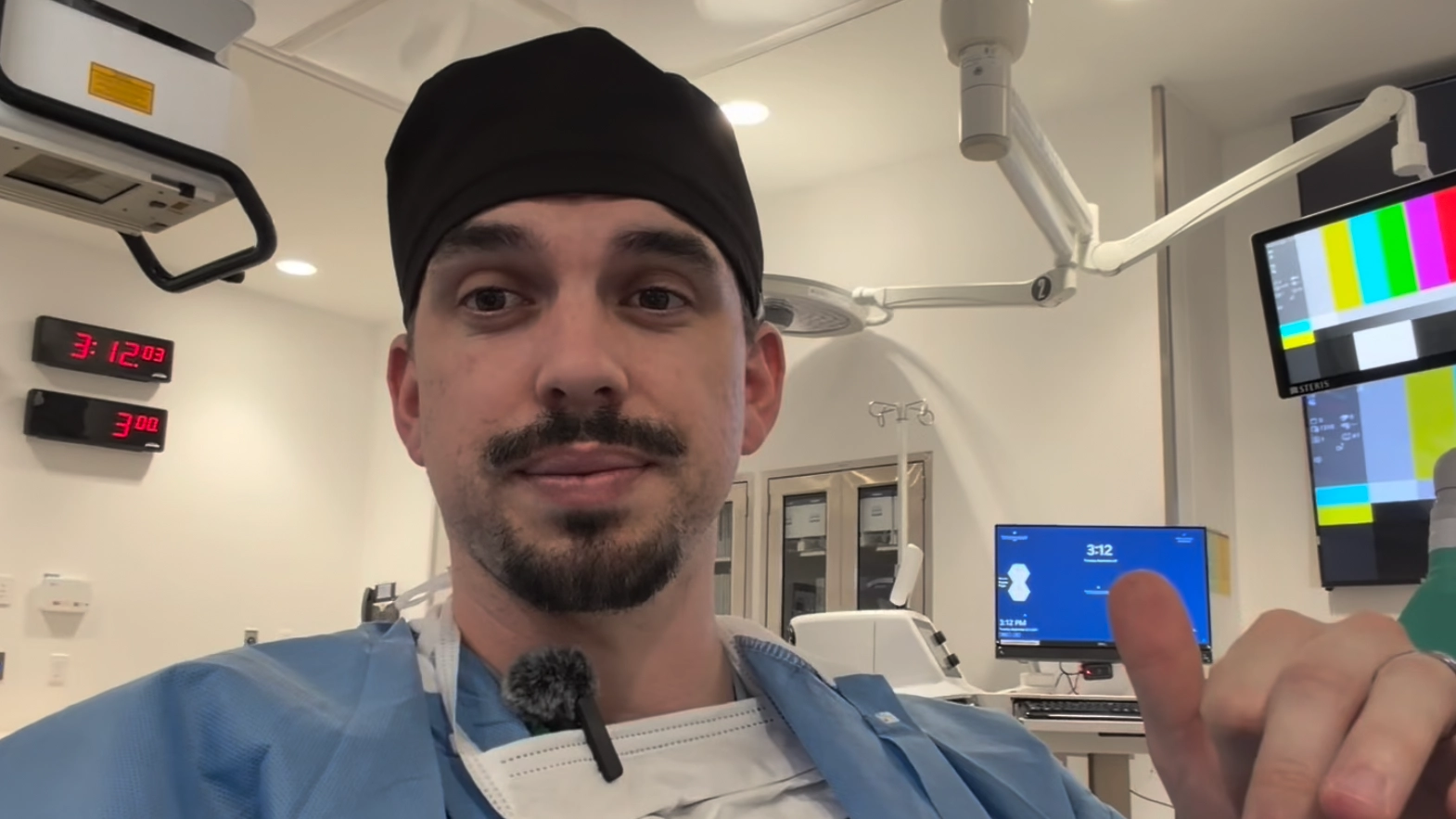
Dr Ty Rogers, an anesthesiologist, has taken to YouTube to explain how doctors monitor our state of unconsciousness - and it's about much more than just putting patients to sleep.
Advert
In fact, the sleep you experience under general anesthesia is entirely different from the kind you get in your own bed, as the brain waves produced are entirely different - even if you've heard someone claim it feels like the best rest they have ever had.
To make sure you do not wake up, doctors monitor a number of signals, with 'MAC' being the primary measurement docs use - which stands for minimum alveolar concentration.
This metric tells the medical team exactly how much inhaled anesthetic is currently in your lungs, and by tracking the concentration of gas in your lungs it acts as a reliable way to show exactly how much anesthetic has safely reached your brain.
During a standard procedure, doctors aim for a MAC of one - at this level, half of all patients will not respond to any surgical stimulus. To push that guarantee to 95 percent, the team will increase the dial to a MAC of 1.2.
"From an anesthesia perspective, a MAC of one probably sounds like the most important thing," Rogers said.
"We don't want our patients moving or being aware during surgery. But there's other MAC numbers we consider - there's MAC of 0.2 to 0.3, which is described as 'MAC aware' - [where] 50% of people might respond to you."
A MAC of 0.5 is known as 'MAC amnesia', where half of patients will not form explicit memories. Meanwhile, a MAC of 1.6 will completely blunt your autonomic responses, which could potentially make a patient unstable.
However, the MAC number is not the only thing keeping you safe.
Rogers continued: "There's many things we actually consider when you're asleep. We don't just only look at Mac.
"We look at the whole picture. We look at your vital signs. We look at you, see if you're moving.

"We want to see if your blood pressure is too high or if you're tacocartic - and that might be a sign we need to increase our anesthetic depth."
If a patient's blood pressure spikes or their heart rate suddenly increases, it could be a sign that they need a deeper level of anesthesia - but these signs can also be influenced by pain, blood loss, or other surgical medications.
Sometimes, doctors do not use inhaled gases like Sevoflurane or Desflurane at all, as you may be given total intravenous agents to keep you asleep - administered through the veins, at which point the medical team cannot rely on lung concentration to monitor your overall depth of sedation.
In these cases, they use a Bispectral Index' (BIS) monitor, which is essentially an electroencephalogram (EEG) that attaches directly to your forehead to measure your brain activity, helping doctors estimate your level of hypnosis and ensuring you do not feel any pain.
 Joe Yates