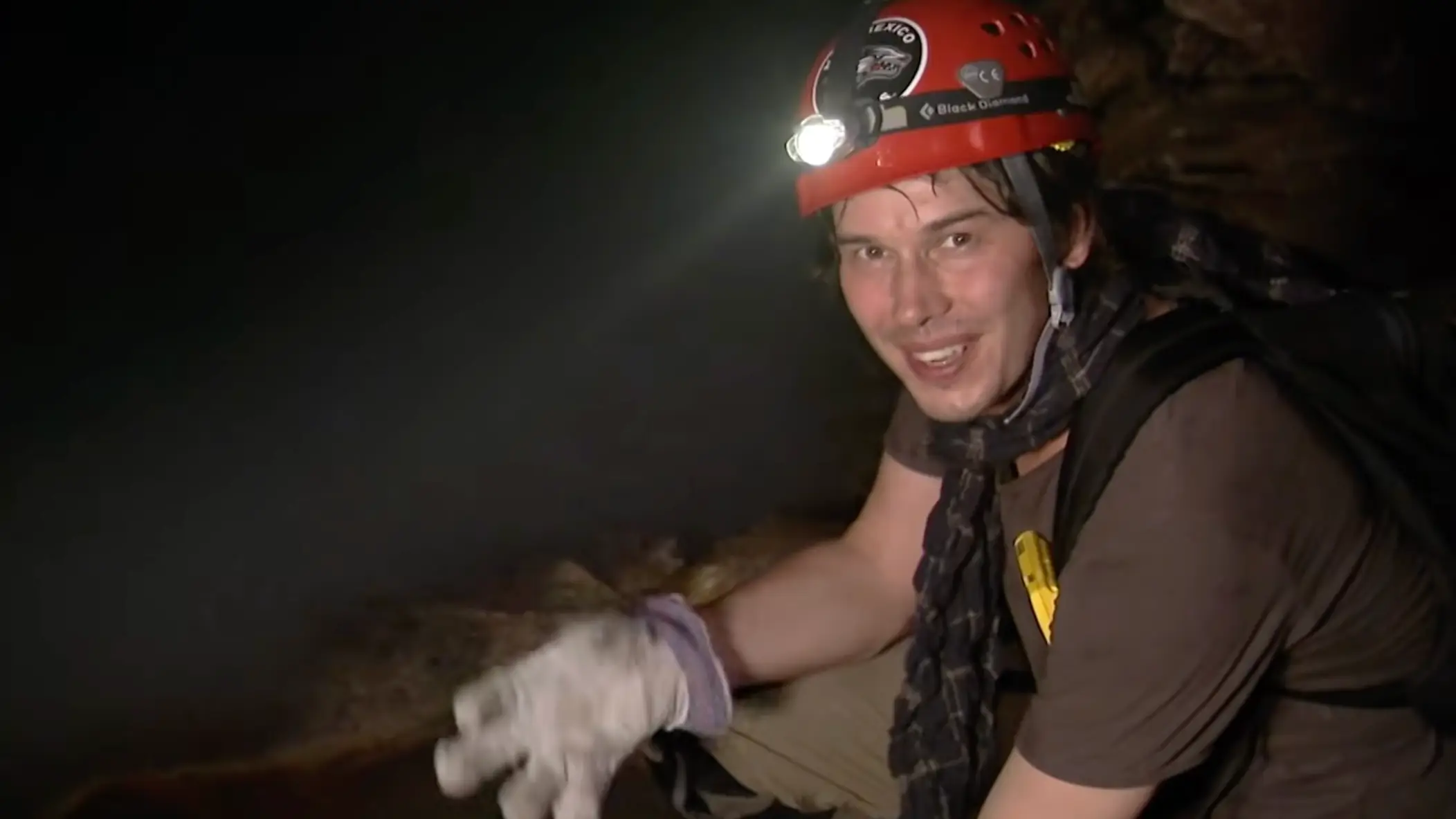
Inside death trap cave that is extremely toxic to humans
Professor Brian Cox revealed pink fish, a dark cave... and snot?

Professor Brian Cox has documented his journey inside a dangerous cave, and it’s somewhere you might want to avoid as your next vacation spot.
Cox is known for his wayward travels that have seen him encounter some pretty odd places, but this might be one of the strangest.
Usually, the physicist is trying to show us mere mortals about how science works, like the speed of light for instance.
But now, he’s tackling an environment of which its very existence is against us.
Advert
In the Mexican city of Tabasco, Cox investigated the dark, dangerous, and highly fascinating 'Cueva de Villa Luz' (translated to mean the cave of the house of light).
While caves are scary enough, this one is a cave filled with bacteria and gasses so toxic to humans that going inside is a dangerous game to play.
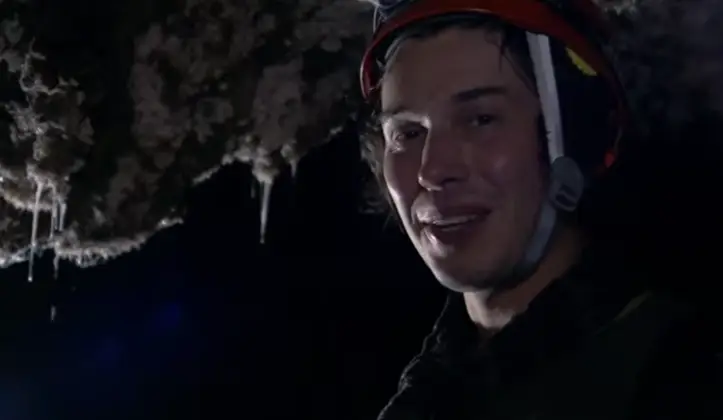
However, for the organisms living within it, like its pink fish, and a single-celled extremophile-like bacteria known as 'Snottites', it’s a thriving environment hub.
Cox revealed all in his BBC Earth Science adventure on the Wonders Of The Solar System show, revealing just how the cave impacts him and the camera crew, but feeds the bacteria around them.
He called the cave ‘the definition of a hostile environment’ because it's ‘full of hydrogen sulfide gas’, a colorless and highly flammable gas that’s known for its characteristic eggy odor.
Cox explained that the presence of the gas meant he and his team had to protect the camera, which would otherwise be eaten by the acidic gas, wear a mask, and bring a monitor to know which areas of the cave have more or less gas.
Exposure to hydrogen sulfide isn’t great – with the Illinois Department of Public Health listing ‘fatigue, loss of appetite, headaches, irritability, poor memory and dizziness’ as potential symptoms of exposure to the gas.
For high-level exposure, it can even result in death within a couple of breaths.
But unlike Cox and his crew, the Snottites bacteria he eagerly walked into a deadly cave to see, are built to survive and thrive in the environment.
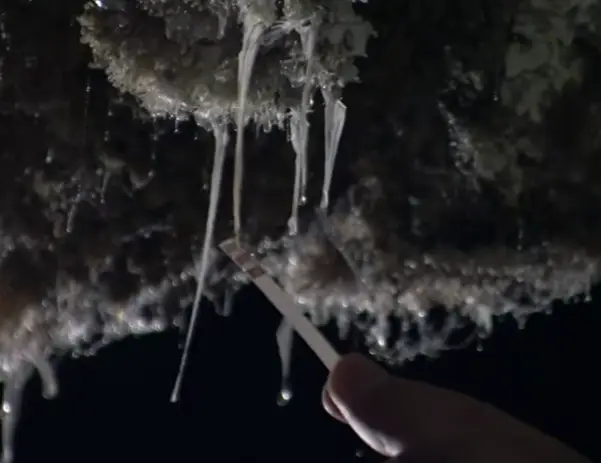
Cox revealed the ‘guys breathe in hydrogen sulfide and oxygen and produce sulfuric acid’, which is why they are called ‘Snottites’.
The organisms create a metabolic byproduct out of sulfuric acid, and these biofilms cover the cave walls with a thick snot-like film, accelerating limestone corrosion.
But it can also melt your skin too, so it’s best to keep your hands away.
"One type of biofilm, called a snottite because of its appearance, has a pH of zero or one," said Daniel S. Jones, graduate student in geosciences told Penn State University. "This is very, very acidic."
But Cox didn’t seem to mind when he took a pH dip stick bare handed, swabbed some biofilm and explained it is as ‘strong as battery acid’, calling the Snottites a kind of ‘strange organism’.
You can say that again, Cox.
 Britt Jones