unilad homepage
unilad homepage
  • News
    • UK News
    • US News
    • World News
    • Crime
    • Health
    • Money
    • Sport
    • Travel
  • Music
  • Technology
  • Film and TV
    • News
    • DC Comics
    • Disney
    • Marvel
    • Netflix
  • Celebrity
  • Politics
  • Advertise
  • Terms
  • Privacy & Cookies
  • LADbible Group
  • LADbible
  • SPORTbible
  • GAMINGbible
  • Tyla
  • UNILAD Tech
  • FOODbible
  • License Our Content
  • About Us & Contact
  • Jobs
  • Latest
  • Archive
  • Topics A-Z
  • Authors
Facebook
Instagram
X
Threads
TikTok
YouTube
Submit Your Content
‘Potentially hazardous’ Empire State Building-size asteroid will zoom past Earth today
Home>News
Updated 10:12 2 Feb 2024 GMTPublished 10:02 2 Feb 2024 GMT

‘Potentially hazardous’ Empire State Building-size asteroid will zoom past Earth today

Asteroid 2008 0S7 is set to zoom past the earth moving at speeds estimated at 40,700mph.

Gerrard Kaonga

Gerrard Kaonga

google discoverFollow us on Google Discover
Featured Image Credit: Science Photo Library - ANDRZEJ WOJCICKI/Getty / Alexander Spatari/Getty

Topics: News, Space, NASA

Gerrard Kaonga
Gerrard Kaonga

Gerrard is a Journalist at UNILAD and has dived headfirst into covering everything from breaking global stories to trending entertainment news. He has a bachelors in English Literature from Brunel University and has written across a number of different national and international publications. Most notably the Financial Times, Daily Express, Evening Standard and Newsweek.

Advert

Advert

Advert

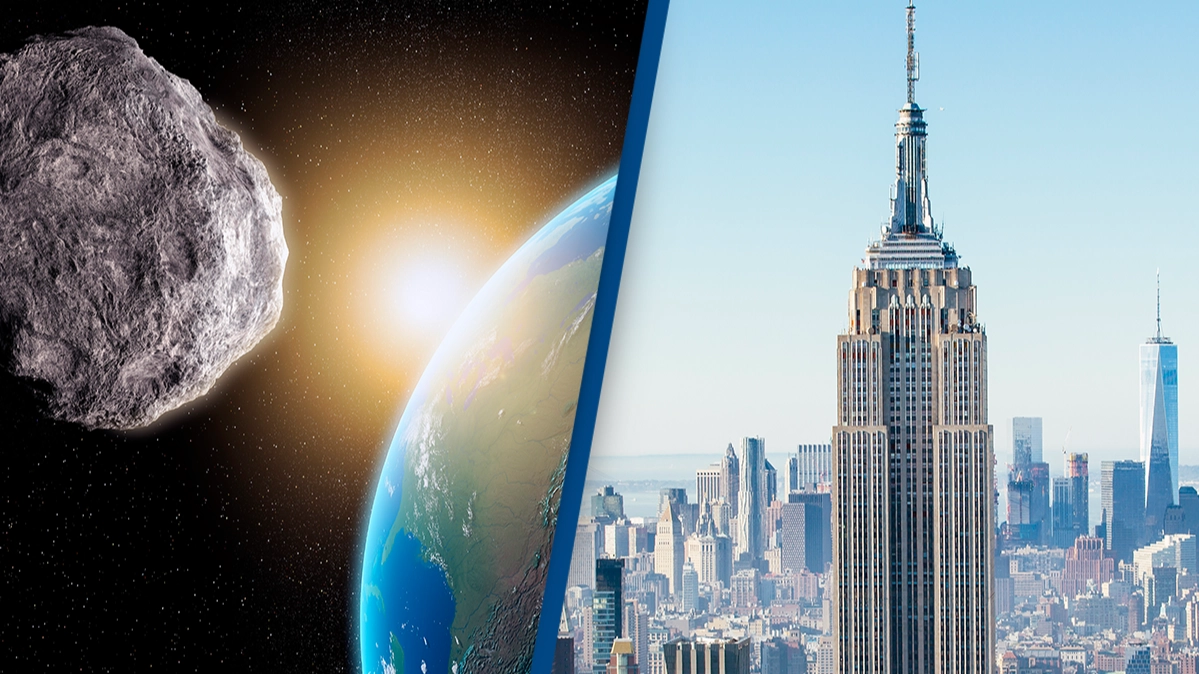
A massive asteroid is set to zoom past Earth today as NASA confirms it is potentially hazardous.

Looking forward to the weekend? Well, just so you know, there is a ‘potentially hazardous’ asteroid the size of the Empire State Building moving unnervingly close to the Earth.

NASA confirmed earlier this week, through its Asteroid Watch department, that a space rock will be missing the planet by 1.7 million miles today (2 February).

The asteroid 2008 OS7 will speed past us at about 18.2 km/s or 40,700mph. Just for comparison, a speeding bullet travels between 600 and 2,000 mph.

Advert

The asteroid has been estimated to be between 690 and 1,570 feet across, according to data from NASA's Center for Near-Earth Object Studies.

The Empire State Building is about 1,250 feet so the rock is quite sizeable.

Martin Barstow, a professor of astrophysics and space science at the University of Leicester in the UK, explained why people shouldn’t worry about the upcoming asteroid, however.

Speaking to Newsweek, he said: “A potentially hazardous asteroid (PHA) is one that has an orbit intersecting the Earth's orbit around the Sun by less than 0.05 astronomical units (1 AU is the distance to the Sun), that's just over 4.5 million miles.
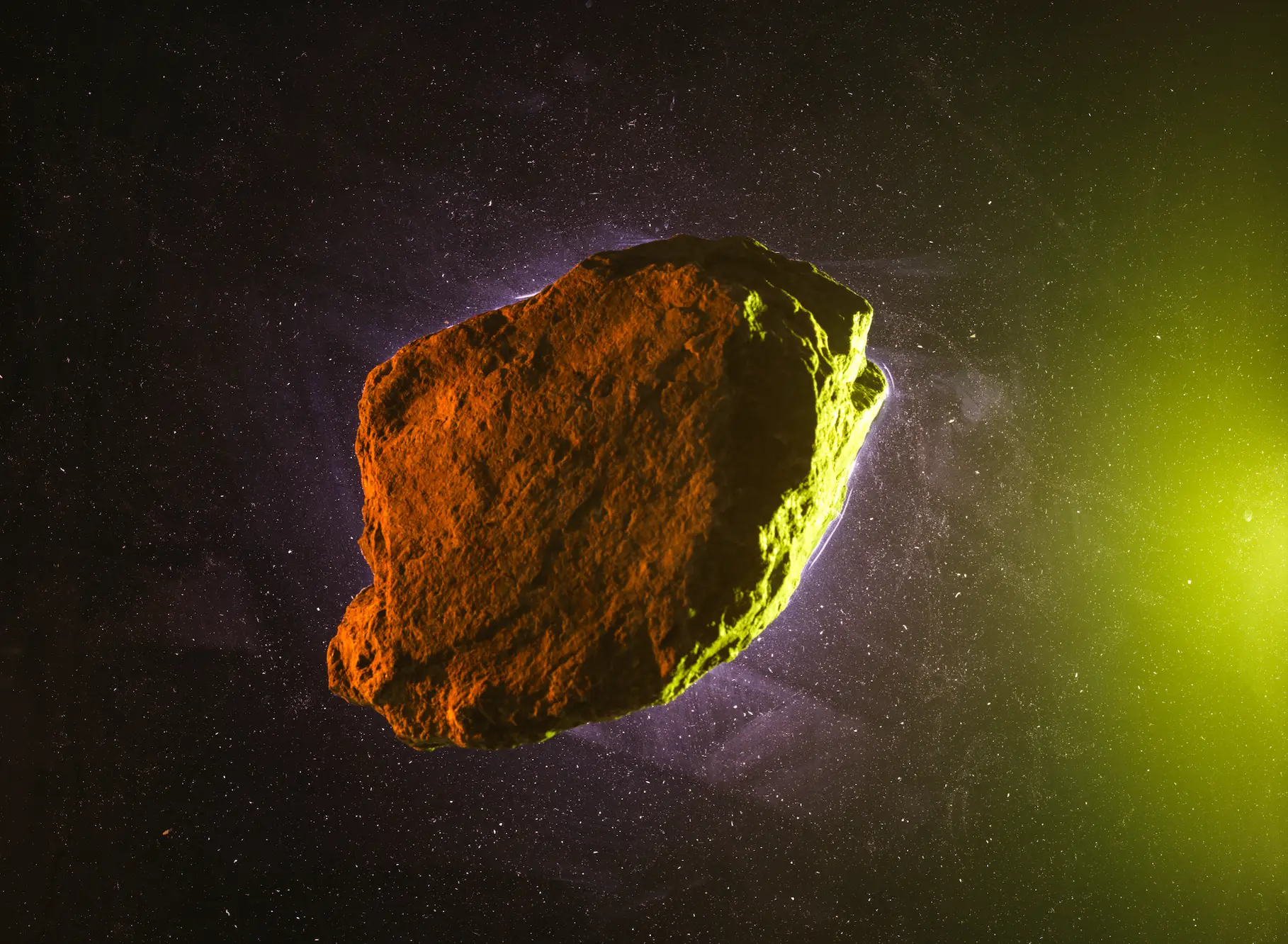
The asteroid 2008 OS7 will speed past us at about 18.2 km/s or 40,700mph.
Getty Stock Image

“It also has to have an absolute brightness of 22.0 or less (lower values of the magnitude are brighter = larger objects), i.e., an asteroid (or comet) that would cause significant regional damage if it hit the Earth.

“Not all NEOs are potentially hazardous, but all hazardous objects are NEOs."

Minjae Kim, a research fellow at the University of Warwick, reinforced Barstow’s comments and said the world need not worry about the incoming 2008 OS7.

“2008 OS7, a very small asteroid whose orbit intersects with that of Earth, has been classified as a "Potentially Hazardous Asteroid (PHA),” she said.
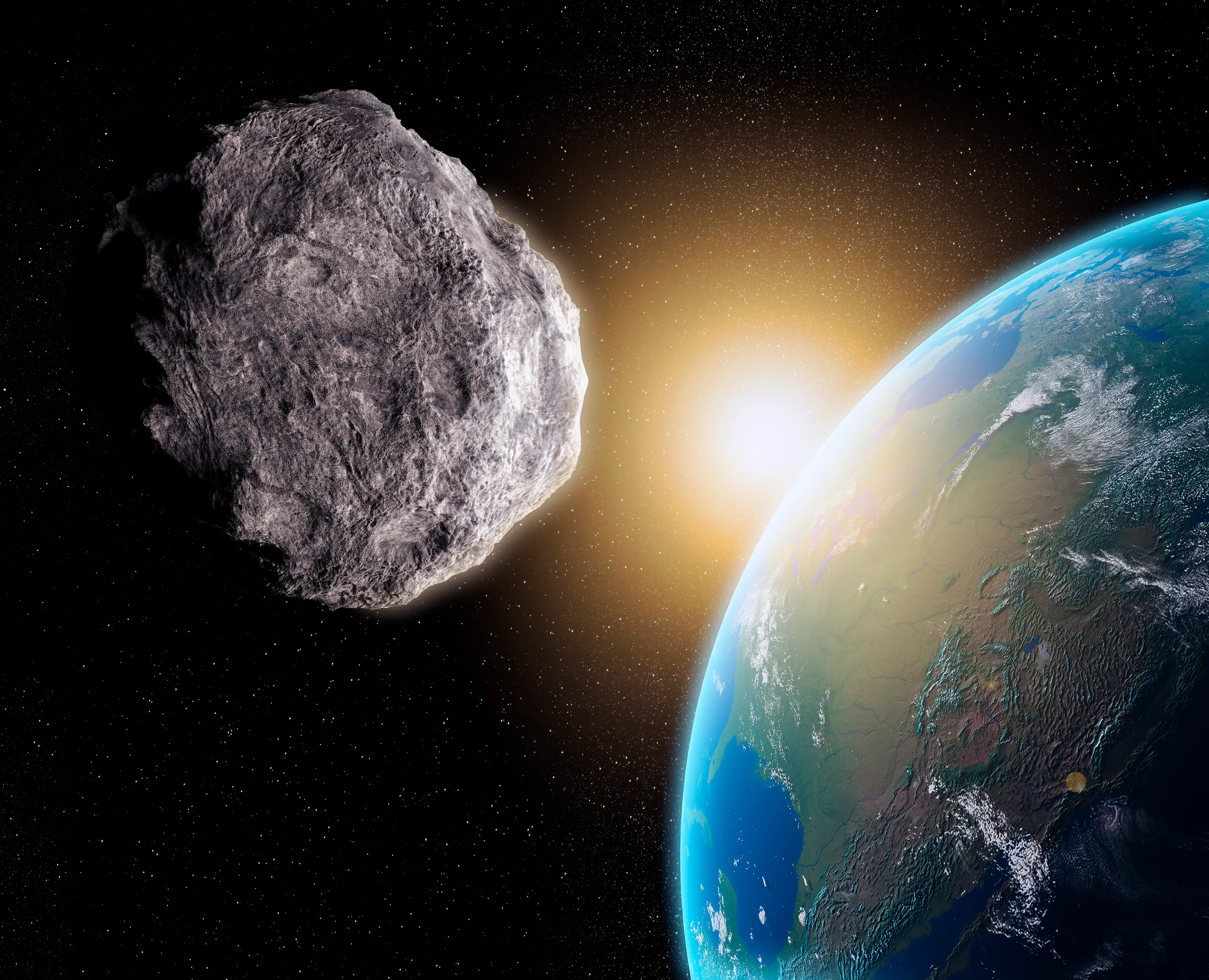
Professor Martin Barstow explained why people shouldn’t worry about the upcoming asteroid, however.
Getty Stock Image

“We don't need to worry about it too much, as this asteroid will not enter Earth's atmosphere, while this will still approach close to the Earth.

"There are more than millions of asteroids in our Solar System, of which ~2,350 asteroids have been classified as PHAs. The next significant approach to Earth by a PHA will be the 99942 Apophis on 14 April, 2029.”

“[The asteroid is] in the category of a small to moderately-sized asteroid, roughly equivalent to the size of a football field.

“Unfortunately, asteroids are generally too faint to have been detected by the current techniques and surveys, so it's very hard to see by our naked eye.

"The only asteroids at all visible to the naked eye so far are Pallas and Vesta, having diameters of about 500 km.”

Choose your content:

an hour ago
3 hours ago
15 hours ago
16 hours ago
  • Chip Somodevilla/Getty Images
    an hour ago

    Trump gives update on 'criminally made algae' at Reflecting Pool and announces when it will be drained

    The pool's issues have included dead ducklings and a price tag that's ballooned massively

    News
  • X/Bosnian Football
    3 hours ago

    US presenter apologizes over 'ignorant' comment about European country during World Cup coverage

    Furious football fans piled on after spotting one brutal detail in her viral on-screen blunder

    News
  • SWNS
    15 hours ago

    One question to ask yourself before starting GLP-1s to keep weight off according to doctors

    The expert shared his golden rule to follow before using GLP-1s for weight loss

    News
  • LOIC VENANCE/AFP via Getty Images
    16 hours ago

    Warning issued for using cold water during a heatwave which could be 'deadly'

    Forecasters warn the heat could break records in some states even after the sun goes down

    News
  • NASA reveals truth behind asteroid hurtling past Earth at 46,908 mph next week
  • Former NASA astronaut explains what he realized about Earth that completely changed the way he thinks
  • NASA discovers potentially habitable planet 'remarkably similar to Earth'
  • China's $280m mega-bridge higher than the Empire State Building passes critical test