unilad homepage
  • News
    • UK News
    • US News
    • World News
    • Crime
    • Health
    • Money
    • Sport
    • Travel
  • Film and TV
    • Netflix
  • Music
  • Tech
  • Features
  • Celebrity
  • Politics
  • Advertise
  • Terms
  • Privacy & Cookies
  • LADbible Group
  • LADbible
  • SPORTbible
  • GAMINGbible
  • Tyla
  • UNILAD Tech
  • FOODbible
  • License Our Content
  • About Us & Contact
  • Jobs
  • Latest
  • Archive
  • Topics A-Z
  • Authors
Facebook
Instagram
X
Threads
TikTok
YouTube
Submit Your Content
World’s largest amphibian might actually be nine different species

Home> News> Animals

Updated 15:03 8 Oct 2024 GMT+1Published 14:40 8 Oct 2024 GMT+1

World’s largest amphibian might actually be nine different species

Scientists hope this clarification will better help them prevent the extinction of the animal

Gerrard Kaonga

Gerrard Kaonga

google discoverFollow us on Google Discover
Featured Image Credit: Getty/Best View Stock/Getty/South China Morning Post

Topics: China, Animals

Gerrard Kaonga
Gerrard Kaonga

Gerrard is a Journalist at UNILAD and has dived headfirst into covering everything from breaking global stories to trending entertainment news. He has a bachelors in English Literature from Brunel University and has written across a number of different national and international publications. Most notably the Financial Times, Daily Express, Evening Standard and Newsweek.

Advert

Advert

Advert

Old Mother Nature loves to keep surprising us, as scientists confirm a suspicion held for decades about the Chinese giant salamander.

As the name would suggest, Chinese giant salamanders are pretty damn big and can grow up to 6.6 feet in length.

This size has cemented them as the largest amphibian in the world for a long time, but more recently, a new study has made quite the revelation.

Chinese giant salamanders have been considered just one species, but a paper published on October 3, in Evolutionary Journal of the Linnean Society, confirmed they actually consist of multiple unique species.

Advert

The team behind the paper are hoping their findings are urgently recognized to ensure that conservation legislation adequately protects these animals.
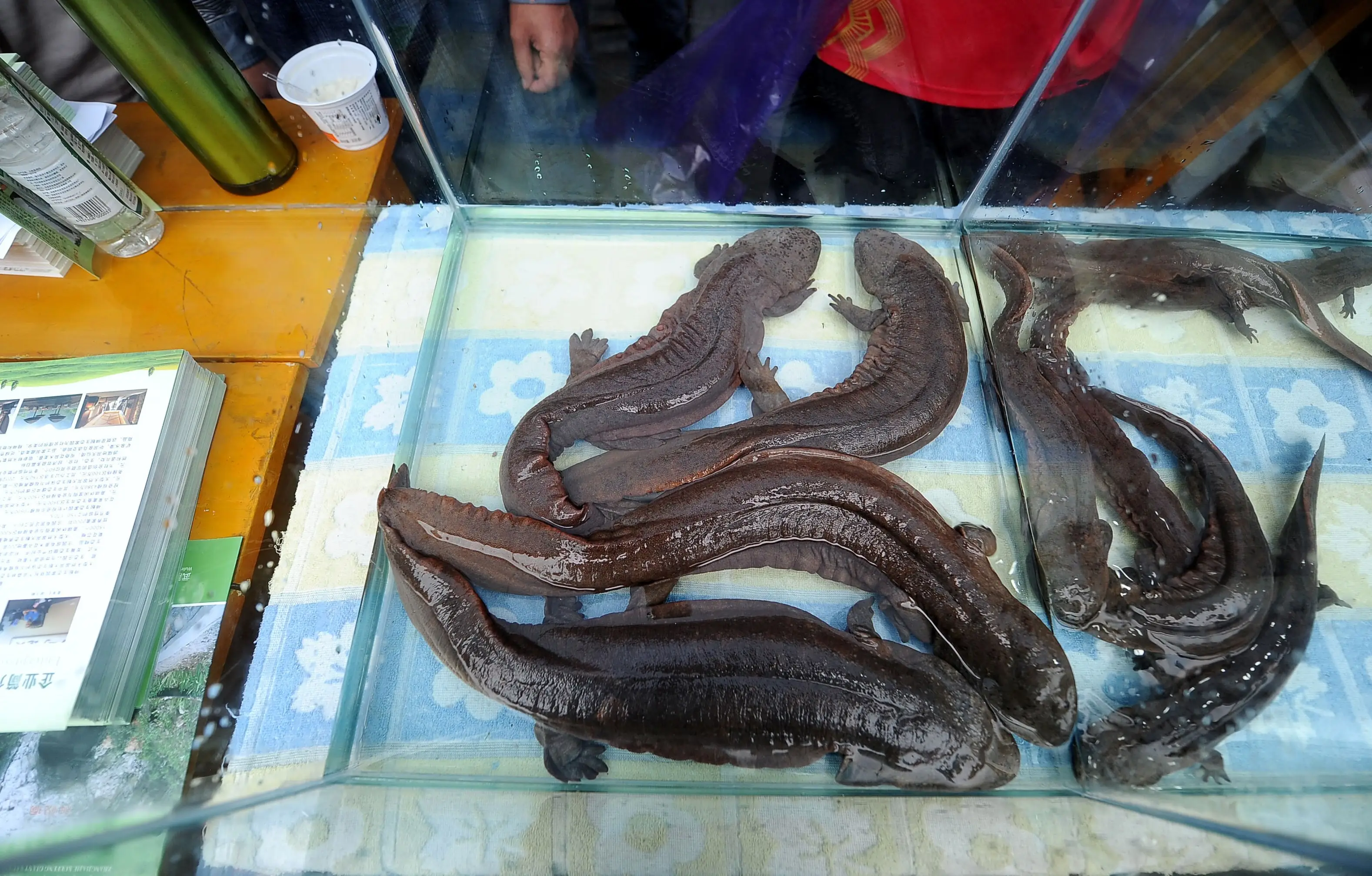
Chinese giant salamanders are critically endangered but still end up in food markets (STR/AFP via Getty Images)

Experts have warned that if action isn’t taken some of the Chinese giant salamander species could go extinct before they are officially recognized.

Professor Samuel Turvey, a researcher at ZSL’s Institute of Zoology and an author of the paper, spoke on this risk.

He said: “Chinese giant salamanders are recognized as Critically Endangered, mainly due to overexploitation of wild populations to support a salamander farming industry that stocks China’s luxury food market.

“All of the species we’ve now identified are thus at high risk of disappearing forever. If we are to avoid losing the world’s largest amphibians, we need to act urgently to ensure that these newly-recognized species are formally recognized and legally protected.”

It isn’t that scientists haven’t suspected there might be more to the giant amphibians, it is just now they have the significant data to support their claims.
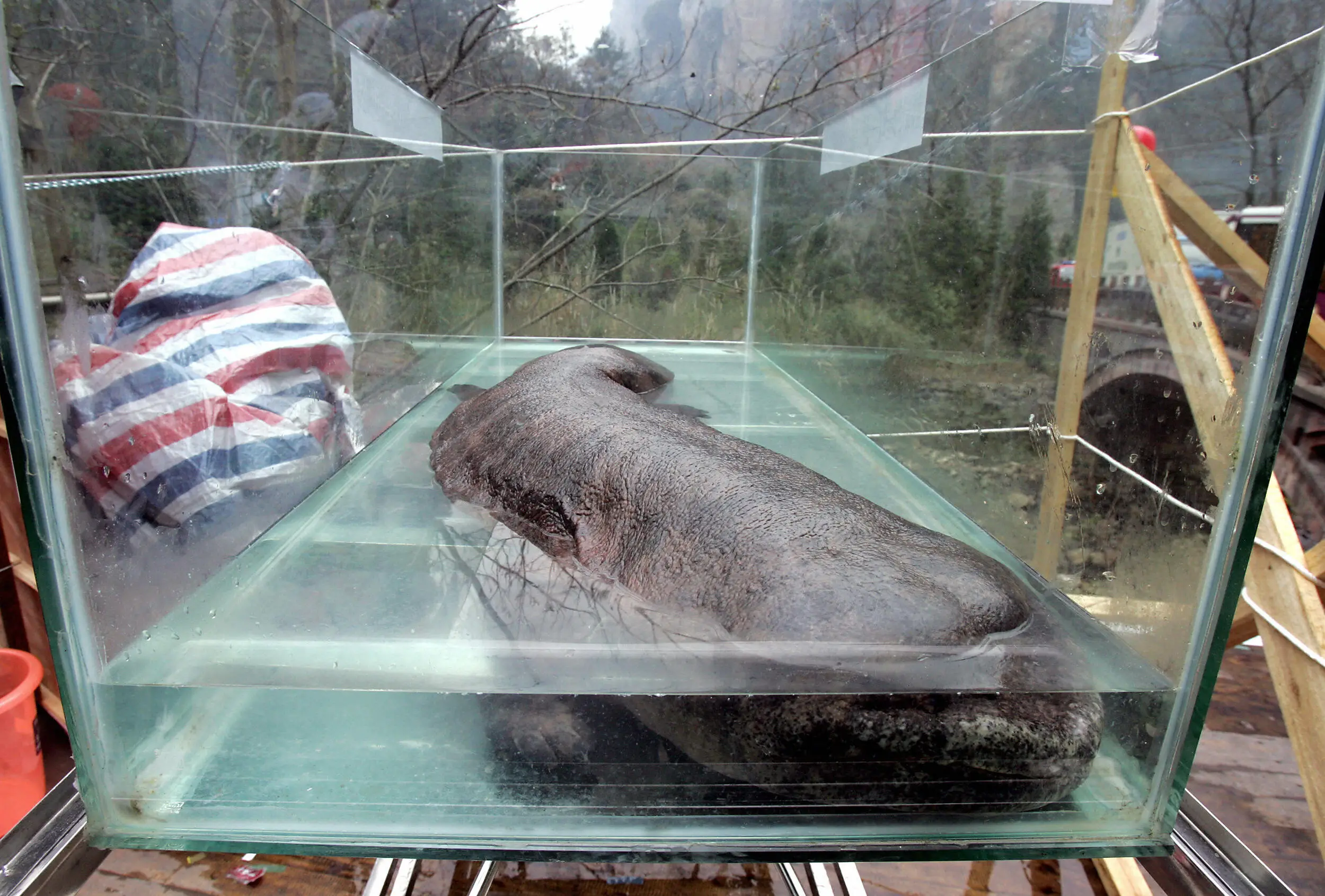
Scientists are hoping their discovery will help better conserve Chinese giant salamanders (GOH CHAI HIN/AFP via Getty Images)

Turvey continued: “The possibility that Chinese giant salamanders may not be a single species has been suggested by researchers for 20 years, but by comparing levels of genetic difference seen across giant salamander populations with differences shown by other known salamander species, we can now confirm this for sure.”

Conservation of the animals has actually become an issue due to the assumption that Chinese giant salamanders were all the same species.

This has meant that salamanders are moved between farms across China in habitats that the species would not normally be found in.

When they are intentionally released from farms back into rivers or accidentally escape, they risk invading habitats and disturbing the natural order of things.

As well as this, as the species are not separated in farms, there is a risk that different species will hybridize with each other, according to Turvey.

Only time will tell if this discovery leads to new legislation to protect and define the different species.

Choose your content:

10 hours ago
11 hours ago
12 hours ago
  • Getty Stock
    10 hours ago

    How much you will get from Trader Joe's $7.4m settlement and how to make a claim

    The grocery store chain was involved in a multi-million dollar class action settlement

    News
  • YouTube/Veritasium
    11 hours ago

    Expert exposes tap-to-pay flaw that can steal thousands from a locked iPhone

    Hackers can steal thousands from your bank account just by standing near your iPhone, using an exploit that has been around for years

    News
  • YouTube/LADBible Stories
    11 hours ago

    Plastic surgeon reveals why BBLs are so dangerous and how patients could die

    Leading plastic surgeon Dr Dan Marsh opened up about why the procedure is so risky, and what can be done to reduce the danger

    News
  • Getty Stock
    12 hours ago

    Professor reveals two things that make you wake up at 3am every night

    Waking up in the middle of the night can be frustrating if it happens once, but if it becomes a pattern you can easily slip into insomnia

    News
  • 661-Pound Giant Stingray Is Thought To Be World’s Largest Freshwater Fish Ever Discovered
  • Scientists discover why the closest living relative to the T-Rex might actually be a chicken
  • Dolphin recorded speaking 'porpoise' revealing world's first animal speaking to a different species