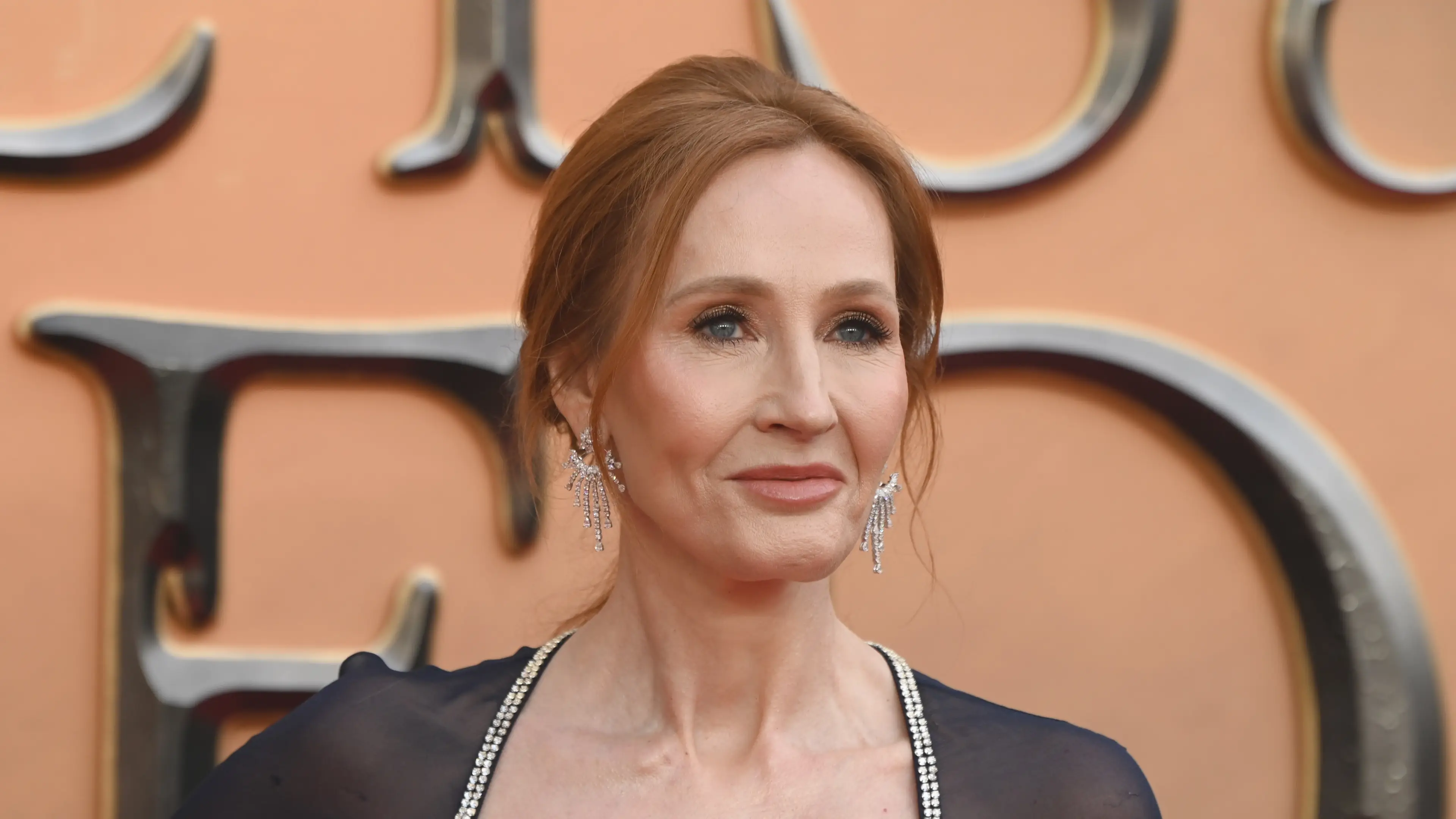
J.K. Rowling's 'Dumbledore is gay' comments resurface as some fans don't believe it

The incoming Harry Potter reboot on HBO Max set to drop later this year is set to introduce a whole new generation of witches and wizards to the world of Hogwarts, and its gentle but wise headmaster Albus Dumbledore.
But with so many new fans becoming interested in the children's fantasy series first created by J.K. Rowling in 1997, one of its author's most controversial moments has been unearthed by those who do not already have an 'Owl Level' in Potterology.
Back in 2007 after the publication of the final book, Deathly Hallows, Rowling told a crowd at New York's Carnegie Hall that she had 'always thought of Dumbledore as gay', immediately dividing readers into those who supported this interpretation, and those who thought she was talking a load of dragon dung.
At the time, she added: "They had Dumbledore saying a line to Harry early in the script saying I knew a girl once, whose hair…. I had to write a little note in the margin and slide it along to the scriptwriter, 'Dumbledore’s gay!'"
Advert
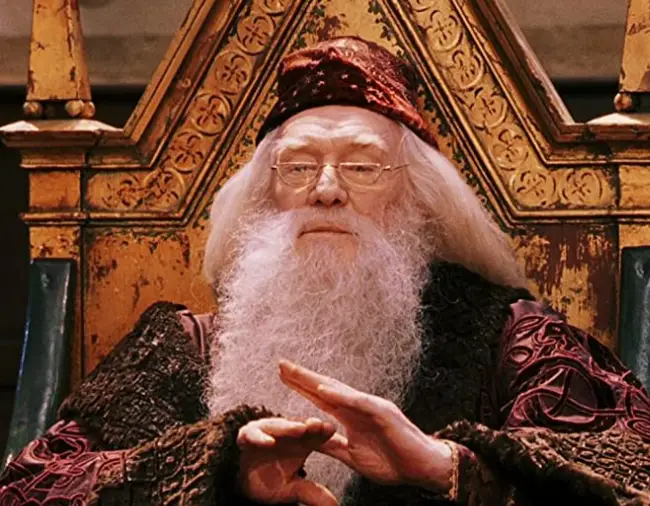
This took Potter fans and the world by storm, with people picking apart the widely-read children's fantasy books to see where Rowling may have dropped hints or inferred something about the Hogwarts headmaster that they had not previously picked up on.
And frankly, they didn't really find anything, perhaps because it would have been out-of-character for the wise and seemingly all-knowing father figure of a youth fiction series to go from discussing horcruxes and hexes to discussing his dating history.
You could point to a comment in the final book about his friendship with Grindelwald, or the way Rowling describes his penchant for extravagant clothes, and at one point even knitting.
But it would be a hard sell to say that a handful of vague descriptors and inferences in a series of over 1,000,000 words are clear proof that Rowling intended Dumbledore to be gay from the outset, and didn't just invent that reading after the series was finished.
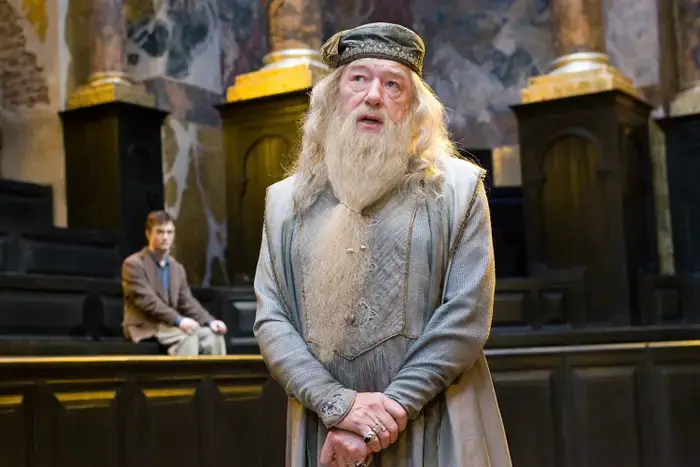
In her 2007 explanation of the elderly wizard's romantic side, Rowling told the crowd that the headmaster, who constantly reminds his protégé to believe in the magical power of love, had himself been a fool for love in the past.
"Dumbledore fell in love with Grindelwald," Rowling told a New York audience in 2007, referring to the wizard's old rival. "And that that added to his horror when Grindelwald showed himself to be what he was.
"To an extent, do we say it excused Dumbledore a little more because falling in love can blind us to an extent? But, he met someone as brilliant as he was, and rather like Bellatrix he was very drawn to this brilliant person, and horribly, terribly let down by him."
The British author, who has been reviled in recent years due to her anti-trans views, said that this was she 'always saw' the figure of Dumbledore when writing, despite there being little to no reference until the final book that could allude to his sexuality.
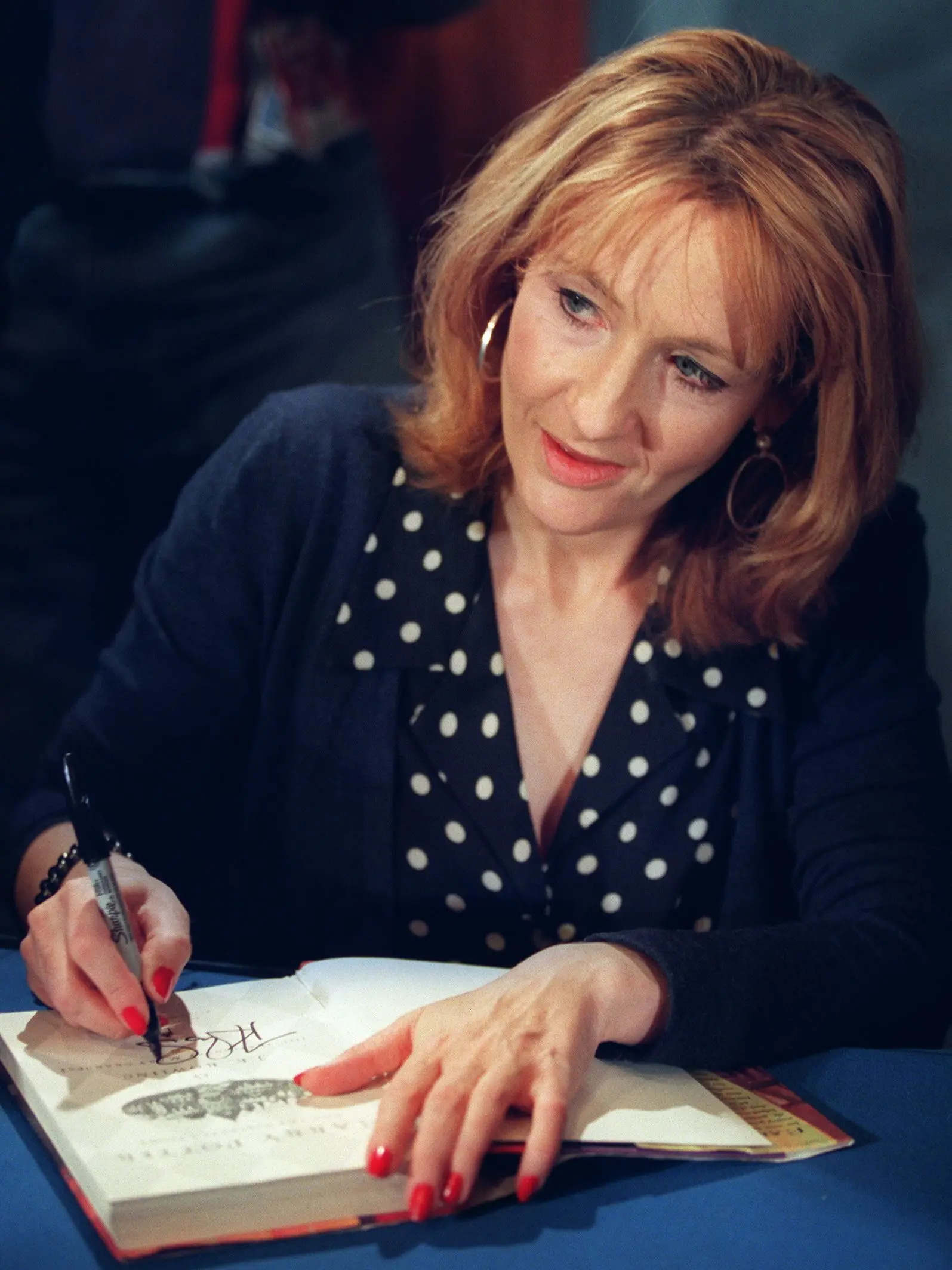
This caused no end of furore at the time, with many people questioning if Rowling was being a revisionist about her own meticulously planned series of books, even serving as the perfect example of a tool in literary criticism known as 'reader-response theory.'
Perhaps most famously expressed by Roland Barthes in The Death of the Author, this mode of analysis argues that what an author intended a text to mean is completely irrelevant to its actual meaning.
That's because meaning is actually created in the mind of the person reading the words that were written down by the author, rather than solely by the author. So if readers could not discern from the book that Dumbledore was gay, does it matter that Rowling thinks he is?
She answered this question, to some extent, a few months after her initial revelation, telling the Pottermore podcast: "How relevant is it? Well, to me it was only relevant in as much as Dumbledore, who was the great defender of love, and who sincerely believed that love was the greatest, most powerful force in the universe, was himself made a fool of by love.
"That, to me, was the interesting point. That, in his youth, he was- he became infatuated with a man who was almost his dark twin. He was as brilliant. He was morally bankrupt. And Dumbledore lost his moral compass.
"He wanted to believe that Grindelwald was what he wanted him to be, which I think is what particularly a young person’s love tends to do."
Topics: Harry Potter, JK Rowling, Books
 William Morgan