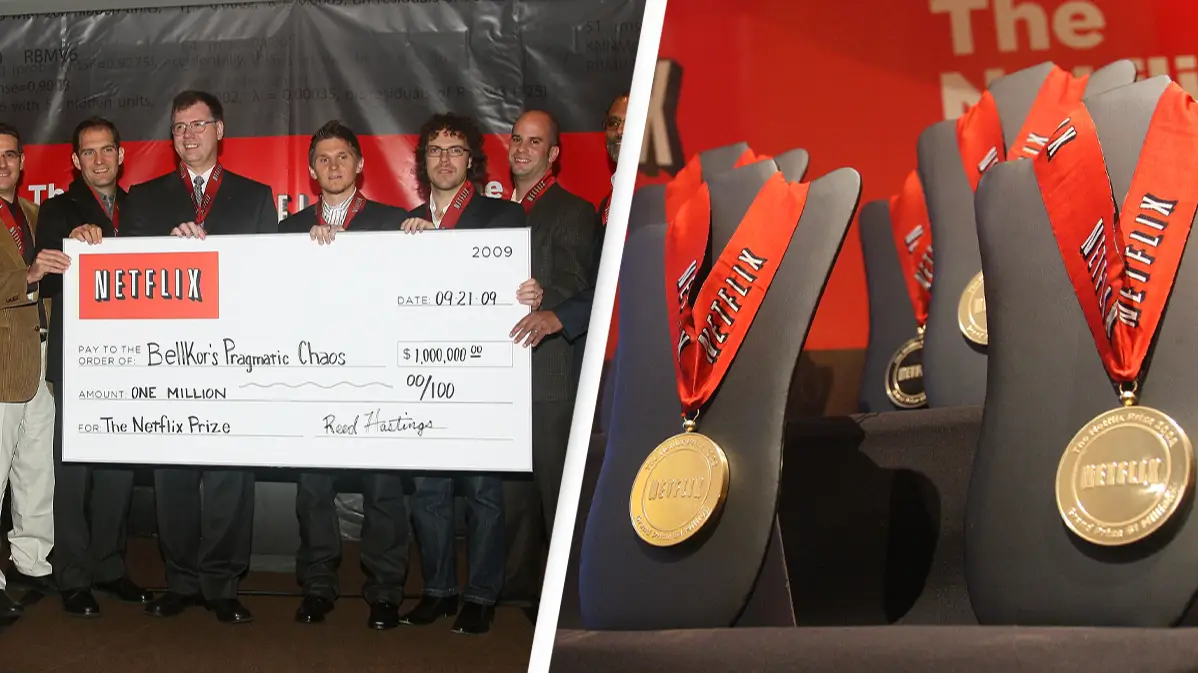
Netflix paid men $1 million after challenging world to beat its recommendation algorithm

While many know Netflix for innovating the modern streaming model that has revolutionized how we watch film and television, few know much about the company’s history before it began streaming in 2007.
Before Netflix streaming became a thing, the company focused on being a video rental company that sent DVDs to their monthly subscribers through the mail.
Yep, remember those discs we used to watch films on?
Anyway, during this time, they still had their now-famous recommendation system. This algorithm recognizes the things you’ve seen and enjoyed using Netflix and gives you tailored suggestions of what to watch next.
Advert
A year before the company’s streaming service finally began, Netflix wanted to get an outside perspective on the algorithm.
Thus, the Netflix Challenge began, with the company offering $1 million to anyone who could improve their algorithm substantially - by 10 percent or more by the time 2011 came around.
The challenge was widespread, with 50,000 participants from across the world attempting to win the cash prize over years the contest was held.
The idea was highly praised by many business experts, with the idea of crowdsourcing such a task being viewed as the way of the future in the late 2000s.
Eventually, winners were crowned, and it didn’t even take the full five years.
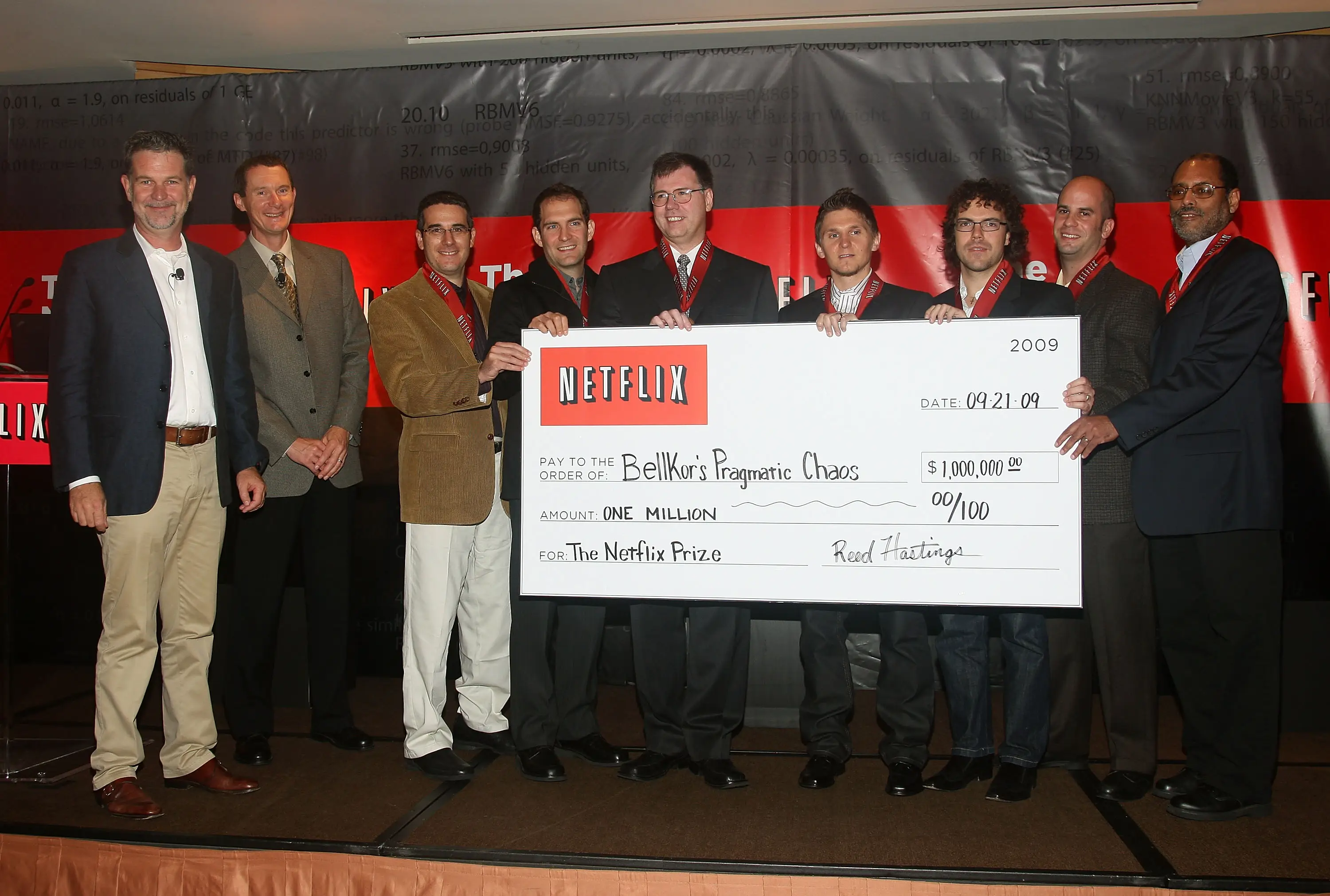
In 2009, a group of individuals that called themselves BellKor’s Pragmatic Chaos won the $1 million prize, as they had improved Netflix’s algorithm by a full 10.05 percent.
But shockingly, Netflix wound up never using the contest winners’ most successful algorithm.
In a blog post by the company back in 2012, they explained the two primary reasons they had not implemented the algorithm despite paying out a million dollars to the winners.
“The additional accuracy gains that we measured did not seem to justify the engineering effort needed to bring them into a production environment,” the blog post read, “Also, our focus on improving Netflix personalization had shifted to the next level by then.”
This 'next level' they were referring to was the global streaming model, which had begun taking the world by storm by the time the contest came to an end and Netflix’s team began work on implementing the winning algorithm.
The blog post continued: “Streaming has not only changed the way our members interact with the service, but also the type of data available to use in our algorithms.”
“Streaming members are looking for something great to watch right now; they can sample a few videos before settling on one, they can consume several in one session, and we can observe viewing statistics such as whether a video was watched fully or only partially.”
However, the contest wasn’t all for naught, as the research and development that the company was able to crowdsource meant that they had already improved their original algorithm by 8.43% before handing out the million dollars.
 Dylan Murray